
"Drought-Stricken Algeria Plans Massive Sheep Import Ahead of Eid Al-Adha"
Generado por agente de IAWesley Park
lunes, 10 de marzo de 2025, 6:51 pm ET3 min de lectura
ANSC--
Algeria is making a bold move to stabilize costs and meet soaring demand ahead of Eid Al-Adha, the Muslim holiday of sacrifice. President Abdelmadjid Tebboune has announced plans to import a staggering one million sheep, a move that could have far-reaching economic and political implications. This is not just a logistical challenge; it's a strategic play to ease public frustration over rising costs and the military-backed government's uncompromising grip on power.
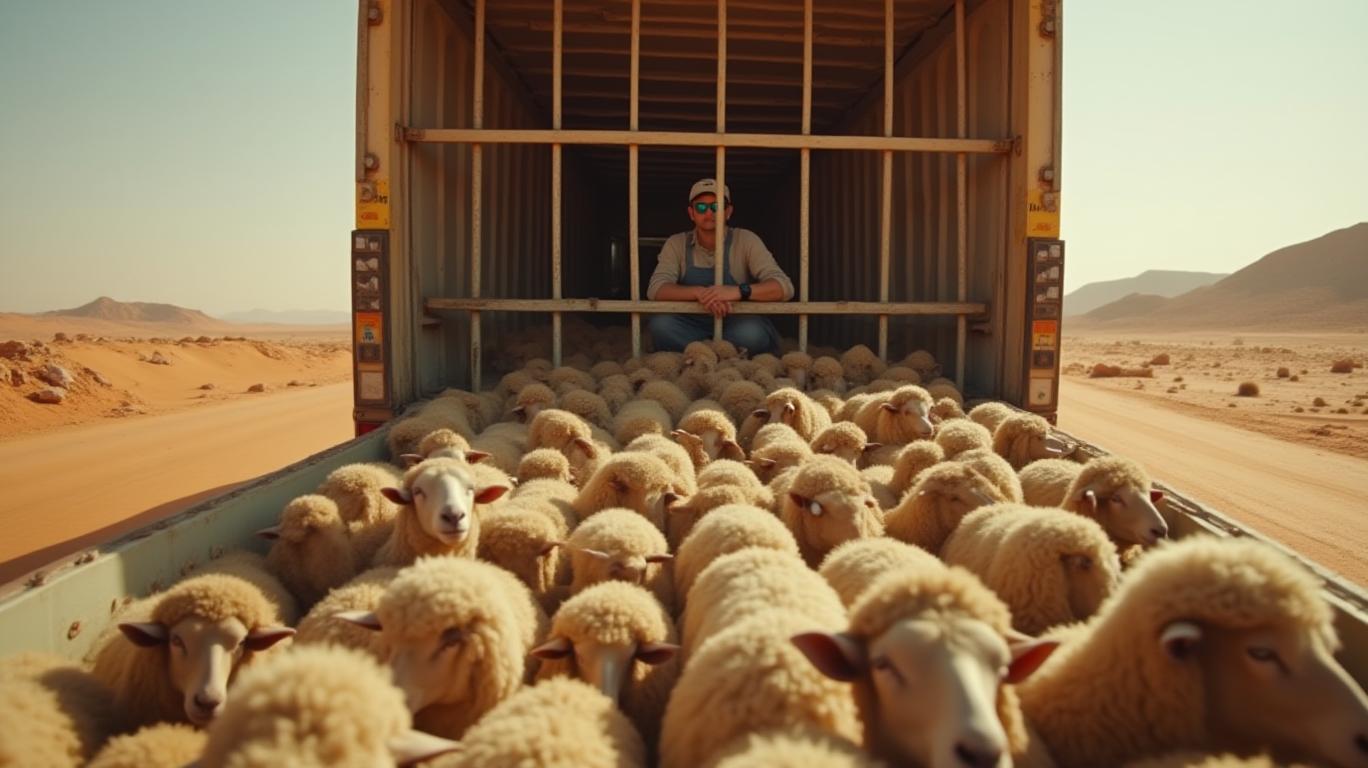
The decision comes as North Africa endures its seventh consecutive year of extreme heat and below-average rainfall. The record drought has shrunk harvests and driven up the price of animal feed needed to raise livestock, including in the northern Algerian highlands where breeders raise sheep revered by the population for their quality. Last year, sheep prices skyrocketed to 200,000 Algerian dinars ($1,496) in some markets — ten times the country’s minimum wage. Many Algerians have in recent years been forced to forgo the cherished tradition. This year’s initiative aims to prevent price spikes and shortages that could put the ritual sacrifice out of reach for most Algerian families.
The Ministries of AgricultureANSC-- and Trade will immediately seek international sources to meet Tebboune’s target, hoping to counteract the soaring inflation that has pushed basic goods and services — including meat — beyond the reach of many. The plan is the latest in a series of measures designed to ease public frustration over rising costs and the military-backed government's uncompromising grip on power. It builds on previous efforts to flood markets with food staples throughout Islam’s holy month of Ramadan. Yet its scale has few parallels.
The import of one million sheep could have significant impacts on the global livestock market, particularly for countries like Argentina, Australia, Brazil, and Spain, which have historically supplied sheep to Algeria. The massive influx of imported sheep could lead to increased competition for local breeders, potentially driving down prices and making it more difficult for them to sustain their businesses. This is particularly concerning given that North Africa is enduring its seventh consecutive year of extreme heat and below-average rainfall, which has shrunk harvests and driven up the price of animal feed needed to raise livestock. The record drought has already put significant strain on local breeders, and the import of such a large number of sheep could exacerbate these challenges.
To support local breeders in the face of increased competition, the Algerian government might consider several measures. One potential approach is to provide subsidies or financial assistance to local breeders to help them cover the increased costs of feed and other expenses. This could help ensure that local breeders are able to compete with imported sheep and maintain their livelihoods. Additionally, the government could implement policies to promote the consumption of locally raised sheep, such as through marketing campaigns or tax incentives for consumers who purchase locally raised livestock. This could help increase demand for locally raised sheep and provide a boost to the local industry.
Another measure the government could take is to invest in infrastructure and technology to improve the efficiency and productivity of local livestock operations. This could include investments in irrigation systems to help mitigate the effects of drought, as well as investments in modern farming techniques and equipment to help local breeders produce higher-quality livestock more efficiently. By supporting local breeders in these ways, the government could help ensure that the local livestock industry remains viable and continues to contribute to the Algerian economy.
The import of one million sheep by Algeria ahead of Eid al-Adha could have significant impacts on the local livestock industry. The massive influx of imported sheep could lead to increased competition for local breeders, potentially driving down prices and making it more difficult for them to sustain their businesses. This is particularly concerning given that North Africa is enduring its seventh consecutive year of extreme heat and below-average rainfall, which has shrunk harvests and driven up the price of animal feed needed to raise livestock. The record drought has already put significant strain on local breeders, and the import of such a large number of sheep could exacerbate these challenges.
The move is designed to make the Eid more feasible for those who otherwise couldn't afford sheep. It's one of several government spending policies Algeria has put in place to calm social unrest while continuing to crack down on opposition parties, journalists, and people critical of the military-backed government. History has shown that food prices can incite widespread political anger in North Africa, and Algeria isn't the only country taking steps ahead of Eid Al-Adha. Its import plan comes just ten days after neighboring Morocco’s King Mohammed VI offered his subjects a reprieve from the costly ritual. The King said in a Feb. 27 letter read on state-run television, warned that the slaughter could burden low-income Moroccans and, as the highest religious authority under Moroccan law, said they could forgo it. The move — which was widely covered in Algerian media — could harm livestock producers and put disparities between those who can afford sheep and those who can't on stark display. Tebboune’s intervention is also designed to make the Eid more feasible for those who otherwise couldn't afford sheep. It's one of several government spending policies Algeria has put in place to calm social unrest while continuing to crack down on opposition parties, journalists, and people critical of the military-backed government.
Algeria is making a bold move to stabilize costs and meet soaring demand ahead of Eid Al-Adha, the Muslim holiday of sacrifice. President Abdelmadjid Tebboune has announced plans to import a staggering one million sheep, a move that could have far-reaching economic and political implications. This is not just a logistical challenge; it's a strategic play to ease public frustration over rising costs and the military-backed government's uncompromising grip on power.
The decision comes as North Africa endures its seventh consecutive year of extreme heat and below-average rainfall. The record drought has shrunk harvests and driven up the price of animal feed needed to raise livestock, including in the northern Algerian highlands where breeders raise sheep revered by the population for their quality. Last year, sheep prices skyrocketed to 200,000 Algerian dinars ($1,496) in some markets — ten times the country’s minimum wage. Many Algerians have in recent years been forced to forgo the cherished tradition. This year’s initiative aims to prevent price spikes and shortages that could put the ritual sacrifice out of reach for most Algerian families.
The Ministries of AgricultureANSC-- and Trade will immediately seek international sources to meet Tebboune’s target, hoping to counteract the soaring inflation that has pushed basic goods and services — including meat — beyond the reach of many. The plan is the latest in a series of measures designed to ease public frustration over rising costs and the military-backed government's uncompromising grip on power. It builds on previous efforts to flood markets with food staples throughout Islam’s holy month of Ramadan. Yet its scale has few parallels.
The import of one million sheep could have significant impacts on the global livestock market, particularly for countries like Argentina, Australia, Brazil, and Spain, which have historically supplied sheep to Algeria. The massive influx of imported sheep could lead to increased competition for local breeders, potentially driving down prices and making it more difficult for them to sustain their businesses. This is particularly concerning given that North Africa is enduring its seventh consecutive year of extreme heat and below-average rainfall, which has shrunk harvests and driven up the price of animal feed needed to raise livestock. The record drought has already put significant strain on local breeders, and the import of such a large number of sheep could exacerbate these challenges.
To support local breeders in the face of increased competition, the Algerian government might consider several measures. One potential approach is to provide subsidies or financial assistance to local breeders to help them cover the increased costs of feed and other expenses. This could help ensure that local breeders are able to compete with imported sheep and maintain their livelihoods. Additionally, the government could implement policies to promote the consumption of locally raised sheep, such as through marketing campaigns or tax incentives for consumers who purchase locally raised livestock. This could help increase demand for locally raised sheep and provide a boost to the local industry.
Another measure the government could take is to invest in infrastructure and technology to improve the efficiency and productivity of local livestock operations. This could include investments in irrigation systems to help mitigate the effects of drought, as well as investments in modern farming techniques and equipment to help local breeders produce higher-quality livestock more efficiently. By supporting local breeders in these ways, the government could help ensure that the local livestock industry remains viable and continues to contribute to the Algerian economy.
The import of one million sheep by Algeria ahead of Eid al-Adha could have significant impacts on the local livestock industry. The massive influx of imported sheep could lead to increased competition for local breeders, potentially driving down prices and making it more difficult for them to sustain their businesses. This is particularly concerning given that North Africa is enduring its seventh consecutive year of extreme heat and below-average rainfall, which has shrunk harvests and driven up the price of animal feed needed to raise livestock. The record drought has already put significant strain on local breeders, and the import of such a large number of sheep could exacerbate these challenges.
The move is designed to make the Eid more feasible for those who otherwise couldn't afford sheep. It's one of several government spending policies Algeria has put in place to calm social unrest while continuing to crack down on opposition parties, journalists, and people critical of the military-backed government. History has shown that food prices can incite widespread political anger in North Africa, and Algeria isn't the only country taking steps ahead of Eid Al-Adha. Its import plan comes just ten days after neighboring Morocco’s King Mohammed VI offered his subjects a reprieve from the costly ritual. The King said in a Feb. 27 letter read on state-run television, warned that the slaughter could burden low-income Moroccans and, as the highest religious authority under Moroccan law, said they could forgo it. The move — which was widely covered in Algerian media — could harm livestock producers and put disparities between those who can afford sheep and those who can't on stark display. Tebboune’s intervention is also designed to make the Eid more feasible for those who otherwise couldn't afford sheep. It's one of several government spending policies Algeria has put in place to calm social unrest while continuing to crack down on opposition parties, journalists, and people critical of the military-backed government.

Divulgación editorial y transparencia de la IA: Ainvest News utiliza tecnología avanzada de Modelos de Lenguaje Largo (LLM) para sintetizar y analizar datos de mercado en tiempo real. Para garantizar los más altos estándares de integridad, cada artículo se somete a un riguroso proceso de verificación con participación humana.
Mientras la IA asiste en el procesamiento de datos y la redacción inicial, un miembro editorial profesional de Ainvest revisa, verifica y aprueba de forma independiente todo el contenido para garantizar su precisión y cumplimiento con los estándares editoriales de Ainvest Fintech Inc. Esta supervisión humana está diseñada para mitigar las alucinaciones de la IA y garantizar el contexto financiero.
Advertencia sobre inversiones: Este contenido se proporciona únicamente con fines informativos y no constituye asesoramiento profesional de inversión, legal o financiero. Los mercados conllevan riesgos inherentes. Se recomienda a los usuarios que realicen una investigación independiente o consulten a un asesor financiero certificado antes de tomar cualquier decisión. Ainvest Fintech Inc. se exime de toda responsabilidad por las acciones tomadas con base en esta información. ¿Encontró un error? Reportar un problema




Comentarios
Aún no hay comentarios