
Drones Revolutionize Oil and Gas Operations with Improved Efficiency and Safety
PorAinvest
viernes, 29 de agosto de 2025, 4:12 pm ET2 min de lectura
BP--
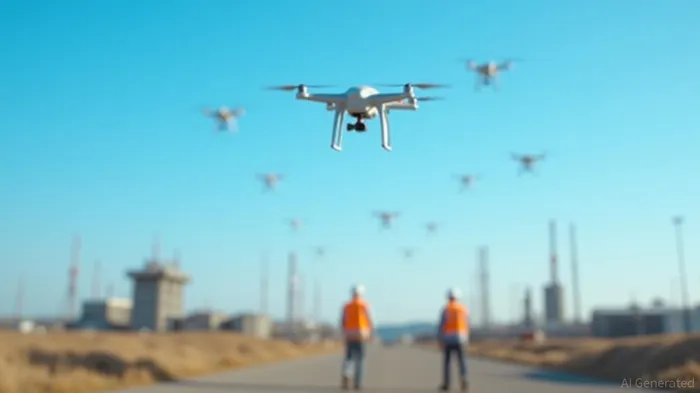
According to GlobalData, the global drone market is projected to surge from $32.2 billion in 2024 to nearly $90 billion by 2030, with commercial drones overtaking military drones as the largest segment by 2025. This growth is largely driven by the oil and gas industry, which is increasingly relying on drones for routine inspections of pipelines, offshore platforms, tanks, and flare stacks [1]. Companies such as Saudi Aramco, BP, Chevron, Shell, and TotalEnergies are expanding their drone fleets to improve safety and reduce operational costs [1].
Drones equipped with advanced sensors and AI technologies enable real-time monitoring of emissions, detect methane leaks, and assist with predictive maintenance, contributing to environmental compliance and operational efficiency [2]. These capabilities are strengthening predictive maintenance and environmental, social, and governance (ESG) compliance, making drones essential for sustainable operations [1].
However, challenges remain. Payload limitations, battery life, and varying regulatory regimes constrain the scale of drone deployments. Infrastructure for autonomous swarm operations and drone traffic management is still emerging. Additionally, concerns around airspace security and data governance present hurdles to wider adoption [1]. Despite these challenges, advancements in drone traffic management and evolving regulations allowing beyond-visual-line-of-sight flights are expected to further expand drone applications [2].
The U.S. drone market is also experiencing significant growth, with revenues increasing and production reaching new highs. The market size is projected to reach $14.55 billion by 2030, driven by growing demand across commercial sectors like agriculture, logistics, and infrastructure, as well as government and military needs [3]. This growth is attributed to favorable regulations, sustained R&D investment, and initiatives like recent executive orders to speed up domestic production.
As the oil and gas industry continues to integrate drones into its operations, these unmanned aerial vehicles are no longer niche tools but core enablers of operational resilience and sustainability. Despite the challenges, the future of drones in the oil and gas sector looks promising, with ongoing advancements in technology and regulatory frameworks expected to drive further adoption.
References:
[1] https://finance.yahoo.com/news/drones-transforming-operations-oil-gas-102945361.html
[2] https://caliber.az/en/post/global-drone-market-forecast-to-surge-to-nearly-90-billion-by-2030
[3] https://www.globenewswire.com/news-release/2025/08/28/3140811/0/en/Drone-Production-at-All-Time-High-as-U-S-Commercial-Drone-Market-Size-Forecasted-to-Reach-14-55-Billion-By-2030.html
CVX--
SHEL--
TTE--
Oil and gas companies are rapidly integrating drones into their operations for asset inspection, emissions monitoring, and logistics support, reducing the need for direct human intervention in hazardous environments. Drones are redefining safety standards while improving efficiency and cost-effectiveness. According to GlobalData, the global drone market will surge from $32.2bn in 2024 to nearly $90bn by 2030, with commercial drones overtaking military drones as the largest segment by 2025. Despite challenges, drones will continue to gain prominence as critical tools in oil and gas operations.
The oil and gas industry is undergoing a significant transformation, driven by the integration of unmanned aerial vehicles (UAVs), commonly known as drones. These agile, affordable, and technologically advanced tools are becoming indispensable for asset inspection, emissions monitoring, and logistics support, significantly enhancing safety and efficiency across the sector.According to GlobalData, the global drone market is projected to surge from $32.2 billion in 2024 to nearly $90 billion by 2030, with commercial drones overtaking military drones as the largest segment by 2025. This growth is largely driven by the oil and gas industry, which is increasingly relying on drones for routine inspections of pipelines, offshore platforms, tanks, and flare stacks [1]. Companies such as Saudi Aramco, BP, Chevron, Shell, and TotalEnergies are expanding their drone fleets to improve safety and reduce operational costs [1].
Drones equipped with advanced sensors and AI technologies enable real-time monitoring of emissions, detect methane leaks, and assist with predictive maintenance, contributing to environmental compliance and operational efficiency [2]. These capabilities are strengthening predictive maintenance and environmental, social, and governance (ESG) compliance, making drones essential for sustainable operations [1].
However, challenges remain. Payload limitations, battery life, and varying regulatory regimes constrain the scale of drone deployments. Infrastructure for autonomous swarm operations and drone traffic management is still emerging. Additionally, concerns around airspace security and data governance present hurdles to wider adoption [1]. Despite these challenges, advancements in drone traffic management and evolving regulations allowing beyond-visual-line-of-sight flights are expected to further expand drone applications [2].
The U.S. drone market is also experiencing significant growth, with revenues increasing and production reaching new highs. The market size is projected to reach $14.55 billion by 2030, driven by growing demand across commercial sectors like agriculture, logistics, and infrastructure, as well as government and military needs [3]. This growth is attributed to favorable regulations, sustained R&D investment, and initiatives like recent executive orders to speed up domestic production.
As the oil and gas industry continues to integrate drones into its operations, these unmanned aerial vehicles are no longer niche tools but core enablers of operational resilience and sustainability. Despite the challenges, the future of drones in the oil and gas sector looks promising, with ongoing advancements in technology and regulatory frameworks expected to drive further adoption.
References:
[1] https://finance.yahoo.com/news/drones-transforming-operations-oil-gas-102945361.html
[2] https://caliber.az/en/post/global-drone-market-forecast-to-surge-to-nearly-90-billion-by-2030
[3] https://www.globenewswire.com/news-release/2025/08/28/3140811/0/en/Drone-Production-at-All-Time-High-as-U-S-Commercial-Drone-Market-Size-Forecasted-to-Reach-14-55-Billion-By-2030.html


Divulgación editorial y transparencia de la IA: Ainvest News utiliza tecnología avanzada de Modelos de Lenguaje Largo (LLM) para sintetizar y analizar datos de mercado en tiempo real. Para garantizar los más altos estándares de integridad, cada artículo se somete a un riguroso proceso de verificación con participación humana.
Mientras la IA asiste en el procesamiento de datos y la redacción inicial, un miembro editorial profesional de Ainvest revisa, verifica y aprueba de forma independiente todo el contenido para garantizar su precisión y cumplimiento con los estándares editoriales de Ainvest Fintech Inc. Esta supervisión humana está diseñada para mitigar las alucinaciones de la IA y garantizar el contexto financiero.
Advertencia sobre inversiones: Este contenido se proporciona únicamente con fines informativos y no constituye asesoramiento profesional de inversión, legal o financiero. Los mercados conllevan riesgos inherentes. Se recomienda a los usuarios que realicen una investigación independiente o consulten a un asesor financiero certificado antes de tomar cualquier decisión. Ainvest Fintech Inc. se exime de toda responsabilidad por las acciones tomadas con base en esta información. ¿Encontró un error? Reportar un problema


SOBRE NOSOTROS
Nuestra historiaAutores de noticiasBase de conocimientosPolítica de privacidadTérmino de usoDescargo de responsabilidad de corretaje de tercerosTérminos de uso de AIMEDivulgaciones de riesgos de AInvest AICarrerasCONTÁCTENOS
Email: support@ainvest.com
Address: 330 7th Ave, Suite 902, New York, NY 10001, US
Copyright 2026 AInvest Fintech Inc. All rights reserved.


Comentarios
Aún no hay comentarios