
Drone Warfare Surge: The Golden Opportunity in Defense Tech
The Russia-Ukraine conflict has transformed into a high-stakes laboratory for drone warfare, with both sides deploying cutting-edge systems that are rewriting the rules of modern combat. As swarms of Iranian-made Shahed drones and Ukrainian AI-driven FPV drones clash nightly, the demand for advanced air defense systems has skyrocketed. This isn't just a battlefield arms race—it's a goldmine for investors with the foresight to back companies at the forefront of drone countermeasures and electronic warfare.
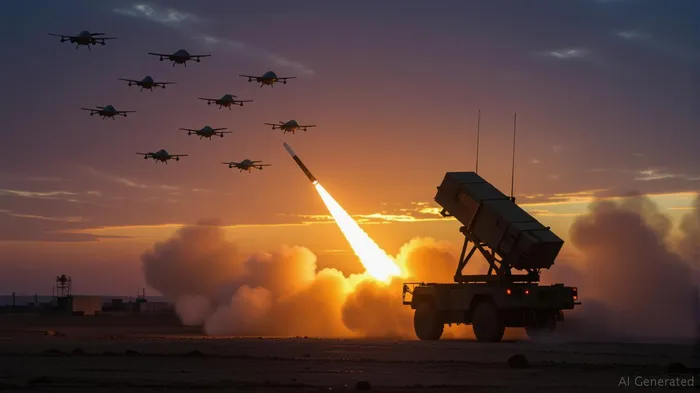
The Drone Threat: A New Paradigm in Warfare
Russia's saturation drone strikes—peaking at 728 drones in a single June 2025 attack—have exposed the vulnerability of conventional air defenses. Ukrainian forces, though deploying AI-enabled electronic warfare systems, neutralize only 60% of such swarms, leaving cities like Kostiantynivka under constant bombardment. This reality has ignited a global scramble for defenses capable of countering fiber-optic-linked drones, AI-driven swarm tactics, and hypersonic projectiles.
The $14 billion counter-drone market is now growing at 12% annually, with NATO allies and Ukraine racing to secure contracts. The U.S. alone has committed $34.3 billion in military aid to Ukraine, but production bottlenecks—like Raytheon's $68 billion Patriot missile backlog—highlight a critical opportunity for investors.
Companies Leading the Counter-Drone Revolution
- Raytheon Technologies (RTX)
- Why Invest? Raytheon's Patriot missile systems are the backbone of NATO's air defense. With production ramped up by 116% to 48.6 interceptors/month, RTXRTX-- is positioned to capitalize on a $500/year global PAC-3 MSE missile cap, creating long-term revenue stability.
Recent Win: A Pentagon contract to boost PAC-3 MSE production to 48.6/month by 2025.
DroneShield (ASX:DRS)
- Why Invest? This Australian firm's DroneSentry-C2 software and DroneGun jammer have been deployed in over 1,000 Ukrainian missions. Its $32 million Asia-Pacific contract and partnerships with U.S. agencies make it a low-risk play on the counter-drone boom.
Key Stat: DroneShield's revenue surged 300% in 2024 as European militaries upgraded defenses.
Leonardo DRS (Leonardo SpA: MLI)
Why Invest? Leonardo's Multi-Mission Hemispheric Radar, integrated with BlueHalo's directed-energy systems, offers 360° detection and NATO compatibility. Its role in the U.S. DragonFire laser program (neutralizing drones for <$10 per shot) adds a high-margin growth vector.
Elbit Systems (NASDAQ:ESLT)
- Why Invest? Elbit's SkyStriker loitering munitions and AI-driven drones are part of Ukraine's 4 million-unit/year co-production deal with the U.S. Its $80 million startup TenCore—focused on lightweight interceptors—adds cutting-edge innovation.
The Risks and the Playbook
- Geopolitical Volatility: The U.S. suspension of Patriot shipments in July 2025 and potential ceasefire talks pose risks. Monitor NATO's Ukraine Defense Contact Group (UDCG) for production updates.
- Supply Chain Bottlenecks: Semiconductor shortages and rare earth metal constraints could delay deliveries. Firms with diversified suppliers (e.g., RTX's partnership with European foundries) are safer bets.
Investment Strategy:
- Aggressive Plays: Buy RTX and ESLT for exposure to Patriot systems and AI-driven drones.
- Stable Plays: Opt for DRS and Leonardo DRS for proven counter-drone tech.
- ETFs: The SPDR S&P Aerospace & Defense ETF (XAR) offers diversified exposure to industry leaders.
The Bottom Line
The Ukraine conflict has become the proving ground for next-gen defense tech. With drone warfare now a defining feature of modern combat, companies like RTX and DRSDRS-- are not just profiting—they're shaping the future of national security. This isn't a passing trend; it's a decade-long growth cycle fueled by $500+ billion in global reconstruction and defense spending. Investors who act now could reap rewards as this battlefield tech goes mainstream.
Action Items:
1. Add RTX and DRS to your watchlist.
2. Track Leonardo's Q3 earnings for updates on radar contracts.
3. Avoid Russian equities—sanctions and battlefield losses make them high-risk.
The next phase of warfare is here. Are you ready to profit from it?





Comentarios
Aún no hay comentarios