
The Drone War's Hidden Playbook: How Semiconductors and Defense Tech Are Redefining Risk and Reward in 2025
The Ukraine-Russia conflict has evolved into a high-stakes tech battlefield, where drones and semiconductors are the new currency of war. As Ukraine’s May 21 strike on Russia’s Bolkhovsky Semiconductor Plant demonstrates, the demand for advanced electronics—and the volatility of their supply—is reshaping defense strategies, geopolitical alliances, and investment opportunities. For investors, this is no longer just about missiles and tactics: it’s about semiconductor resilience and defense innovation—two sectors primed to deliver outsized returns.
Semiconductor Volatility: The Hidden Supply Chain War
The Bolkhovsky attack, which crippled a critical supplier of semiconductor components for Russian missiles and electronic warfare systems, underscores a stark reality: modern militaries are semiconductor-dependent. These chips power everything from drone guidance systems to radar arrays, and disruptions to their supply chains can cripple entire arsenals.
Russia’s escalating drone campaigns—using Shahed-238 and Geran3 drones—rely on Chinese-sourced semiconductors for engines, guidance systems, and anti-jamming tech. But as U.S. and EU sanctions tighten, Chinese firms like ZTE and Huawei face growing scrutiny for enabling Russia’s drone war. This creates a volatile demand dynamic: Ukraine’s strikes on Russian infrastructure and Western sanctions on Chinese suppliers are forcing both sides to seek alternative chip sources.
Investment Play: Look to semiconductor firms with diversified supply chains and exposure to defense contracts. Companies like Intel (INTC) and Texas Instruments (TXN)—which supply chips for aerospace and military systems—are already seeing demand spikes.
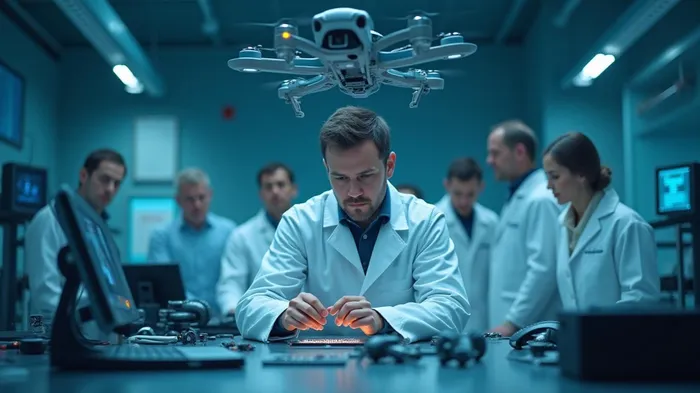
Defense Tech Innovation: The New Arms Race
While Russia relies on mass-produced drones, Ukraine is outpacing it with AI-driven countermeasures and long-range drone capabilities. Ukrainian firms like Vyriy now produce 200,000 FPV drones monthly, with 70% of components sourced domestically—a feat that signals a shift from importer to innovator. Meanwhile, the U.S. is fast-tracking high-energy laser systems (e.g., Raytheon’s DE M-SHORAD) to intercept drones, creating a $20B+ market by 2027.
The CSIS report on layered air defense systems highlights a gold mine for investors in counter-drone tech, AI targeting, and fiber-optic communication. Companies like Lockheed Martin (LMT) (missiles) and Northrop Grumman (NOC) (electronic warfare) are already scaling up production to meet NATO’s demand for drone defenses.
The Strategic Edge: Why Investors Can’t Afford to Wait
This conflict is a stress test for global tech supply chains. Every drone strike, every semiconductor shortage, and every sanction creates opportunities for investors in three key areas:
- Semiconductor Resilience: Back firms with U.S./EU manufacturing hubs and defense contracts (e.g., Intel’s $20B Ohio chip plant).
- Defense Tech Supremacy: Prioritize AI-driven countermeasures, laser systems, and long-range drones (Raytheon, Lockheed Martin).
- Geopolitical Arbitrage: Short stocks of Chinese semiconductor suppliers (e.g., SMIC) exposed to Russian ties, while long Western defense stocks.
The Bolkhovsky strike is a wake-up call: Ukraine’s targeting of Russia’s defense industrial base proves that supply chains are battlefields. Investors who act now—by allocating to semiconductor resilience and defense innovation—will capture the spoils of this tech-driven war.
Final Warning: The Clock Is Ticking
The Ukraine conflict is accelerating tech adoption at a pace unseen since WWII. As Russia’s drone saturation tactics collide with Ukraine’s AI innovations, the demand for semiconductors and defense tech will only grow more volatile—and lucrative.
Act now, or risk being left behind in the drone war’s next chapter.
The stakes are clear: semiconductors are the new oil, and defense tech is the new gold. Position your portfolio accordingly.





Comentarios
Aún no hay comentarios