
Drone Strikes on Port Sudan: A Geopolitical Crossroads for Global Supply Chains
The port city of Port Sudan, a vital artery for humanitarian aid and regional trade, has become the latest flashpoint in Sudan’s brutal civil war. On May 5, 2025, Sudan’s Rapid Support Forces (RSF)—a paramilitary group led by renegade general Abdel Fattah al-Burhan—launched a coordinated drone assault targeting the port’s infrastructure, including its container terminal, fuel depots, and electricity substation. The strikes, described by maritime security firm Ambrey as the most intense since the conflict began, have ignited fears of a deepening humanitarian crisis and destabilized global supply chains. This article examines the geopolitical, economic, and investment implications of this escalation.
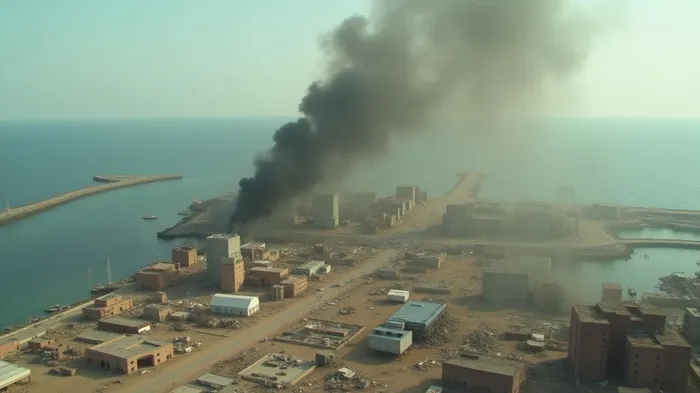
The Geopolitical Calculus
The RSF’s shift from ground assaults to drone-based tactics marks a strategic evolution in its campaign to weaken the army-aligned government. By targeting critical infrastructure—fuel depots, power stations, and ports—the RSF aims to disrupt the military’s logistical backbone while amplifying pressure on international stakeholders. The Sudanese military has blamed the UAE for supplying advanced drones to the RSF, a claim the UAE denies. This accusation underscores the broader regional rivalry between the UAE and other Gulf states, which have backed opposing factions in Sudan’s war.
The attacks also risk drawing in external powers. Port Sudan’s strategic location on the Red Sea makes it a chokepoint for global shipping routes, with over 10% of the world’s seaborne oil transiting nearby. A prolonged disruption could force ships to divert to longer routes, raising costs for energy and commodities traders.
Humanitarian Crisis Escalates
The UN has warned that the strikes could worsen what it calls the “world’s worst humanitarian crisis.” Port Sudan serves as a lifeline for aid deliveries to millions displaced by the war. The destruction of fuel depots threatens to cut off cooking gas and diesel for generators, compounding shortages that already force 22 million Sudanese to rely on emergency food aid.
The RSF’s targeting of civilian infrastructure defies international norms, raising questions about its willingness to escalate further. As Ambrey noted, the group has prioritized destabilizing military-held regions rather than securing them—a pattern that suggests the conflict could expand geographically.
Investment Risks and Opportunities
The Port Sudan attacks highlight three critical investment risks:
Supply Chain Disruptions: The port handles 85% of Sudan’s imports, including food and medicine. Even temporary closures could strain global commodity markets.
Insurance Costs: Shipping companies like Maersk (MAERSK.AS) and DHL (DHLG) face rising premiums for routes near conflict zones.
Geopolitical Contagion: The UAE’s alleged involvement could trigger sanctions or diplomatic fallout, impacting its $500 billion economy and regional investments.
Meanwhile, long-term opportunities may emerge in post-war reconstruction. Firms with expertise in infrastructure rebuilding—such as engineering conglomerates like Bechtel or Black & Veatch—could benefit once stability returns.
Conclusion: A Costly Stalemate
The Port Sudan strikes underscore the high stakes of Sudan’s war for global investors. The immediate risks—soaring insurance costs, rerouted shipping, and commodity price volatility—are already materializing. Over the long term, the conflict’s trajectory hinges on international diplomacy. A peace deal could unlock Sudan’s $40 billion GDP potential, while continued fighting risks deeper entrenchment of the RSF’s drone warfare model, which has already cost the economy 15% of its GDP since 2023.
Investors should monitor two key metrics: the UN’s monthly displacement figures (now exceeding 12 million) and the S&P Global Supply Chain Risk Index, which has surged to a five-year high. Until a resolution emerges, Port Sudan’s smoldering fuel depots serve as a stark reminder of the fragility of global systems in an era of protracted regional conflicts.
In the end, the Port Sudan incident is not just a humanitarian tragedy—it’s a geopolitical stress test for industries reliant on the Red Sea’s strategic passage. The market’s verdict will depend on whether this latest escalation marks a turning point or merely another step in Sudan’s long slide toward chaos.







Comentarios
Aún no hay comentarios