
U.S. Drone Market Restructuring and the Rise of Domestic Tech Producers
The U.S. drone market is undergoing a seismic shift as the Federal Communications Commission (FCC) and the Trump administration implement sweeping policies to curb foreign competition and bolster domestic manufacturing. These measures, framed as national security imperatives, are reshaping the industry landscape, creating both challenges and opportunities for investors. By analyzing recent regulatory actions, funding trends, and the performance of key U.S. drone manufacturers, this article outlines a compelling investment thesis for companies positioned to benefit from this strategic reorientation.
Regulatory Overhaul: A National Security-Driven Shift
The FCC's 2025 decision to add all foreign-made drones and critical components to its Covered List marks a pivotal moment in the U.S. drone sector. This move, part of the Trump administration's broader strategy to reduce reliance on foreign supply chains, effectively bans new authorizations for foreign-produced drones, including models from Chinese giants like DJI and Autel as reported by DroneLife. The policy is justified by concerns over surveillance risks, data exfiltration, and potential foreign manipulation of drone systems during high-profile events such as the 2026 World Cup and 2028 Olympics according to HackDiversity.
While critics argue the restrictions are protectionist, the administration and industry leaders emphasize their role in mitigating national security vulnerabilities. As stated by the FCC, the update to the Covered List aligns with the FY2025 National Defense Authorization Act and aims to "secure critical supply chains while promoting domestic innovation". This regulatory environment has created a vacuum in the market, which U.S. manufacturers are now poised to fill.
Strategic Tailwinds for Domestic Producers
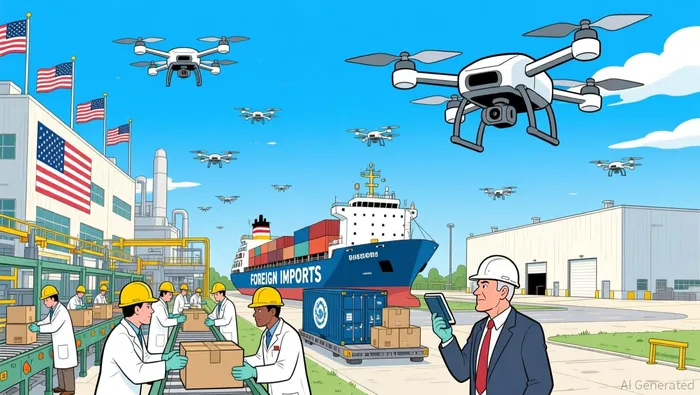 The Trump administration's Executive Order 14307 titled "Unleashing American Drone Dominance" further amplifies this shift by mandating federal agencies prioritize domestically manufactured drones. Coupled with the FCC's restrictions, the policy ensures that only U.S.-made drones can receive FCC authorization, effectively locking out foreign competitors. This has spurred a surge in government contracts and private investment for domestic startups.
Three standout beneficiaries are Anduril, Mach Industries, and Neros. Anduril, a defense-focused drone company, has raised $6.8 billion in total funding and secured contracts like the Marine Corps' Bolt-M and the Pentagon's Replicator program. Its revenue jumped from $420 million in 2023 to $1 billion in 2024. Mach Industries, founded in 2023, has leveraged its cost-effective Viper and Glide platforms to secure Pentagon development contracts and raise $197 million in funding. Neros, a startup co-founded by former teenage drone racers, has raised over $120 million, including a $75 million Series B round in 2025, and supplies its Archer drones to the U.S. Army and Marine Corps.
These companies exemplify a broader trend: early-stage startups are outpacing traditional defense contractors by offering agile, technology-driven solutions. As noted in a report by Business Insider, the administration's emphasis on unmanned warfare has created a "gold rush" for drone startups, with government spending on drone tech projected to grow significantly.
Risks and Considerations
While the policy environment is favorable, investors must weigh short-term challenges. Existing users of foreign drones-such as those in agriculture, law enforcement, and filmmaking-face higher costs and limited options as the market transitions as reported by HackDiversity. Additionally, foreign manufacturers like DJI have contested the FCC's decision, arguing it is based on "protectionism rather than evidence of security threats" according to CNN. However, the administration's focus on supply chain resilience and the long-term growth of the domestic industry suggests these challenges are temporary.
Investment Outlook
The confluence of regulatory support, government contracts, and private funding positions U.S. drone manufacturers for sustained growth. For investors, the key is to target companies with strong ties to defense programs, scalable production capabilities, and innovative technology. Anduril, Mach Industries, and Neros are prime examples, but the sector's broader potential extends to emerging players in eVTOL (electric vertical takeoff and landing) and industrial drone applications.
As the U.S. seeks to reclaim its position as a global leader in drone technology, the current restructuring presents a unique opportunity to invest in firms that align with both national security priorities and market demand. While risks exist, the strategic alignment of policy and industry growth makes this an attractive sector for long-term investors.







Comentarios
Aún no hay comentarios