
Dream Impact Trust Navigates Q1 with Mixed Results, Eyes Development Milestones
Dream Impact Trust’s first-quarter 2025 results reveal a company navigating a complex balance between near-term financial pressures and long-term ambitions. While the Trust posted a narrower net loss compared to the prior year, its progress hinges on the execution of high-profile development projects—most notably, the $647 million 49 Ontario St. venture in Toronto—and its ability to manage a looming debt maturity wall.
Financials Show Fragile Progress
The Trust reported a net loss of $3.8 million for Q1 2025, an improvement from the $5.4 million loss in Q1 2024. This narrowing gap was driven by gains in its residential portfolio, including occupancy income from Brightwater and progress on multi-family properties. However, challenges linger: commercial properties contributed less net operating income (NOI), and the absence of a prior-year gain on a passive investment sale further constrained results.
Cash reserves remain modest at $8.8 million, though the Trust’s debt-to-asset ratio of 40.4% has held steady. A critical point of focus is its debt maturity profile: $352 million of the Trust’s $274.7 million consolidated debt is due in 2025. The Trust plans to refinance or repay this through proceeds from Brightwater condo sales and Zibi land loan renewals. A successful execution here is non-negotiable, as delays could strain liquidity.
Development Projects: The Engine of Growth
The Trust’s future lies in its development pipeline, and Q1 brought key milestones:
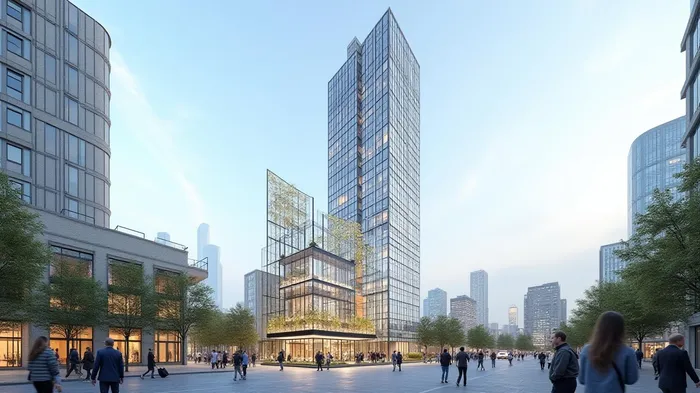
- 49 Ontario St.: The $647.6 million construction loan secured for this 1,200-unit rental project is a landmark achievement. The Trust sold a 10% stake in the project to a condominium developer, which could attract further partners and reduce its equity burden. Construction is slated to begin in Q4 2025, positioning this project as a linchpin for affordable housing in Toronto.
- Brightwater: With 74% of its 343 condominium units occupied by Q1, the Trust now eyes final closings in late 2025. An additional 36 units are expected to come online this year, boosting recurring income.
- Zibi Block 204: The sale of a 10% interest here generated $6.2 million, aiding debt reduction. Meanwhile, infrastructure debt tied to Zibi fell by $5.4 million, easing near-term repayment pressure.
Segment Performance and Risks
The Trust’s three segments—Recurring Income, Development, and Other—paint a nuanced picture:
- Recurring Income posted a $3.7 million net loss, slightly better than Q1 2024, as fair value gains offset interest expenses from lease-up phases.
- Development turned profitable with a $2.1 million net income, fueled by Brightwater’s occupancy and fair value adjustments.
- Other widened its loss to $2.2 million due to the absence of prior-year tax recoveries, though proceeds from non-core investments provided a modest buffer.
Despite these gains, risks loom large. Rising interest rates, construction delays, and softening commercial real estate markets could disrupt cash flows. The Trust also faces regulatory and economic uncertainties, including potential shifts in affordable housing policies.
Conclusion: A Tightrope Walk Toward Growth
Dream Impact Trust’s Q1 results underscore its dual identity: a company still refining its financial footing while betting heavily on transformative developments. The Trust’s ability to execute on 49 Ontario St.—a project that could generate steady rental income—and manage its 2025 debt maturities will be critical.
Investors should note that while the Trust’s debt-to-asset ratio remains manageable, its reliance on development outcomes leaves it vulnerable to execution risks. A successful condo sale at Brightwater and a timely refinancing of debt could stabilize the balance sheet, but delays or cost overruns could amplify losses.
The Trust’s focus on impact investing—emphasized in its environmental and affordable housing mandates—aligns with long-term trends, but short-term profitability remains precarious. For now, Dream Impact Trust’s story is one of cautious optimism: progress is evident, but the path to sustained growth requires flawless execution in a volatile real estate landscape.







Comentarios
Aún no hay comentarios