
The Dragon's Dilemma: Navigating China's Dual Playbook on Taiwan
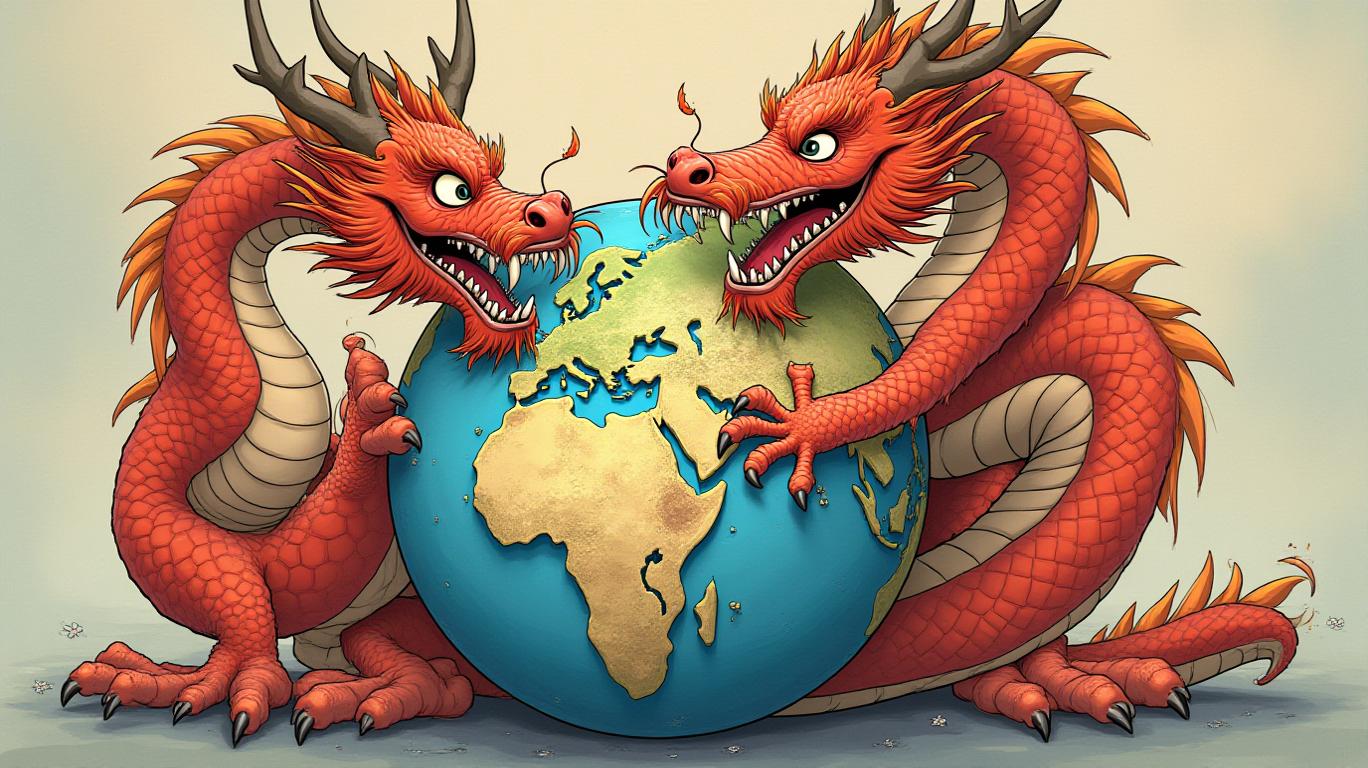
China’s approach to Taiwan since 2024 has evolved into a sophisticated dual strategy: leveraging economic incentives to entice cross-strait cooperation while simultaneously applying relentless political and military pressure to weaken Taiwan’s autonomy. A recent study by the Institute for the Study of War (ISW) and the American Enterprise Institute (AEI) reveals a meticulously coordinated playbook that investors must analyze to navigate risks and opportunities in the region. Here’s how to parse the implications for portfolios.
The Economic Charm Offensive: Leverage Through Trade and Tech
China’s economic overtures toward Taiwan are designed to exploit dependencies while masking coercive intent. Key tactics include:
- Rare Earth Dominance: China controls ~70% of global rare earth production, a critical input for semiconductors and defense systems. shows Beijing’s ability to weaponize supply chains, especially as U.S. reliance on these minerals remains near 70%.
- Tech Sector Soft Power: Taiwan’s semiconductor industry—responsible for ~92% of global advanced chip production—is a prime target. China has offered incentives for Taiwanese firms to relocate operations, while simultaneously pressuring Taiwan to join its Belt and Road Initiative (BRI).
- Trade Tariffs as a Pressure Tool: After raising tariffs on U.S. goods to 125%, China positioned itself as a “more stable” trade partner, attracting Taiwanese businesses wary of U.S. protectionism.
Investors in tech and materials sectors should monitor , as shifts in these flows could signal geopolitical realignments.
The Political Pressure Campaign: Coercion Beyond the Battlefield
While military posturing dominates headlines, China’s softer levers are equally potent:
- Espionage and Disinformation: Over 510,000 AI-generated social media posts targeting Taiwan’s governance were documented in 2024, alongside a tripling of espionage cases involving Taiwanese officials. underscores the CCP’s focus on destabilizing Taiwan’s political stability.
- Military Sabotage: China’s sabotage of Taiwan’s undersea cables (at 50x the global average) and support for Russia’s war in Ukraine (supplying 90% of its chips) reveal a strategy to weaken Taiwan’s infrastructure and U.S. alliances.
- Legal Warfare: Beijing’s prosecution of Taiwanese individuals for “secessionist acts” and its expansion of coast guard incursions into Taiwan’s waters aim to erode international recognition of Taiwan’s autonomy.
Investment Implications: Risks and Opportunities
- Supply Chain Vulnerabilities:
- Risk: Companies reliant on Taiwanese semiconductors or Chinese rare earths face disruption if cross-strait tensions escalate.
Play: Diversify suppliers (e.g., U.S.-based chip manufacturers like Intel or ASML) and invest in rare earth exploration in Africa or Australia.
Geopolitical Arbitrage:
- Opportunity: Firms positioned to benefit from U.S.-Taiwan defense collaboration (e.g., Lockheed Martin’s F-35 sales to Taiwan) or cybersecurity providers (e.g., Palo Alto Networks) may see demand surge as Taiwan bolsters defenses.
Watch: has risen to 2.3%, signaling long-term growth in defense tech.
Tech Sector Caution:
- Avoid Taiwanese firms with significant exposure to China’s BRI, as their operations could be weaponized in a crisis. Instead, focus on Taiwanese companies with U.S. partnerships (e.g., TSMC’s Arizona fab).
Conclusion: A Delicate Balance of Power
China’s dual strategy toward Taiwan is a high-stakes game of carrots and sticks, with profound implications for global investors. While economic incentives create opportunities for cross-strait collaboration, the shadow of political coercion looms large. Key data points—such as Taiwan’s semiconductor exports (92% global share), China’s rare earth dominance (70% of global supply), and the tripling of espionage cases—highlight both the stakes and the asymmetry of power.
For portfolios, the path forward requires three pillars:
1. Diversification: Reduce reliance on single-supplier chains.
2. Geopolitical Awareness: Track , which have surged from 120 to over 600 incidents annually.
3. Resilience: Invest in sectors insulated from cross-strait volatility, such as renewable energy (China’s solar dominance) or AI-driven cybersecurity.
The Dragon’s Dilemma is far from resolved, but investors who blend vigilance with strategic foresight can turn geopolitical turbulence into profit.
Data sources: ISW/AEI China-Taiwan Weekly Update, Taiwan National Security Bureau reports, and World Bank trade statistics.







Comentarios
Aún no hay comentarios