
DR Congo's Monetary Policy Stasis and Its Implications for Emerging Market Investors
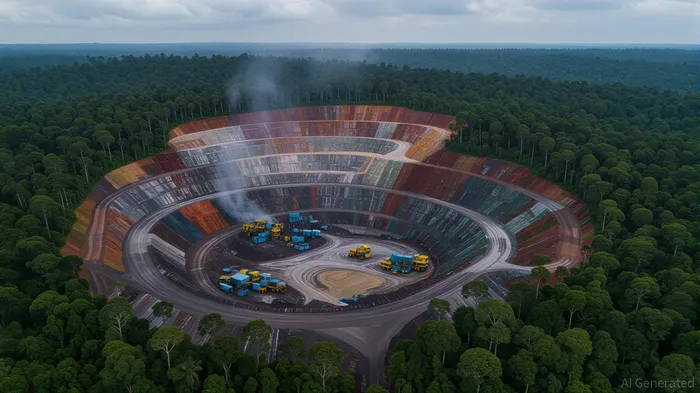
For emerging market investors, the Democratic Republic of the Congo (DRC) has long been a paradox: a nation sitting atop a third of the world's cobalt reserves and 15% of global copper deposits, yet mired in political instability, currency volatility, and a fragile regulatory framework. In 2025, the Central Bank of the DRC (BCC) has maintained its policy rate at 25%, a decision that reflects both the country's unique macroeconomic challenges and its potential as a high-risk, high-reward investment opportunity.
The 25% Policy Rate: A Double-Edged Sword
The BCC's decision to keep the policy rate at 25% since 2023 is a stark contrast to the more moderate rates of its African peers. This rate, the highest in sub-Saharan Africa, aims to curb inflation, stabilize the Congolese franc (CDF), and deter speculative capital flows. Inflation has indeed cooled from a peak of 24.89% in December 2023 to 10.5% in April 2025, but the high rate has come at a cost. High borrowing costs have stifled private sector investment, while the CDF's managed float regime—designed to limit depreciation—has drawn criticism for creating artificial stability.
The BCC's approach also underscores its broader de-dollarization strategy. By mandating that electronic payment terminals (EPTs) operate exclusively in CDF since mid-2024, the bank aims to reduce reliance on the U.S. dollar, which currently dominates daily transactions. While this could strengthen the CDF's role in the long term, it risks alienating foreign investors who prefer dollar-denominated assets for hedging purposes.
Commodities: A Sector in Transition
The DRC's extractive industries remain its economic lifeline. Cobalt, which accounts for 71.4% of global production, is a case study in volatility. In early 2024, the government imposed a four-month export ban on cobalt hydroxide, a move that initially boosted prices by over 100% but led to stockpiling and reduced tax revenues. Now, the government is pivoting to a quota system by June 2025, a strategy that could stabilize supply chains while maintaining price premiums.
For investors, the transition from an export ban to quotas presents a mixed bag. On one hand, the DRC's dominance in cobalt—critical for electric vehicle (EV) batteries—positions it as a strategic player in the green energy transition. On the other, the quota system's enforceability is uncertain. History shows that similar controls in the DRC often fail due to corruption and weak governance. However, if implemented transparently, quotas could create a pricing floor, benefiting domestic miners and sovereign revenues.
Sovereign Debt: A Low-Debt, High-Risk Proposition
The DRC's public debt-to-GDP ratio is projected to fall to 16% in 2025, a historically low level by African standards. This suggests room for fiscal expansion, particularly in infrastructure and social programs. However, the country's “B-/B” credit rating from international agencies reflects deep-seated concerns about governance, corruption, and security.
Investing in DRC sovereign debt carries significant risks. The government's ability to service its debt depends heavily on commodity prices and foreign aid, both of which are volatile. Yet, for investors with a long-term horizon, the low debt burden and growing demand for cobalt and copper could justify the risks. The key question is whether the DRC can leverage its mineral wealth to fund sustainable development rather than exacerbate inequality and conflict.
Strategic Opportunities and Cautionary Signals
For emerging market investors, the DRC's policy stasis offers two primary angles:
Commodities as a Growth Engine: The quota system for cobalt, if successful, could create a pricing floor that benefits miners and sovereign revenues. Investors in companies like CMOC Group or Glencore, which operate in the DRC, may see upside if the quota system stabilizes supply chains. However, political risks—including potential legal challenges to the quotas—remain high.
Sovereign Debt as a Speculative Bet: While the DRC's low debt-to-GDP ratio is attractive, its creditworthiness is undermined by weak institutions and security challenges. A ratings upgrade would require concrete steps to address corruption, improve governance, and stabilize the CDF. Until then, sovereign debt remains a high-risk asset.
Conclusion: Navigating the DRC's High-Stakes Environment
The DRC's 25% policy rate is a testament to the BCC's commitment to macroeconomic stability, but it also highlights the country's structural weaknesses. For investors, the DRC represents a high-stakes proposition: a chance to capitalize on the green energy transition while navigating a complex web of political, economic, and security risks.
A cautious approach is warranted. Diversification across sectors—such as pairing cobalt-related equities with hedged currency positions—could mitigate some risks. Additionally, investors should monitor the quota system's implementation and the DRC's progress on governance reforms.
In the end, the DRC's potential is undeniable. But as with any high-yield emerging market bet, success hinges on timing, resilience, and a willingness to tolerate volatility. For those who can stomach the risks, the rewards may well be worth the wait.







Comentarios
Aún no hay comentarios