
DP World's Strategic Expansion in Emerging Markets: Unlocking Long-Term Value Through Global Trade Infrastructure
DP World's aggressive expansion into emerging markets represents a masterclass in aligning infrastructure development with global trade dynamics to unlock long-term value. By investing $2.5 billion annually in strategic projects across India, Africa, and South America, the company is not only addressing immediate supply chain bottlenecks but also positioning itself to capitalize on the projected 65% contribution of emerging markets to global economic growth by 2035, according to an S&P Global report. This analysis examines how DP World's infrastructure investments, coupled with its focus on sustainability and digital integration, create a resilient platform for value creation.
Strategic Infrastructure: Bridging Trade Gaps in Underserved Markets
DP World's projects in emerging markets are designed to transform regional trade ecosystems. In India, the $510 million Tuna Tekra terminal in Gujarat, with a 2.19 million TEU annual capacity, is a cornerstone of the country's push to become a global export hub. By connecting India's industrial hinterland to global markets, this terminal addresses the critical need for inland logistics solutions, reducing pressure on coastal ports and accelerating last-mile delivery, as reported in a Maritime Gateway report. Similarly, in Senegal, the $830 million Ndayane Port-projected to handle 1.2 million TEUs annually-will serve as a maritime gateway for West Africa, potentially boosting regional trade by $15 billion by 2035, according to an Atlas-IMS analysis.
Inland corridors and multimodal terminals are equally transformative. DP World's Banana Port in the Democratic Republic of Congo (DRC), with a 450,000 TEU capacity, is set to attract larger vessels from Asia and Europe, reducing logistics costs and transit times for landlocked African nations, as noted by Ecofin Agency. These projects exemplify DP World's ability to create "trade enablers" that unlock economic potential in underserved regions while securing long-term revenue streams through port fees and logistics services.
Financial Resilience and Long-Term Value Creation
DP World's financial performance underscores the viability of its expansion strategy. In 2024, the company reported a 9.7% revenue increase to $20 billion, driven by its ports and terminals segment, while adjusted EBITDA rose 6.7% to $5.5 billion, according to a Container News report. Despite a 2% decline in net profit due to higher finance costs, the Container News report also noted that the company's net leverage ratio improved to 3.4x, reflecting disciplined capital management.
The $2.5 billion 2025 capex budget, allocated to projects like the London Gateway expansion and Tuna Tekra, is a testament to DP World's confidence in its emerging market strategy. While specific ROI or NPV metrics for individual projects remain undisclosed, the company's broader financial trajectory-supported by its 42% decarbonization target by 2030 and AI-driven operational efficiencies-signals a commitment to sustainable, high-margin growth, as highlighted in Transport & Logistics ME. Analysts project that DP World's integrated supply chain solutions and focus on high-growth corridors will drive EBITDA margins above 25% over the next decade, according to Procurement Mag.
Sustainability as a Competitive Advantage
DP World's integration of sustainability into its infrastructure projects further enhances long-term value. Carbon-conscious designs, renewable energy adoption, and electrified equipment are now standard across new developments, aligning with global decarbonization trends and reducing regulatory risks. The Atlas-IMS analysis referenced above also highlights sustainability components in projects like Ndayane, which is expected to attract green industrial investments near Blaise Diagne International Airport and create a virtuous cycle of trade and environmental stewardship. For corporate disclosures, DP World has expanded its Sustainable Development Impact Disclosure (SDID), as described in a DP World press release.
The company's SDID filings in countries like Brazil and South Africa also highlight its alignment with the UN's Sustainable Development Goals (SDGs). In Brazil, a joint venture with Rumo to develop a 12.5 million-ton grain terminal in Santos exemplifies how DP World leverages local partnerships to address food security while securing long-term cargo volumes, as reported by Logistics Manager.
Conclusion: A Blueprint for Future-Proofing Global Trade
DP World's expansion into emerging markets is more than a capital play-it is a strategic reimagining of global trade infrastructure. By investing in high-impact projects that address regional trade deficits, integrating sustainability, and leveraging digital tools for efficiency, the company is building a logistics network that is both resilient and scalable. For investors, the combination of DP World's financial discipline, strategic foresight, and alignment with macroeconomic trends in emerging markets presents a compelling case for long-term value creation.
As global supply chains continue to shift toward diversification and sustainability, DP World's infrastructure-first approach ensures it remains at the forefront of this transformation. The company's ability to convert physical assets into economic catalysts-while navigating geopolitical and environmental challenges-positions it as a key player in shaping the next era of global trade.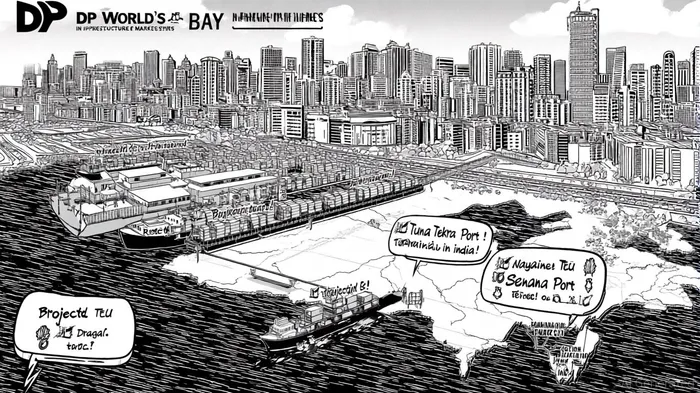







Comentarios
Aún no hay comentarios