
The Downside Risks of USDT and the Case for Alternatives in a Volatile Crypto Landscape
The Risks of USDT: A Stablecoin in Turbulent Waters
Tether's USDT has long been a cornerstone of crypto markets, but its dominance is increasingly precarious. According to a report by , S&P Global Ratings downgraded USDT to its lowest possible score of "5 (weak)" in 2025, citing a shift in Tether's reserve composition toward higher-risk assets like BitcoinBTC-- and gold. This move raised red flags about liquidity and creditworthiness, especially as the U.S. GENIUS Act-signed into law in July 2025-now prohibits stablecoins from using illiquid assets like gold as collateral.
The European Central Bank (ECB) has echoed these concerns, warning that stablecoins like USDT could pose systemic risks through de-pegging events triggered by a loss of investor confidence. While USDT has maintained a near-$1 peg so far, the underlying fragility of its reserves is evident. Tether's reliance on periodic ISAE 3000 attestation reports, rather than full financial audits, has left room for skepticism. As regulatory frameworks tighten, the gap between Tether's claims and compliance realities is likely to widen.
The Regulatory Tightrope: USDT's Struggle to Adapt
The U.S. GENIUS Act has rewritten the rules for stablecoins, mandating 100% reserve backing with liquid assets like U.S. dollars or short-term Treasuries. This legislation also requires monthly public disclosures of reserve composition and imposes strict marketing rules to prevent misleading claims about government backing. For USDT, this means a fundamental overhaul of its reserve strategy. Tether's recent announcement of a U.S.-compliant stablecoin, USAT, signals its attempt to navigate these regulations, but the transition period remains fraught with uncertainty.
Meanwhile, the SEC and CFTC are accelerating their efforts to clarify the regulatory landscape. The SEC's approval of generic listing standards for commodity-based trust shares in September 2025 and the CFTC's push for spot trading on Designated Contract Markets underscore a broader trend: regulators are prioritizing transparency and investor protection. USDT's historical opacity puts it at a disadvantage in this new environment.
The Case for Alternatives: Safer Stablecoin Options in 2025
As USDT's risks crystallize, investors are turning to alternatives that align with the new regulatory paradigm. Among these, USD Coin (USDC) stands out as a paragon of transparency and compliance. Backed 1:1 by cash and short-term U.S. Treasuries, USDCUSDC-- undergoes monthly independent audits and has achieved full compliance with the EU's Markets in Crypto-Assets (MiCA) regulation. Its institutional-grade credibility makes it a preferred choice for both retail and institutional users.
PayPal USD (PYUSD) is another compelling option. Backed by U.S. dollar deposits and short-term Treasury securities, PYUSD leverages PayPal's global financial infrastructure to offer a seamless bridge between traditional finance and blockchain. Its recent expansion into nearly 10 networks via LayerZero's Stargate Hydra bridge further enhances its utility in decentralized finance (DeFi) ecosystems.
For those prioritizing decentralization, Dai (DAI) remains a resilient option. Over-collateralized by a diversified portfolio of crypto assets, DAIDAI-- has demonstrated stability during market stress. However, its reliance on volatile collateral introduces inherent risks, making it better suited for DeFi use cases than as a general-purpose stablecoin. According to a recent analysis, DAI's performance during market downturns has been consistent. 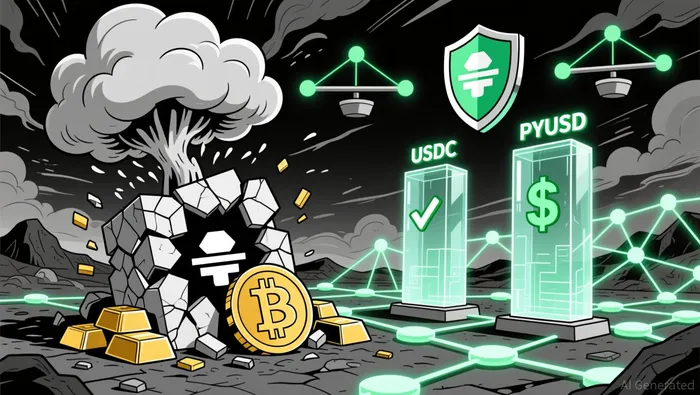
TrueUSD (TUSD), once a strong contender, now faces liquidity challenges. Legal issues, including a Dubai court freezing $456M of TUSD assets and delistings on major exchanges like Binance and CoinbaseCOIN--, have eroded confidence. While TUSDTUSD-- maintains a presence on 12+ blockchains, its 24-hour trading volume has plummeted to $15.68M from over $1B in 2023, signaling a decline in market trust.
Liquidity and Market Dynamics: Q3–Q4 2025 Trends
The liquidity landscape for stablecoins in late 2025 reveals a shifting power dynamic. USDC's market cap grew to $73.4 billion by Q3 2025, but its dominance in trading volumes slipped to 10.5% as USDT reclaimed the lead in decentralized exchange (DEX) activity. PYUSD, however, saw its transaction volume triple in Q3, driven by its integration into DeFi protocols like SparkSPK--. DAI's share of stablecoin volumes dropped to 2% in Q3, reflecting its niche appeal in DeFi. TUSD's liquidity struggles were stark, with its price trading at $0.9961-a slight de-peg-and its 24-hour volume dwindling to a fraction of its 2023 levels. These trends highlight the growing preference for stablecoins that balance transparency, compliance, and liquidity.
Conclusion: Navigating the New Stablecoin Era
The risks associated with USDT-opaque reserves, regulatory misalignment, and liquidity vulnerabilities-underscore the need for a more robust approach to stablecoin selection. As the GENIUS Act and MiCA reshape the industry, investors must prioritize assets that offer full reserve transparency, regulatory compliance, and institutional-grade liquidity.
While USDT may retain its market share for now, the writing is on the wall: the future belongs to stablecoins like USDC and PYUSD, which are built to thrive in a post-2025 regulatory environment. For those seeking decentralization, DAI remains a viable option, but its inherent volatility demands caution. In a crypto landscape marked by volatility and uncertainty, the path to stability lies in choosing stablecoins that align with both market realities and regulatory expectations.





Comentarios
Aún no hay comentarios