
Dow Inc. Securities Fraud Lawsuit: Corporate Governance Risks and Investor Strategy in a Post-Scandal Era
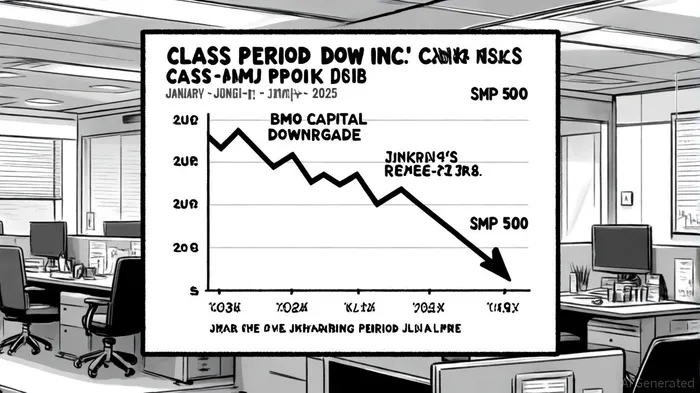
The securities fraud lawsuit Sarti v. Dow Inc. (No. 25-cv-12744, E.D. Mich.) has thrust the chemical giant into the spotlight, exposing vulnerabilities in its corporate governance and raising urgent questions for investors. Filed in August 2025, the case alleges that Dow Inc.DOW-- and its executives misled shareholders about the company's ability to navigate macroeconomic and tariff-related challenges, while concealing the severity of declining sales and competitive pressures, as detailed in the Robbins Geller notice. The fallout-significant stock price declines, a 50% dividend cut, and a Fitch downgrade to 'BBB'-underscores the interplay between governance failures and shareholder value erosion. For investors, the case serves as a cautionary tale about the risks of overreliance on executive assurances and the need to scrutinize board oversight mechanisms.
Corporate Governance: A Double-Edged Sword
Dow Inc. has long touted its commitment to robust corporate governance, including an independent lead director (Richard K. Davis) and a board focused on ESG integration on its corporate governance page. However, the lawsuit suggests that these structures failed to prevent material misstatements. According to the complaint, Dow executives overstated the company's financial flexibility and downplayed risks such as global oversupply and tariff uncertainties, a point raised in the Robbins Geller notice. This disconnect between governance rhetoric and operational reality raises concerns about board accountability. For instance, the July 2025 earnings report revealed a non-GAAP loss of $0.42 per share-far worse than analyst expectations-and a 7.43% year-over-year revenue decline, according to a CSIMarket report. Such outcomes imply that the board's risk management frameworks may have been insufficient to address external shocks.
The case also highlights the limitations of "qualified" governance structures. While Dow's board is diverse and experienced, its independence appears to have been compromised during the class period. The re-election of Richard Davis as lead director in 2025, for example, ensured continuity but may have reduced incentives to challenge management's optimistic projections, as described on the corporate governance page. As noted by the Harvard Law blog, boards must balance strategic oversight with the ability to question executive decisions-a balance Dow seems to have missed.
Investor Implications: Navigating Legal and Market Risks
For shareholders, the lawsuit underscores the importance of diversifying legal and financial strategies. The lead plaintiff deadline of October 28, 2025, creates a critical window for investors to assert their interests, per the Robbins Geller notice. Those who purchased Dow stock between January 30 and July 23, 2025, should evaluate whether to join the class action or seek individual redress. However, participation in litigation carries its own risks, including prolonged uncertainty and potential dilution of recovery if the case proceeds to trial.
Beyond legal considerations, investors must reassess Dow's long-term viability. The company's market share dropped from 5.44% to 5.05% in Q2 2025, signaling competitive vulnerabilities, as reported by CSIMarket. Meanwhile, Sustainalytics' ESG rating flagged "moderate controversy" related to Dow's operations, complicating its appeal to socially responsible investors; Fitch's downgrade to 'BBB' further pressures access to capital. These factors suggest that even if the lawsuit is resolved favorably, Dow's reputation-and its ability to attract capital-may face lasting damage.
Strategic Recommendations for Investors
- Engage in Active Ownership: Investors should push for enhanced board independence and stricter internal controls. Proxy voting can be leveraged to advocate for reforms, such as term limits for directors or mandatory ESG risk audits.
- Diversify Exposure: Given the lawsuit's focus on macroeconomic and tariff risks, investors might reduce concentrated bets on cyclical industries like chemicals. Rebalancing portfolios to include sectors with more predictable cash flows could mitigate similar governance-related shocks.
- Monitor Credit and ESG Metrics: Fitch's downgrade to 'BBB' and Sustainalytics' moderate controversy rating highlight the need to track non-financial indicators. Credit spreads and ESG scores can serve as early warning signals for governance lapses.
Conclusion
The Sarti v. Dow Inc. case is a microcosm of broader challenges in modern corporate governance. While Dow's board structure appears sound on paper, the lawsuit reveals gaps in execution-particularly in risk transparency and executive accountability. For investors, the lesson is clear: governance frameworks must be rigorously tested against real-world pressures. As the legal process unfolds, shareholders must remain vigilant, balancing short-term legal strategies with long-term portfolio resilience.





Comentarios
Aún no hay comentarios