
The Dow's Record Ascent: Weighing the Risks of AI Overbuilding and Energy Constraints
The DowDOW-- Jones Industrial Average closed Q3 2025 near record highs, buoyed by a surge in AI-driven innovation and a Federal Reserve pivot toward rate cuts. Yet beneath the surface, the market's ascent masks growing tensions between the explosive growth of AI infrastructure and the fragility of energy markets. As investors grapple with sector rotation dynamics, the interplay of these forces-alongside macroeconomic headwinds-raises critical questions about the sustainability of the current trajectory.
Sector Rotation: AI's Boom vs. Energy's Strain
The Technology sector emerged as the star of Q3 2025, with AI-related capital expenditures extending into 2026 and unprofitable tech firms outperforming their profitable peers by a wide margin. This "AI arms race" has fueled earnings growth for companies at the forefront of the AI ecosystem, including semiconductors and cloud infrastructure providers. However, the frenzy has sparked concerns about speculative bubbles, as valuations for unprofitable firms now trade at premiums not seen since the dot-com era.
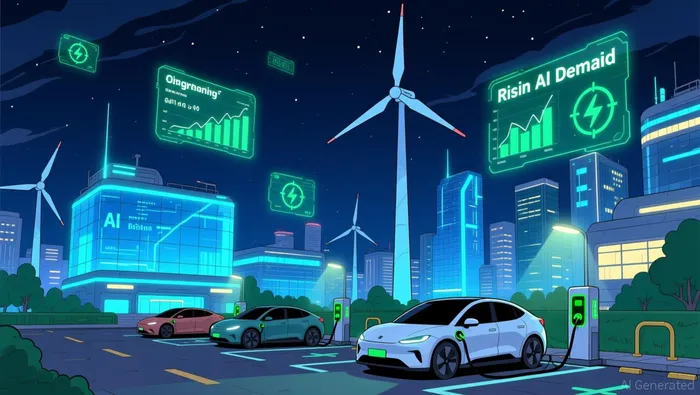
In contrast, the Energy sector faced headwinds, with Q4 2025 earnings projected to decline year-over-year despite a minor offset from seasonal heating oil demand. This divergence highlights the uneven impact of macroeconomic conditions: while AI-driven demand for computing power accelerates, energy markets struggle to balance surging demand with supply constraints. The energy-AI nexus has become a critical focal point, as data centers-already accounting for 1.5% of global electricity consumption in 2024-are projected to consume 945 terawatt-hours (TWh) by 2030.
Macroeconomic Headwinds: Inflation, Growth, and Policy Shifts
Q3 2025 saw the U.S. economy grow at a 1.9% annualized rate, down from 3.8% in Q2, while core inflation remained stubbornly at 3.0% year-over-year. The Federal Reserve responded to a cooling labor market by cutting rates by 25 basis points in September, lowering the target range to 4.00%–4.25%. This accommodative stance has supported equity markets but also heightened scrutiny of AI-driven spending, which now accounts for $1.5 trillion globally in 2025 and is expected to exceed $2 trillion by 2026.
The energy sector's 6.2% gain in Q3 2025-driven by moderating inflation and rate-cut expectations-masked underlying vulnerabilities. Sectors reliant on energy inputs, such as manufacturing and airlines, faced rising costs, while energy companies like ExxonMobilXOM-- and ChevronCVX-- benefited from higher crude prices. Meanwhile, the Data Center sector's growth has been tempered by grid modernization challenges, with U.S. data center electricity demand projected to triple by 2028.
Risks of AI Overbuilding and Energy Constraints
The AI investment boom, while transformative, carries significant risks. Global data center electricity demand could reach over 2,200 TWh by 2030, straining grid capacity and sustainability goals. In the U.S., reliance on natural gas to balance renewable energy shortfalls has pushed prices toward $4–$5/MMBtu by the late 2020s, with delays in infrastructure development posing upward risks. These pressures could exacerbate energy price volatility, particularly as AI-driven demand outpaces the pace of renewable energy adoption.
Moreover, the energy-AI nexus has geopolitical implications. Countries with secure, affordable energy supplies are poised to dominate the AI race, while those lacking infrastructure may face exclusion from the next phase of technological growth. This dynamic underscores the need for integrated strategies addressing energy, water, and material constraints-a challenge that could test the resilience of global markets.
Conclusion: Balancing Innovation and Sustainability
The Dow's record ascent reflects the market's optimism about AI's potential, but investors must weigh this against the risks of overbuilding and energy bottlenecks. While the Fed's rate cuts and accommodative policies have provided a tailwind for equities, the long-term sustainability of AI-driven growth hinges on resolving energy supply constraints and avoiding speculative excess. For now, sector rotation appears to favor technology at the expense of energy, but the interplay of macroeconomic forces and infrastructure challenges suggests a more nuanced approach is warranted.





Comentarios
Aún no hay comentarios