
Dow Jumps Over 500 Points As Trump Takes Office: Investor Sentiment Improves, But Greed Index Remains In 'Fear' Zone
Generado por agente de IATheodore Quinn
miércoles, 22 de enero de 2025, 3:12 am ET2 min de lectura
BAC--
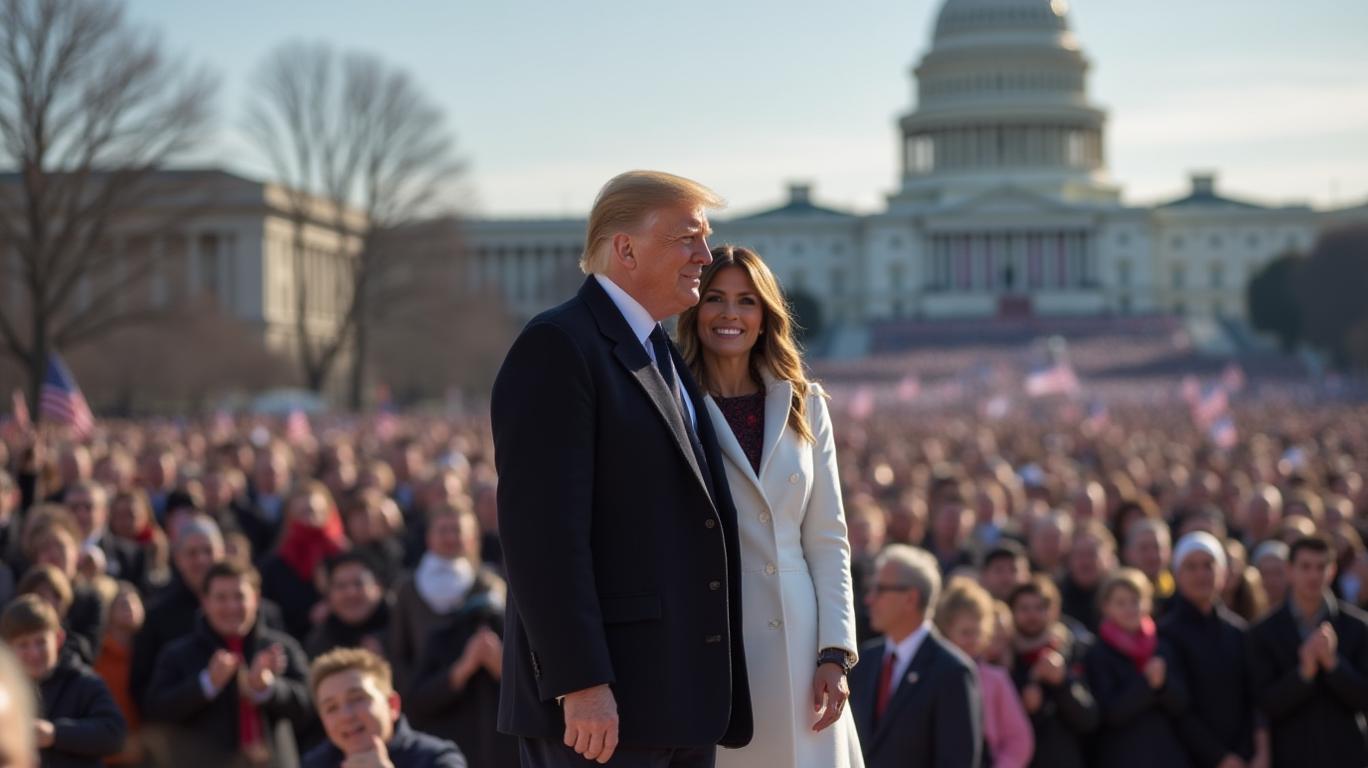
The Dow Jones Industrial Average (DJIA) surged by over 500 points on Tuesday, January 22, as President Donald Trump began his second term in office. The strong rally was led by the Dow Jones and Smallcap names, with the S&P 500 gauge up almost 1% (Source: 2025-01-22). Investor sentiment improved, but the Fear and Greed Index remained in the 'Fear' zone, indicating a cautious market outlook.
Several factors contributed to the market's positive response to Trump's inauguration:
1. Investment push in artificial intelligence: Trump announced a new investment push in artificial intelligence led by Softbank Group Corp., OpenAI LLC, and Oracle Corp. (Source: 2025-01-22). This initiative boosted investor confidence in tech shares, contributing to the market's positive reaction.
2. Executive orders: Trump's flurry of executive orders, including those focused on space shares and reducing regulations, also helped boost the market (Source: 2025-01-22).
3. Absence of tariffs on China: Despite Trump's protectionist stance during his campaign, he has yet to impose tariffs on China, which has relieved investors and contributed to the market's positive response (Source: 2025-01-22).
4. Historical precedent: The market's initial reaction to Trump's inauguration aligns with historical patterns, as stocks tend to rise during the first few days of a new presidential term (Source: "The Most (and Least) Effective US Presidents, According to Historians").
However, the Fear and Greed Index remained in the 'Fear' zone, indicating that investors are still cautious about the potential economic consequences of Trump's protectionist measures, such as tariffs on steel and aluminum and the trade conflict with China over intellectual property. These measures have been identified as the biggest tail risk 20 times from March 2018 to December 2019 in the Bank of America/Merrill Lynch monthly fund manager survey. Despite the signing of a Phase One trade agreement between the U.S. and China in January 2020, most tariffs remain in place, and trade tensions persist.
Market participants are balancing optimism about potential economic growth under Trump's leadership with concerns about trade tensions and geopolitical risks. On one hand, investors are optimistic about Trump's pro-growth policies, such as tax cuts and deregulation, which have contributed to the strong rally in U.S. markets since his election. On the other hand, investors are concerned about the potential economic consequences of Trump's protectionist measures, such as tariffs on steel and aluminum and the trade conflict with China over intellectual property. These measures have been identified as the biggest tail risk 20 times from March 2018 to December 2019 in the Bank of America/Merrill Lynch monthly fund manager survey. Despite the signing of a Phase One trade agreement between the U.S. and China in January 2020, most tariffs remain in place, and trade tensions persist.
In conclusion, the Dow Jones Industrial Average surged by over 500 points on Tuesday, January 22, as President Donald Trump began his second term in office. Investor sentiment improved, but the Fear and Greed Index remained in the 'Fear' zone, indicating a cautious market outlook. Market participants are balancing optimism about potential economic growth under Trump's leadership with concerns about trade tensions and geopolitical risks.
ORCL--
The Dow Jones Industrial Average (DJIA) surged by over 500 points on Tuesday, January 22, as President Donald Trump began his second term in office. The strong rally was led by the Dow Jones and Smallcap names, with the S&P 500 gauge up almost 1% (Source: 2025-01-22). Investor sentiment improved, but the Fear and Greed Index remained in the 'Fear' zone, indicating a cautious market outlook.
Several factors contributed to the market's positive response to Trump's inauguration:
1. Investment push in artificial intelligence: Trump announced a new investment push in artificial intelligence led by Softbank Group Corp., OpenAI LLC, and Oracle Corp. (Source: 2025-01-22). This initiative boosted investor confidence in tech shares, contributing to the market's positive reaction.
2. Executive orders: Trump's flurry of executive orders, including those focused on space shares and reducing regulations, also helped boost the market (Source: 2025-01-22).
3. Absence of tariffs on China: Despite Trump's protectionist stance during his campaign, he has yet to impose tariffs on China, which has relieved investors and contributed to the market's positive response (Source: 2025-01-22).
4. Historical precedent: The market's initial reaction to Trump's inauguration aligns with historical patterns, as stocks tend to rise during the first few days of a new presidential term (Source: "The Most (and Least) Effective US Presidents, According to Historians").
However, the Fear and Greed Index remained in the 'Fear' zone, indicating that investors are still cautious about the potential economic consequences of Trump's protectionist measures, such as tariffs on steel and aluminum and the trade conflict with China over intellectual property. These measures have been identified as the biggest tail risk 20 times from March 2018 to December 2019 in the Bank of America/Merrill Lynch monthly fund manager survey. Despite the signing of a Phase One trade agreement between the U.S. and China in January 2020, most tariffs remain in place, and trade tensions persist.
Market participants are balancing optimism about potential economic growth under Trump's leadership with concerns about trade tensions and geopolitical risks. On one hand, investors are optimistic about Trump's pro-growth policies, such as tax cuts and deregulation, which have contributed to the strong rally in U.S. markets since his election. On the other hand, investors are concerned about the potential economic consequences of Trump's protectionist measures, such as tariffs on steel and aluminum and the trade conflict with China over intellectual property. These measures have been identified as the biggest tail risk 20 times from March 2018 to December 2019 in the Bank of America/Merrill Lynch monthly fund manager survey. Despite the signing of a Phase One trade agreement between the U.S. and China in January 2020, most tariffs remain in place, and trade tensions persist.
In conclusion, the Dow Jones Industrial Average surged by over 500 points on Tuesday, January 22, as President Donald Trump began his second term in office. Investor sentiment improved, but the Fear and Greed Index remained in the 'Fear' zone, indicating a cautious market outlook. Market participants are balancing optimism about potential economic growth under Trump's leadership with concerns about trade tensions and geopolitical risks.

Divulgación editorial y transparencia de la IA: Ainvest News utiliza tecnología avanzada de Modelos de Lenguaje Largo (LLM) para sintetizar y analizar datos de mercado en tiempo real. Para garantizar los más altos estándares de integridad, cada artículo se somete a un riguroso proceso de verificación con participación humana.
Mientras la IA asiste en el procesamiento de datos y la redacción inicial, un miembro editorial profesional de Ainvest revisa, verifica y aprueba de forma independiente todo el contenido para garantizar su precisión y cumplimiento con los estándares editoriales de Ainvest Fintech Inc. Esta supervisión humana está diseñada para mitigar las alucinaciones de la IA y garantizar el contexto financiero.
Advertencia sobre inversiones: Este contenido se proporciona únicamente con fines informativos y no constituye asesoramiento profesional de inversión, legal o financiero. Los mercados conllevan riesgos inherentes. Se recomienda a los usuarios que realicen una investigación independiente o consulten a un asesor financiero certificado antes de tomar cualquier decisión. Ainvest Fintech Inc. se exime de toda responsabilidad por las acciones tomadas con base en esta información. ¿Encontró un error? Reportar un problema


SOBRE NOSOTROS
Nuestra historiaAutores de noticiasBase de conocimientosPolítica de privacidadTérmino de usoDescargo de responsabilidad de corretaje de tercerosTérminos de uso de AIMEDivulgaciones de riesgos de AInvest AICarrerasCONTÁCTENOS
Email: support@ainvest.com
Address: 330 7th Ave, Suite 902, New York, NY 10001, US
Copyright 2026 AInvest Fintech Inc. All rights reserved.


Comentarios
Aún no hay comentarios