
Dow Jones Surges 2.73% as Trump's Criticism of Powell Fuels Market Volatility
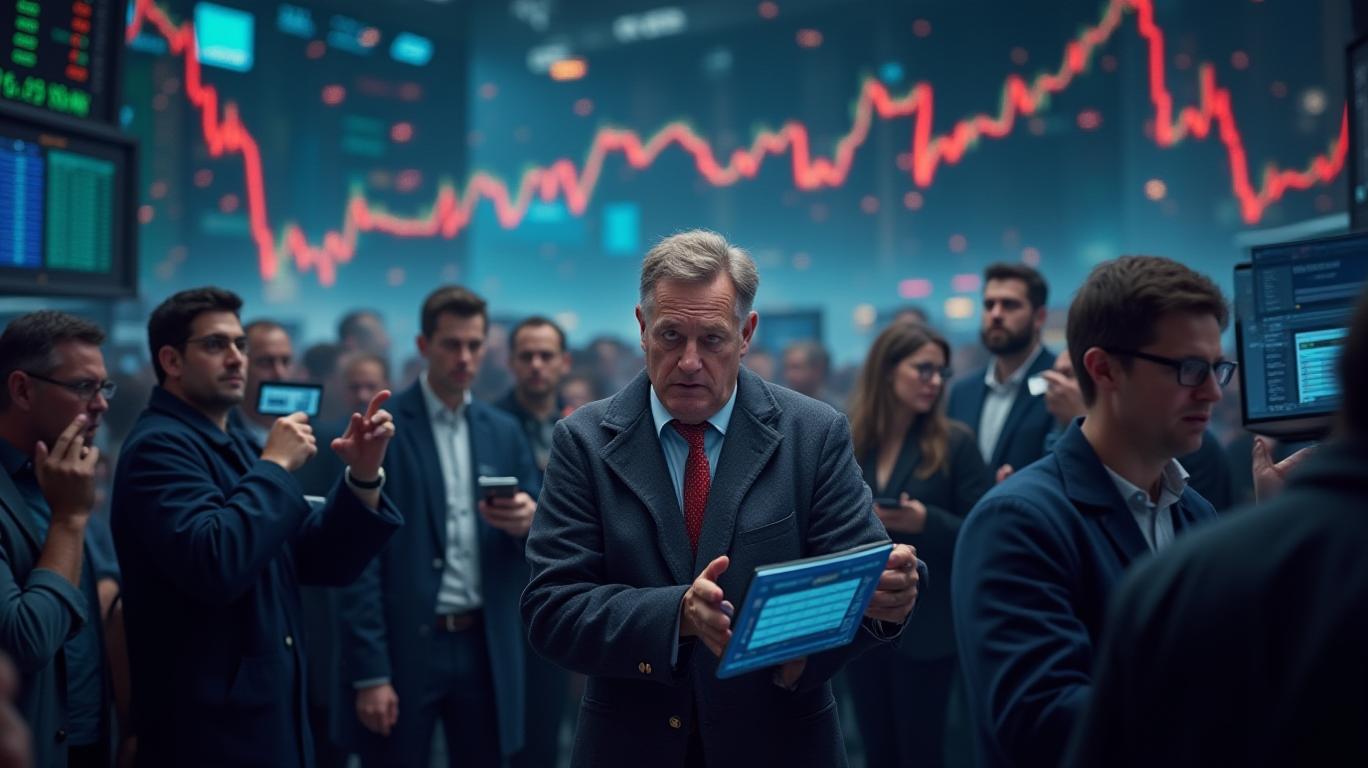
On the afternoon of April 23, U.S. stocks surged, with the Dow Jones Industrial Average rising over 1000 points, erasing the previous day's losses. All three major indices had recovered from their declines. The market continued to focus on the progress of Trump's tariff war, his criticism of Federal Reserve Chairman Jerome Powell, and the earnings reports of U.S. companies. Several Federal Reserve officials were scheduled to speak later in the day.
The Dow Jones Industrial Average rose 1040.90 points, or 2.73%, to 39211.31. The Nasdaq Composite Index gained 443.59 points, or 2.80%, to 16314.49. The S&P 500 Index increased 137.87 points, or 2.67%, to 5296.07.
U.S. stocks opened higher on Tuesday, but the rebound came against a backdrop of heavy losses on Monday, when the three major indices suffered significant declines. The Dow Jones Industrial Average plummeted 970 points, while the S&P 500 and Nasdaq Composite both fell more than 2%. The Dow Jones and Nasdaq had been in a losing streak for four consecutive trading days.
The catalyst for the market volatility was clear: U.S. President Donald Trump warned on Monday that "if the Federal Reserve does not immediately lower interest rates, the economy will fall into recession," and referred to Powell as "Mr. Slowpoke" and "a total loser." This was the second time in recent days that Trump had publicly criticized the Federal Reserve Chairman.
Trump had previously suggested that he might "terminate" Powell's term. White House economic advisor Kevin Hassett confirmed that the White House legal team was exploring the feasibility of this unprecedented action. Trump also stated that he believed Powell would resign if he asked him to, despite Powell's assertion that he would not step down.
It remains unclear whether Trump has the authority to fire Powell. The legal battle over Trump's attempt to dismiss another official is seen as a test case for this scenario. The prospect of Trump potentially firing Powell has exacerbated market jitters, which were already heightened by the administration's tariff policies. Trump's actions and frequent attacks on the Federal Reserve have forced investors to reassess the status of the dollar and U.S. Treasuries as safe-haven assets.
Powell, however, stated that his position as Federal Reserve Chairman is protected by law until May 2026 and that he has no intention of resigning. The deeper concern for the market stems from the ongoing trade war. Since Trump announced his "reciprocal tariff" plan on April 2, the three major U.S. stock indices have all declined by more than 9%.
While the White House is negotiating multiple trade agreements, market participants generally believe that a deal is unlikely in the near term. The uncertainty surrounding Trump's tariff policies has led to a chaotic situation, with even the seemingly straightforward negotiations with Japan now appearing uncertain. Early indications suggest significant differences in communication between Trump and Japanese officials, making it clear that there is no easy resolution in sight.
Analysts at JPMorganJPEM-- noted that the average trade agreement takes 18 months to negotiate and 45 months to implement. They warned that if current policies remain unchanged, the probability of a U.S. recession by 2025 is as high as 90%. The International Monetary Fund (IMF) also raised its estimate of the likelihood of a U.S. recession by 2025 to 40%, up from 27% in October 2022.
Market strategists have expressed concerns about the waning optimism among investors, who are bracing for the possibility that trade negotiations may not yield the expected results. The prolonged uncertainty surrounding the trade war and the potential removal of Powell have added to the market's volatility.
Investors are closely monitoring the earnings reports of over 100 S&P 500 companies scheduled to be released this week. Against the backdrop of Trump's fluctuating policies, investors are paying particular attention to the outlook provided by these companies, with a focus on the technology sector. In the recent market downturn triggered by tariffs, technology stocks have been among the hardest hit, with the "Magnificent Seven" all down by 23% or more from their recent 52-week highs. Given the significant market decline over the past month, analysts are watching the stock price reactions to earnings reports as a key indicator of whether the market has bottomed out.
Several Federal Reserve officials, including Vice Chairman Philip Jefferson, Minneapolis Fed President Neel Kashkari, and Fed Governor Adriana Kugler, are scheduled to speak on Tuesday. Their remarks will be closely watched for any insights into the central bank's monetary policy stance.







Comentarios
Aún no hay comentarios