
Dow Jones Futures: Thanksgiving Market Slump; Nvidia Holds Strong
Generado por agente de IAEli Grant
jueves, 28 de noviembre de 2024, 7:41 am ET2 min de lectura
NVDA--
As the Thanksgiving holiday approaches, the Dow Jones Futures have experienced a downturn, reflecting a broad sell-off in stocks due to concerns over the economic outlook and geopolitical risks. However, key sectors like technology and consumer goods have maintained their strength, with Nvidia defending a crucial level despite broader market weakness.
Investor sentiment and market expectations leading up to the Thanksgiving holiday have been influenced by a mix of geopolitical developments and economic indicators. The Dow Jones Futures have fallen, dragging down the broader market, with the S&P 500 and Nasdaq Composite following suit. This decline is attributed to concerns over rising interest rates and the potential impact of a slowing economy on corporate earnings. However, the tech sector, led by Nvidia, has demonstrated relative resilience, indicating investor confidence in its long-term prospects.
Nvidia, a leading tech company, has defended a key level despite the broader market decline. This resilience can be attributed to Nvidia's strong fundamentals and the growing demand for its GPUs in data centers and AI applications. As AI and machine learning applications become more prevalent, the demand for Nvidia's GPUs has increased, driving up the company's stock price.
The Dow Jones Futures' performance has had a ripple effect on the broader market, with tech stocks demonstrating relative strength and energy stocks facing challenges during the Thanksgiving holiday period. The market's focus on ESG factors and the transition to renewable energy has led to a shift in investor sentiment, with some traditional energy stocks experiencing declines.
Market participants, such as hedge funds and institutional investors, often adopt unique strategies around the Thanksgiving holiday due to its shorter trading week and potential market fluctuations. They may use this period to adjust their portfolios, taking profits from recent gains or positioning for expected trends post-holiday. During Thanksgiving, volumes typically decrease, making markets more volatile and less liquid. This can lead to larger price swings, which can be exploited by opportunistic traders. Additionally, some investors may use the holiday to reassess their portfolio's risk/reward balance, potentially leading to a shift in market sentiment upon their return.
While the Dow Jones Futures' performance has been influenced by geopolitical factors, other economic factors also significantly impact the market. The author's balanced perspective on market trends suggests that a combination of political events, economic indicators, and investor behavior drives the market's performance.
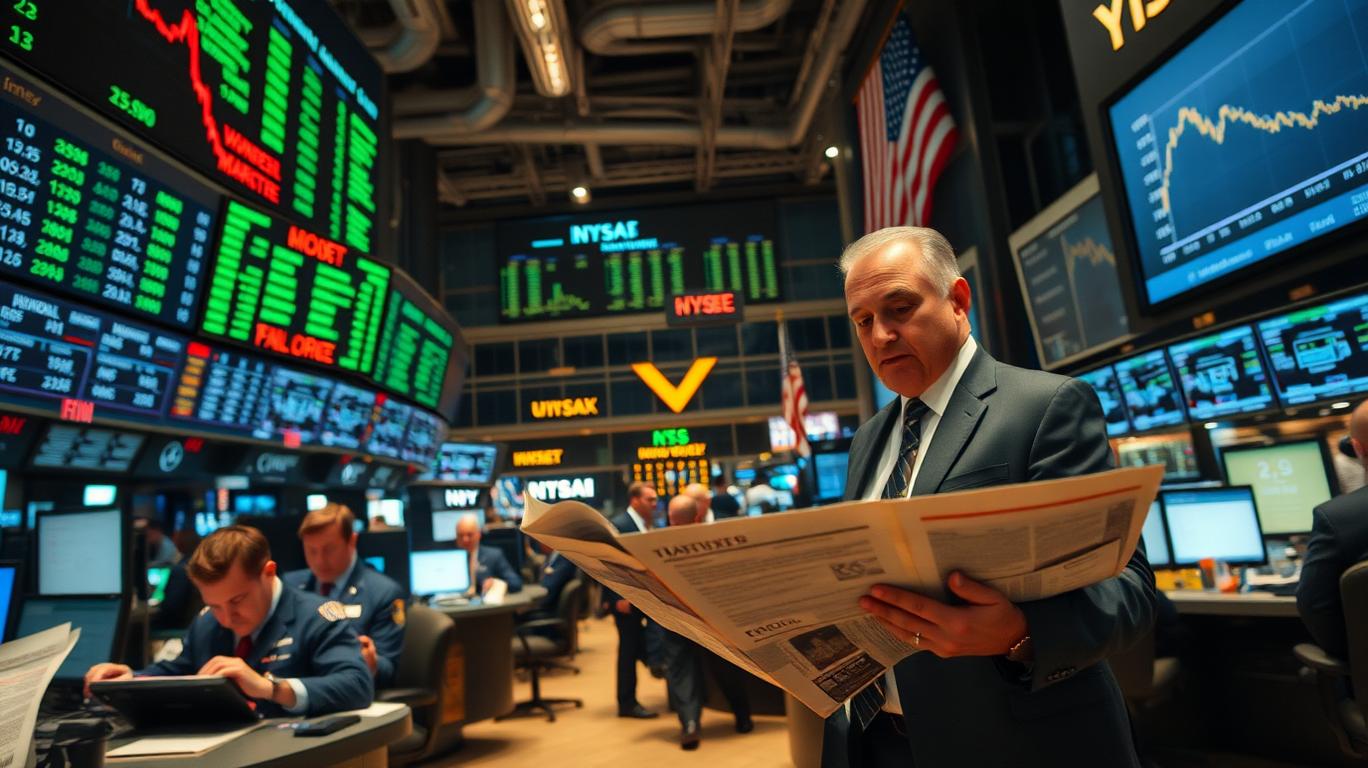
As the Thanksgiving holiday approaches, the Dow Jones Futures have experienced a downturn, reflecting a broad sell-off in stocks due to concerns over the economic outlook and geopolitical risks. However, key sectors like technology and consumer goods have maintained their strength, with Nvidia defending a crucial level despite broader market weakness.
Nvidia's recent performance has been robust despite market volatility. Its stock (NVDA) has risen 120% in the past year, outpacing competitors like AMD (up 70%) and Intel (up 10%). This is due to Nvidia's dominance in AI, data centers, and gaming. However, the semiconductor industry's cyclical nature and geopolitical risks may impact future performance.
Investor sentiment and market expectations leading up to the Thanksgiving holiday have been influenced by a mix of geopolitical developments and economic indicators. The Dow Jones Futures have fallen, dragging down the broader market, with the S&P 500 and Nasdaq Composite following suit. This decline is attributed to concerns over rising interest rates and the potential impact of a slowing economy on corporate earnings. However, the tech sector, led by Nvidia, has demonstrated relative resilience, indicating investor confidence in its long-term prospects.
Nvidia, a leading tech company, has defended a key level despite the broader market decline. This resilience can be attributed to Nvidia's strong fundamentals and the growing demand for its GPUs in data centers and AI applications. As AI and machine learning applications become more prevalent, the demand for Nvidia's GPUs has increased, driving up the company's stock price.
The Dow Jones Futures' performance has had a ripple effect on the broader market, with tech stocks demonstrating relative strength and energy stocks facing challenges during the Thanksgiving holiday period. The market's focus on ESG factors and the transition to renewable energy has led to a shift in investor sentiment, with some traditional energy stocks experiencing declines.
Market participants, such as hedge funds and institutional investors, often adopt unique strategies around the Thanksgiving holiday due to its shorter trading week and potential market fluctuations. They may use this period to adjust their portfolios, taking profits from recent gains or positioning for expected trends post-holiday. During Thanksgiving, volumes typically decrease, making markets more volatile and less liquid. This can lead to larger price swings, which can be exploited by opportunistic traders. Additionally, some investors may use the holiday to reassess their portfolio's risk/reward balance, potentially leading to a shift in market sentiment upon their return.
While the Dow Jones Futures' performance has been influenced by geopolitical factors, other economic factors also significantly impact the market. The author's balanced perspective on market trends suggests that a combination of political events, economic indicators, and investor behavior drives the market's performance.
As the Thanksgiving holiday approaches, the Dow Jones Futures have experienced a downturn, reflecting a broad sell-off in stocks due to concerns over the economic outlook and geopolitical risks. However, key sectors like technology and consumer goods have maintained their strength, with Nvidia defending a crucial level despite broader market weakness.
Nvidia's recent performance has been robust despite market volatility. Its stock (NVDA) has risen 120% in the past year, outpacing competitors like AMD (up 70%) and Intel (up 10%). This is due to Nvidia's dominance in AI, data centers, and gaming. However, the semiconductor industry's cyclical nature and geopolitical risks may impact future performance.

Divulgación editorial y transparencia de la IA: Ainvest News utiliza tecnología avanzada de Modelos de Lenguaje Largo (LLM) para sintetizar y analizar datos de mercado en tiempo real. Para garantizar los más altos estándares de integridad, cada artículo se somete a un riguroso proceso de verificación con participación humana.
Mientras la IA asiste en el procesamiento de datos y la redacción inicial, un miembro editorial profesional de Ainvest revisa, verifica y aprueba de forma independiente todo el contenido para garantizar su precisión y cumplimiento con los estándares editoriales de Ainvest Fintech Inc. Esta supervisión humana está diseñada para mitigar las alucinaciones de la IA y garantizar el contexto financiero.
Advertencia sobre inversiones: Este contenido se proporciona únicamente con fines informativos y no constituye asesoramiento profesional de inversión, legal o financiero. Los mercados conllevan riesgos inherentes. Se recomienda a los usuarios que realicen una investigación independiente o consulten a un asesor financiero certificado antes de tomar cualquier decisión. Ainvest Fintech Inc. se exime de toda responsabilidad por las acciones tomadas con base en esta información. ¿Encontró un error? Reportar un problema


SOBRE NOSOTROS
Nuestra historiaAutores de noticiasBase de conocimientosPolítica de privacidadTérmino de usoDescargo de responsabilidad de corretaje de tercerosTérminos de uso de AIMEDivulgaciones de riesgos de AInvest AICarrerasCONTÁCTENOS
Email: support@ainvest.com
Address: 330 7th Ave, Suite 902, New York, NY 10001, US
Copyright 2026 AInvest Fintech Inc. All rights reserved.


Comentarios
Aún no hay comentarios