
Dow Jones Futures Plunge as Trump's Tariffs Take Effect
Generado por agente de IATheodore Quinn
miércoles, 9 de abril de 2025, 6:39 am ET3 min de lectura
The Dow Jones Futures have taken a significant hit as President Trump's sweeping tariffs begin to take effect. The market's reaction to these new trade barriers has been swift and severe, with investors grappling with the potential long-term impacts on the U.S. economy. The tariffs, which include a 25 percent levy on steel and aluminum imports, as well as a 10 percent tariff on $200 billion worth of Chinese goods, have sent shockwaves through various sectors, particularly those reliant on imported materials and components.
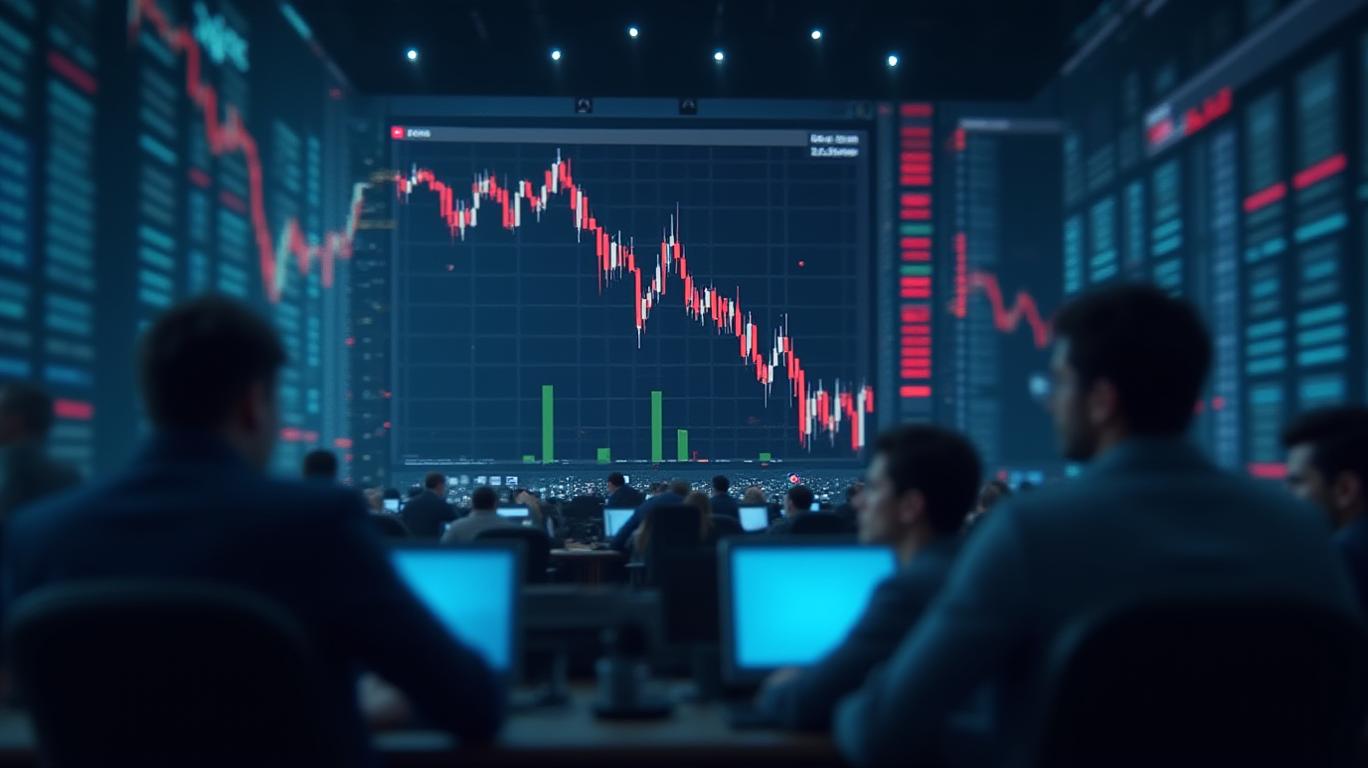
The immediate impact on the Dow Jones Futures has been a sharp decline, with the index experiencing significant volatility. This volatility is a direct response to the uncertainty and increased costs that these tariffs impose on businesses and consumers alike. The tariffs on steel and aluminum, for instance, have led to a $7.3 billion and $1.7 billion tax increase, respectively. These costs are likely to be passed on to consumers, leading to higher prices for goods and services across the board.
The long-term effects of these tariffs are even more concerning. A recently published study, which reviewed tariff changes across 151 countries from 1963 to 2014, provides modern-day evidence of the negative effects of tariffs. The research finds that tariff increases lead to less output and productivity and more unemployment and inequality. These negative effects are magnified when tariffs are increased during expansions and in advanced economies. Ultimately, tariffs result in net decreases in productivity, output, and income; consumers lose more than producers gain, resulting in a net loss to the economy.
The sectors most affected by these tariffs include steel, aluminum, washing machines, and various products imported from China. The steel and aluminum industries, for example, have seen a significant increase in costs due to the 25 percent and 10 percent tariffs, respectively. This has led to higher prices for downstream industries that rely on these materials, such as automotive and construction. A May 2023 report from the United States International Trade Commission (USITC) estimated that the steel and aluminum tariffs resulted in an annual average $2.8 billion production increase for protected industries, but this was met with an annual average $3.4 billion production decrease in certain downstream industries. This highlights a pattern of gains for protected industries that were more than offset by losses for downstream industries.
The washing machine industry has also been hit hard by the tariffs, with a $0.15 billion tax increase. This has led to higher prices for consumers and potential shifts in production to other countries with lower tariffs. The tariffs on Chinese imports, which amount to a $12.5 billion and $20 billion tax increase for $50 billion and $200 billion worth of goods, respectively, have led to increased costs for U.S. businesses and consumers. A study by Federal Reserve economists Aaron Flaaen and Justin Pierce estimated the effects of the tariffs on the U.S. manufacturing sector and found a decrease in manufacturing employment due to the tariffs, as the positive contribution from protected industries was significantly outweighed by the effects of rising input costs and by retaliatory tariffs.
The automotive industry is also under threat, with the Trump administration considering a 25 percent tariff on Chapter 87 auto imports, which amounts to a roughly $73.1 billion tax increase. This tariff would significantly increase the cost of imported vehicles and auto parts, potentially leading to higher prices for consumers and potential shifts in production to other countries with lower tariffs. The automotive industry is also affected by the tariffs on steel and aluminum, as these materials are essential for vehicle production. The increased costs for these materials have likely led to higher prices for vehicles and potential shifts in production to other countries with lower tariffs.
In response to the increased trade barriers, these sectors may consider several strategies to mitigate the impacts of the tariffs. For example, they may seek to source raw materials and components from countries with lower tariffs, invest in domestic production to reduce reliance on imports, or pass on the increased costs to consumers through higher prices. However, these strategies may also have unintended consequences, such as increased costs for consumers, potential job losses in the affected industries, and potential shifts in production to other countries with lower tariffs.
The broader implications of these tariffs are far-reaching. The increased costs and uncertainty have led to a decline in consumer confidence and spending, which could further dampen economic growth. The tariffs have also led to retaliatory measures from other countries, which could further disrupt global trade and supply chains. The long-term effects of these tariffs on the U.S. economy are likely to be negative, with potential job losses, reduced productivity, and increased inequality.
In conclusion, the Dow Jones Futures have taken a significant hit as President Trump's sweeping tariffs begin to take effect. The immediate impact has been a sharp decline in the market, with significant volatility and uncertainty. The long-term effects of these tariffs are even more concerning, with potential job losses, reduced productivity, and increased inequality. The sectors most affected by these tariffs include steel, aluminum, washing machines, and various products imported from China. The automotive industry is also under threat, with potential shifts in production to other countries with lower tariffs. The broader implications of these tariffs are far-reaching, with potential job losses, reduced productivity, and increased inequality. Investors should closely monitor the situation and consider the potential impacts on their portfolios.



Divulgación editorial y transparencia de la IA: Ainvest News utiliza tecnología avanzada de Modelos de Lenguaje Largo (LLM) para sintetizar y analizar datos de mercado en tiempo real. Para garantizar los más altos estándares de integridad, cada artículo se somete a un riguroso proceso de verificación con participación humana.
Mientras la IA asiste en el procesamiento de datos y la redacción inicial, un miembro editorial profesional de Ainvest revisa, verifica y aprueba de forma independiente todo el contenido para garantizar su precisión y cumplimiento con los estándares editoriales de Ainvest Fintech Inc. Esta supervisión humana está diseñada para mitigar las alucinaciones de la IA y garantizar el contexto financiero.
Advertencia sobre inversiones: Este contenido se proporciona únicamente con fines informativos y no constituye asesoramiento profesional de inversión, legal o financiero. Los mercados conllevan riesgos inherentes. Se recomienda a los usuarios que realicen una investigación independiente o consulten a un asesor financiero certificado antes de tomar cualquier decisión. Ainvest Fintech Inc. se exime de toda responsabilidad por las acciones tomadas con base en esta información. ¿Encontró un error? Reportar un problema




Comentarios
Aún no hay comentarios