
Dow Jones Futures Plunge as China's Retaliation to Trump Tariffs Stirs Recession Fears
Generado por agente de IATheodore Quinn
sábado, 5 de abril de 2025, 10:00 am ET4 min de lectura
STLA--
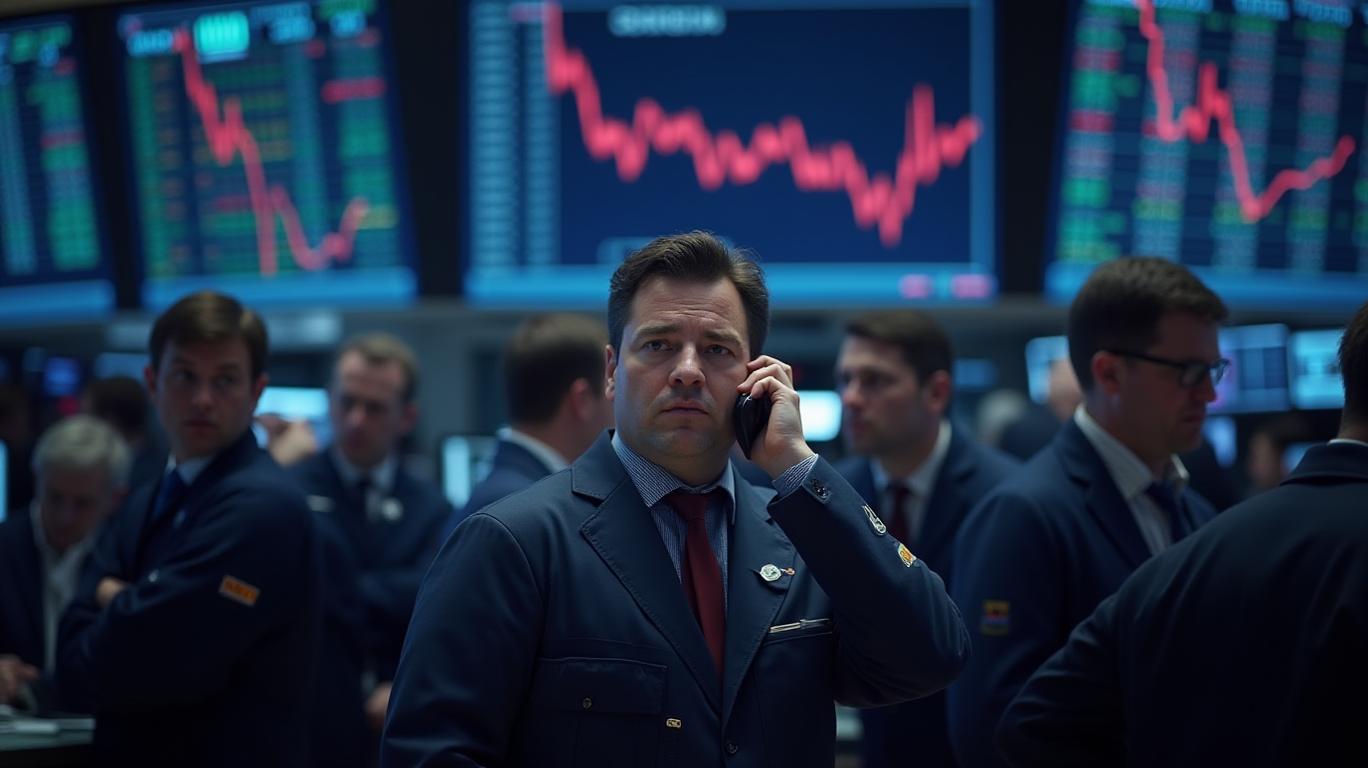
The Dow Jones Industrial Average is in freefall, and the culprit is the escalating trade war between the U.S. and China. On Friday, China announced it would impose 34% tariffs on all imports from the United States, a retaliatory move that has sent shockwaves through global markets. The Dow Jones futures plunged by 1,000 points, or 2.3%, while the broader S&P 500 and tech-heavy Nasdaq Composite were set to open 2.4% and 2.7% lower, respectively. European and UK stocks were down more than 3%, on pace for their worst performance in years. The question on everyone's mind: Is this the beginning of a global recession?
The latest round of tariffs, which come on top of existing duties, will effectively subject Chinese goods arriving in the U.S. to tariffs of well over 54%. This is a significant escalation that could fundamentally reshape the trade relationship between the two largest economies in the world. The impact on key sectors within the Dow Jones Industrial Average, particularly those with significant exposure to global trade, is likely to be profound.
The automotive sector, for instance, is already feeling the pinch. Volkswagen is planning to add import fees to the sticker prices of its vehicles shipped to the U.S. and has halted all rail shipments of vehicles built in Mexico to the U.S. StellantisSTLA-- has announced it will pause production at two assembly plants in Canada and Mexico, leading to temporary layoffs of about 900 workers in the U.S. at supporting plants. This indicates a significant impact on employment and production within the sector.
The technology sector, which includes companies like AppleAAPL-- and MicrosoftMSFT--, relies heavily on components and manufacturing from China. The 34% tariffs on Chinese goods will increase the cost of these components, potentially leading to higher prices for consumers and reduced profitability for these companies. The tariffs could also disrupt supply chains, as companies may need to find alternative suppliers or relocate manufacturing facilities, which could be costly and time-consuming.
The consumer goods sector, which includes companies like Procter & GamblePG-- and Coca-ColaKO--, will face higher costs for imported materials and components. This could lead to price increases for consumers and reduced profit margins for these companies. For example, the tariffs on Chinese goods could impact a variety of consumer products, including cellphones, children’s toys, and clothing that Americans buy every day. Companies like Best Buy have already indicated that they expect their vendors to pass along some level of tariff costs to retailers, making price increases for American consumers highly likely.
The energy sector, which includes companies like ExxonMobil and Chevron, will also be affected by the tariffs. Oil prices have already plunged due to China's retaliatory tariffs, which could impact the profitability of energy companies. The Ice Brent contract with June expiry was trading at $65.42 per barrel, down 6.73% from the Thursday close price. The front-month May Nymex WTI contract was at $62.03 per barrel, lower by 7.35% from the previous session's settlement. This drop in oil prices could lead to reduced revenue for energy companies.
The financial sector, which includes companies like JPMorgan Chase and Goldman Sachs, will be affected by the overall economic uncertainty and potential slowdown in global trade. The tariffs could lead to a reduction in consumer spending and business investment, which could impact the profitability of financial institutions. For example, the Dow Jones Industrial Average lost over 1,400 points, or 3.5 percent, to 40,747.76 as of 10:05 a.m. eastern time (1405 GMT). Meanwhile, the S&P 500 shed 218.81 points, or 3.86 percent, to 5,452.17. The Nasdaq Composite Index dropped by 796.85 points, or 4.53 percent, to 16,804.20. This indicates a significant impact on the financial markets and investor confidence.
The potential long-term effects on the U.S. economy and stock market if the trade war with China continues to escalate are multifaceted and significant. One of the most immediate impacts is the increase in tariffs, which could lead to higher prices for American consumers. For instance, the 34% tariffs on Chinese goods and the reciprocal 34% tariffs on U.S. imports by China could fundamentally reshape the trade relationship between the two economies, affecting roughly half a trillion dollars in trade. This escalation could lead to a significant increase in the cost of goods, as noted by Larry Hu, chief China economist at Macquarie Group, who estimates that the current escalation could shave up to 2.5 percentage points off China’s economic growth for this year. China is aiming to grow its economy by around 5% in 2025, and such a reduction would have ripple effects on the global economy, including the U.S.
The tariffs also come at a tough time for China’s own slowing economy, with officials ramping up efforts to spur weak domestic consumption as they brace for the widening trade war. This could lead to a global economic slowdown, further impacting the U.S. economy. The impact could manifest itself through multiple channels such as falling US demand for Chinese goods, the potential global economic slowdown and the hit on export re-routing. Export re-routing refers to the practice of exporting goods that were previously imported into a country to another place without significant processing. Countries in Southeast Asia and Latin America were part of this trend during Trump's previous tariff policies.
The stock market has already shown signs of volatility due to the trade war. On Friday, US stock futures plunged after China announced it would retaliate with 34% tariffs on all imports from the United States. Dow futures fell 1,000 points, or 2.3%. The broader S&P 500 was set to open 2.4% lower and the tech-heavy Nasdaq Composite was on pace to start the day 2.7% lower. European and UK stocks were down more than 3% Friday, on pace for their worst performance in years. This volatility is likely to continue as investors grapple with the uncertainty and potential long-term impacts of the trade war.
Investor sentiment is likely to be negatively affected by the escalating trade war. The uncertainty surrounding the trade policies and the potential for further escalation could lead to a decrease in confidence among investors. This could result in a decrease in investment in the stock market, further exacerbating the volatility. For example, the White House did not immediately respond to CNBC's request for comment on Trump's social media post arguing he is deliberately crashing the stock market as a strategic play to force lower interest and mortgage rates. This lack of clarity and transparency could further erode investor confidence.
In summary, the escalating trade war with China could have significant long-term effects on the U.S. economy and stock market, including higher prices for consumers, a potential global economic slowdown, and increased market volatility. Investor sentiment is likely to be negatively affected by the uncertainty and potential for further escalation, leading to a decrease in confidence and investment in the stock market.
The Dow Jones Industrial Average is in freefall, and the culprit is the escalating trade war between the U.S. and China. On Friday, China announced it would impose 34% tariffs on all imports from the United States, a retaliatory move that has sent shockwaves through global markets. The Dow Jones futures plunged by 1,000 points, or 2.3%, while the broader S&P 500 and tech-heavy Nasdaq Composite were set to open 2.4% and 2.7% lower, respectively. European and UK stocks were down more than 3%, on pace for their worst performance in years. The question on everyone's mind: Is this the beginning of a global recession?
The latest round of tariffs, which come on top of existing duties, will effectively subject Chinese goods arriving in the U.S. to tariffs of well over 54%. This is a significant escalation that could fundamentally reshape the trade relationship between the two largest economies in the world. The impact on key sectors within the Dow Jones Industrial Average, particularly those with significant exposure to global trade, is likely to be profound.
The automotive sector, for instance, is already feeling the pinch. Volkswagen is planning to add import fees to the sticker prices of its vehicles shipped to the U.S. and has halted all rail shipments of vehicles built in Mexico to the U.S. StellantisSTLA-- has announced it will pause production at two assembly plants in Canada and Mexico, leading to temporary layoffs of about 900 workers in the U.S. at supporting plants. This indicates a significant impact on employment and production within the sector.
The technology sector, which includes companies like AppleAAPL-- and MicrosoftMSFT--, relies heavily on components and manufacturing from China. The 34% tariffs on Chinese goods will increase the cost of these components, potentially leading to higher prices for consumers and reduced profitability for these companies. The tariffs could also disrupt supply chains, as companies may need to find alternative suppliers or relocate manufacturing facilities, which could be costly and time-consuming.
The consumer goods sector, which includes companies like Procter & GamblePG-- and Coca-ColaKO--, will face higher costs for imported materials and components. This could lead to price increases for consumers and reduced profit margins for these companies. For example, the tariffs on Chinese goods could impact a variety of consumer products, including cellphones, children’s toys, and clothing that Americans buy every day. Companies like Best Buy have already indicated that they expect their vendors to pass along some level of tariff costs to retailers, making price increases for American consumers highly likely.
The energy sector, which includes companies like ExxonMobil and Chevron, will also be affected by the tariffs. Oil prices have already plunged due to China's retaliatory tariffs, which could impact the profitability of energy companies. The Ice Brent contract with June expiry was trading at $65.42 per barrel, down 6.73% from the Thursday close price. The front-month May Nymex WTI contract was at $62.03 per barrel, lower by 7.35% from the previous session's settlement. This drop in oil prices could lead to reduced revenue for energy companies.
The financial sector, which includes companies like JPMorgan Chase and Goldman Sachs, will be affected by the overall economic uncertainty and potential slowdown in global trade. The tariffs could lead to a reduction in consumer spending and business investment, which could impact the profitability of financial institutions. For example, the Dow Jones Industrial Average lost over 1,400 points, or 3.5 percent, to 40,747.76 as of 10:05 a.m. eastern time (1405 GMT). Meanwhile, the S&P 500 shed 218.81 points, or 3.86 percent, to 5,452.17. The Nasdaq Composite Index dropped by 796.85 points, or 4.53 percent, to 16,804.20. This indicates a significant impact on the financial markets and investor confidence.
The potential long-term effects on the U.S. economy and stock market if the trade war with China continues to escalate are multifaceted and significant. One of the most immediate impacts is the increase in tariffs, which could lead to higher prices for American consumers. For instance, the 34% tariffs on Chinese goods and the reciprocal 34% tariffs on U.S. imports by China could fundamentally reshape the trade relationship between the two economies, affecting roughly half a trillion dollars in trade. This escalation could lead to a significant increase in the cost of goods, as noted by Larry Hu, chief China economist at Macquarie Group, who estimates that the current escalation could shave up to 2.5 percentage points off China’s economic growth for this year. China is aiming to grow its economy by around 5% in 2025, and such a reduction would have ripple effects on the global economy, including the U.S.
The tariffs also come at a tough time for China’s own slowing economy, with officials ramping up efforts to spur weak domestic consumption as they brace for the widening trade war. This could lead to a global economic slowdown, further impacting the U.S. economy. The impact could manifest itself through multiple channels such as falling US demand for Chinese goods, the potential global economic slowdown and the hit on export re-routing. Export re-routing refers to the practice of exporting goods that were previously imported into a country to another place without significant processing. Countries in Southeast Asia and Latin America were part of this trend during Trump's previous tariff policies.
The stock market has already shown signs of volatility due to the trade war. On Friday, US stock futures plunged after China announced it would retaliate with 34% tariffs on all imports from the United States. Dow futures fell 1,000 points, or 2.3%. The broader S&P 500 was set to open 2.4% lower and the tech-heavy Nasdaq Composite was on pace to start the day 2.7% lower. European and UK stocks were down more than 3% Friday, on pace for their worst performance in years. This volatility is likely to continue as investors grapple with the uncertainty and potential long-term impacts of the trade war.
Investor sentiment is likely to be negatively affected by the escalating trade war. The uncertainty surrounding the trade policies and the potential for further escalation could lead to a decrease in confidence among investors. This could result in a decrease in investment in the stock market, further exacerbating the volatility. For example, the White House did not immediately respond to CNBC's request for comment on Trump's social media post arguing he is deliberately crashing the stock market as a strategic play to force lower interest and mortgage rates. This lack of clarity and transparency could further erode investor confidence.
In summary, the escalating trade war with China could have significant long-term effects on the U.S. economy and stock market, including higher prices for consumers, a potential global economic slowdown, and increased market volatility. Investor sentiment is likely to be negatively affected by the uncertainty and potential for further escalation, leading to a decrease in confidence and investment in the stock market.

Divulgación editorial y transparencia de la IA: Ainvest News utiliza tecnología avanzada de Modelos de Lenguaje Largo (LLM) para sintetizar y analizar datos de mercado en tiempo real. Para garantizar los más altos estándares de integridad, cada artículo se somete a un riguroso proceso de verificación con participación humana.
Mientras la IA asiste en el procesamiento de datos y la redacción inicial, un miembro editorial profesional de Ainvest revisa, verifica y aprueba de forma independiente todo el contenido para garantizar su precisión y cumplimiento con los estándares editoriales de Ainvest Fintech Inc. Esta supervisión humana está diseñada para mitigar las alucinaciones de la IA y garantizar el contexto financiero.
Advertencia sobre inversiones: Este contenido se proporciona únicamente con fines informativos y no constituye asesoramiento profesional de inversión, legal o financiero. Los mercados conllevan riesgos inherentes. Se recomienda a los usuarios que realicen una investigación independiente o consulten a un asesor financiero certificado antes de tomar cualquier decisión. Ainvest Fintech Inc. se exime de toda responsabilidad por las acciones tomadas con base en esta información. ¿Encontró un error? Reportar un problema


SOBRE NOSOTROS
Nuestra historiaAutores de noticiasBase de conocimientosPolítica de privacidadTérmino de usoDescargo de responsabilidad de corretaje de tercerosTérminos de uso de AIMEDivulgaciones de riesgos de AInvest AICarrerasCONTÁCTENOS
Email: support@ainvest.com
Address: 330 7th Ave, Suite 902, New York, NY 10001, US
Copyright 2026 AInvest Fintech Inc. All rights reserved.


Comentarios
Aún no hay comentarios