
Dow Jones Futures: Navigating the Storm After Trump Tariffs
Generado por agente de IATheodore Quinn
domingo, 6 de abril de 2025, 5:44 pm ET2 min de lectura
AAPL--
The stock market has been on a rollercoaster ride since President Donald Trump announced his sweeping tariffs, and the Nasdaq Composite has officially entered bear market territory. The tech-heavy index fell 962.82 points, or 5.8%, to end at 15,587.79 on Friday, April 4, 2025. This marks the first time the Nasdaq has entered a bear market since 2022, as fears of a trade war and global economic slowdown have gripped investors.
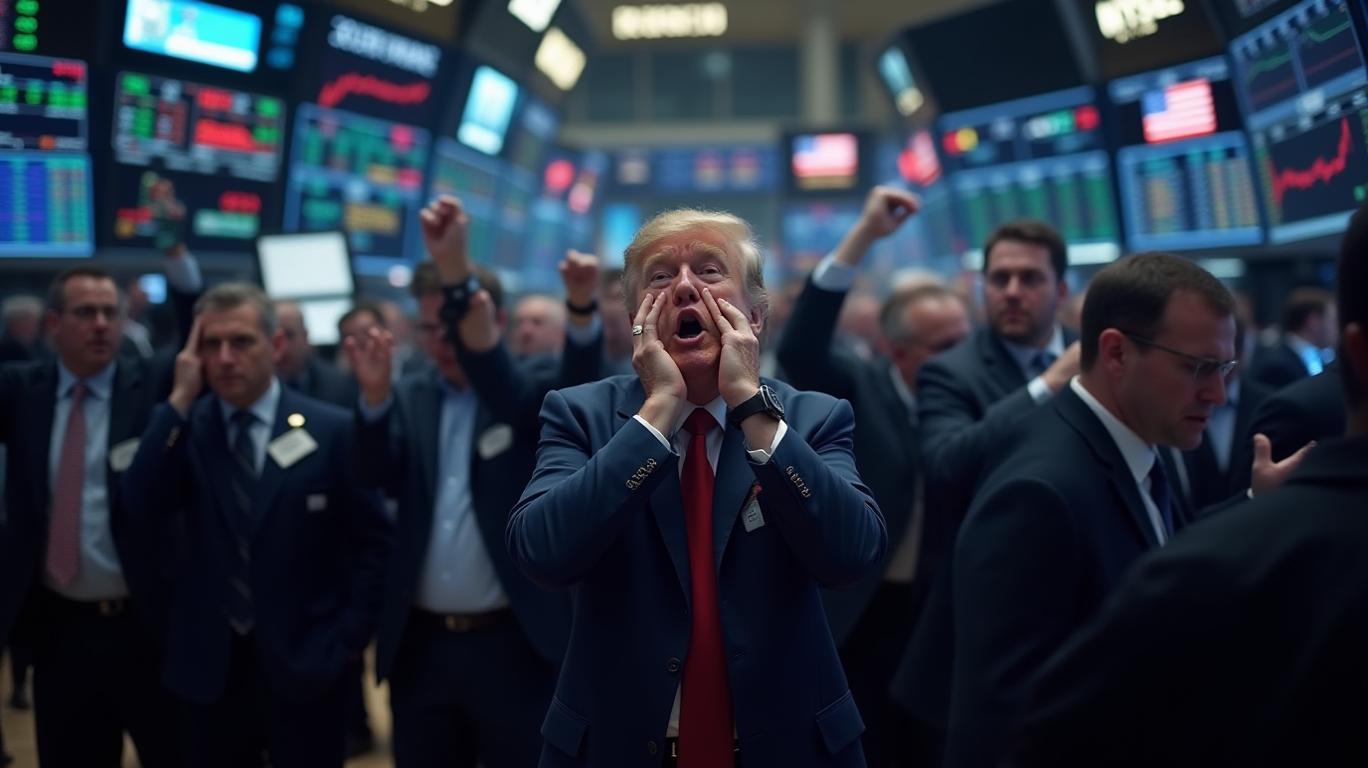
The Dow Jones Industrial Average is also feeling the heat, entering correction territory, while the S&P 500 teeters on the edge of a bear market. The Russell 2000, an index of small-cap stocks, has also fallen into bear market territory, with the index falling to a level that is 22% below its recent high. This widespread market turmoil underscores the significant impact of the tariffs on investor confidence and market sentiment.
The tariffs have sparked a wave of uncertainty, with investors fleeing riskier assets and seeking safety in more stable investments. The tech sector, in particular, has been hard hit, with heavyweights like AppleAAPL-- and NvidiaNVDA-- falling more than 7%. The Nasdaq's decline was driven by fears that the tariffs could ignite a trade war, leading to a global economic slowdown. The index has now fallen 22.7% from its December 16, 2024, record close, confirming a bear market as it closed down at least 20% from its most recent record high finish.
The market's reaction to the tariffs has been swift and severe, with the Nasdaq's biggest drag from individual stocks coming from heavyweights Apple, which ended down 7.3%, and Nvidia, which also fell more than 7%. This market reaction underscores the heightened anxiety among investors regarding the potential economic repercussions of the tariffs.
The tariffs have also had a significant impact on consumer behavior, with Americans saving more and spending less as the tariffs loom. This shift in consumer behavior could lead to a decrease in overall economic activity, further exacerbating the economic slowdown. Job opportunities are shrinking, and layoffs in the federal government just hit their highest level in four years. This trend could worsen if the trade war continues, leading to higher unemployment rates and further economic instability.
The market's reaction to the tariffs has also led to increased expectations for rate cuts. The median expectation is now for a total of five quarter-point Federal Reserve rate cuts this year, up from an expected three just a month ago. This could provide some relief to the economy, but it also indicates that the Federal Reserve is concerned about the economic outlook.
Despite the market turmoil, there are still opportunities for investors. For example, Arm HoldingsARM-- and The Trade Desk have seen significant declines in their stock prices, but analysts see potential for substantial upside. Arm Holdings has a median target price of $177.50 per share, implying 106% upside from the current share price of $86. The Trade Desk has a median target price of $103 per share, implying 124% upside from the current share price of $46. These stocks could be attractive for investors with a longer-term horizon.
In conclusion, the escalation of the trade war could have significant long-term effects on the U.S. economy and global markets, including economic slowdown, increased unemployment, and market volatility. However, there are also opportunities for investors to adjust their strategies and take advantage of undervalued stocks and sectors. The market's reaction to the tariffs has been swift and severe, but investors who remain calm and focused on the long term could still find opportunities to profit.
NVDA--
The stock market has been on a rollercoaster ride since President Donald Trump announced his sweeping tariffs, and the Nasdaq Composite has officially entered bear market territory. The tech-heavy index fell 962.82 points, or 5.8%, to end at 15,587.79 on Friday, April 4, 2025. This marks the first time the Nasdaq has entered a bear market since 2022, as fears of a trade war and global economic slowdown have gripped investors.
The Dow Jones Industrial Average is also feeling the heat, entering correction territory, while the S&P 500 teeters on the edge of a bear market. The Russell 2000, an index of small-cap stocks, has also fallen into bear market territory, with the index falling to a level that is 22% below its recent high. This widespread market turmoil underscores the significant impact of the tariffs on investor confidence and market sentiment.
The tariffs have sparked a wave of uncertainty, with investors fleeing riskier assets and seeking safety in more stable investments. The tech sector, in particular, has been hard hit, with heavyweights like AppleAAPL-- and NvidiaNVDA-- falling more than 7%. The Nasdaq's decline was driven by fears that the tariffs could ignite a trade war, leading to a global economic slowdown. The index has now fallen 22.7% from its December 16, 2024, record close, confirming a bear market as it closed down at least 20% from its most recent record high finish.
The market's reaction to the tariffs has been swift and severe, with the Nasdaq's biggest drag from individual stocks coming from heavyweights Apple, which ended down 7.3%, and Nvidia, which also fell more than 7%. This market reaction underscores the heightened anxiety among investors regarding the potential economic repercussions of the tariffs.
The tariffs have also had a significant impact on consumer behavior, with Americans saving more and spending less as the tariffs loom. This shift in consumer behavior could lead to a decrease in overall economic activity, further exacerbating the economic slowdown. Job opportunities are shrinking, and layoffs in the federal government just hit their highest level in four years. This trend could worsen if the trade war continues, leading to higher unemployment rates and further economic instability.
The market's reaction to the tariffs has also led to increased expectations for rate cuts. The median expectation is now for a total of five quarter-point Federal Reserve rate cuts this year, up from an expected three just a month ago. This could provide some relief to the economy, but it also indicates that the Federal Reserve is concerned about the economic outlook.
Despite the market turmoil, there are still opportunities for investors. For example, Arm HoldingsARM-- and The Trade Desk have seen significant declines in their stock prices, but analysts see potential for substantial upside. Arm Holdings has a median target price of $177.50 per share, implying 106% upside from the current share price of $86. The Trade Desk has a median target price of $103 per share, implying 124% upside from the current share price of $46. These stocks could be attractive for investors with a longer-term horizon.
In conclusion, the escalation of the trade war could have significant long-term effects on the U.S. economy and global markets, including economic slowdown, increased unemployment, and market volatility. However, there are also opportunities for investors to adjust their strategies and take advantage of undervalued stocks and sectors. The market's reaction to the tariffs has been swift and severe, but investors who remain calm and focused on the long term could still find opportunities to profit.

Divulgación editorial y transparencia de la IA: Ainvest News utiliza tecnología avanzada de Modelos de Lenguaje Largo (LLM) para sintetizar y analizar datos de mercado en tiempo real. Para garantizar los más altos estándares de integridad, cada artículo se somete a un riguroso proceso de verificación con participación humana.
Mientras la IA asiste en el procesamiento de datos y la redacción inicial, un miembro editorial profesional de Ainvest revisa, verifica y aprueba de forma independiente todo el contenido para garantizar su precisión y cumplimiento con los estándares editoriales de Ainvest Fintech Inc. Esta supervisión humana está diseñada para mitigar las alucinaciones de la IA y garantizar el contexto financiero.
Advertencia sobre inversiones: Este contenido se proporciona únicamente con fines informativos y no constituye asesoramiento profesional de inversión, legal o financiero. Los mercados conllevan riesgos inherentes. Se recomienda a los usuarios que realicen una investigación independiente o consulten a un asesor financiero certificado antes de tomar cualquier decisión. Ainvest Fintech Inc. se exime de toda responsabilidad por las acciones tomadas con base en esta información. ¿Encontró un error? Reportar un problema




Comentarios
Aún no hay comentarios