
Dow Drops for Third Day as Trump's Tariffs Roil Markets
Generado por agente de IATheodore Quinn
martes, 8 de abril de 2025, 3:37 am ET2 min de lectura
AAPL--
The Dow Jones Industrial Average (DJIA) tumbled for the third consecutive session on Monday, as President Trump's escalating tariff threats sent shockwaves through global markets. The index closed down 0.91%, marking its worst three-day stretch since the 2020 pandemic sell-off. The S&P 500 and Nasdaq Composite also finished lower, with tech giants AppleAAPL-- and TeslaTSLA-- leading the decline.
The market turmoil comes as Trump doubled down on his trade policies, announcing a 10% baseline tariff on all U.S. imports and additional "reciprocal" duties on 90 countries. The move has sparked fears of a global trade war, with China and other major economies retaliating with their own tariffs.
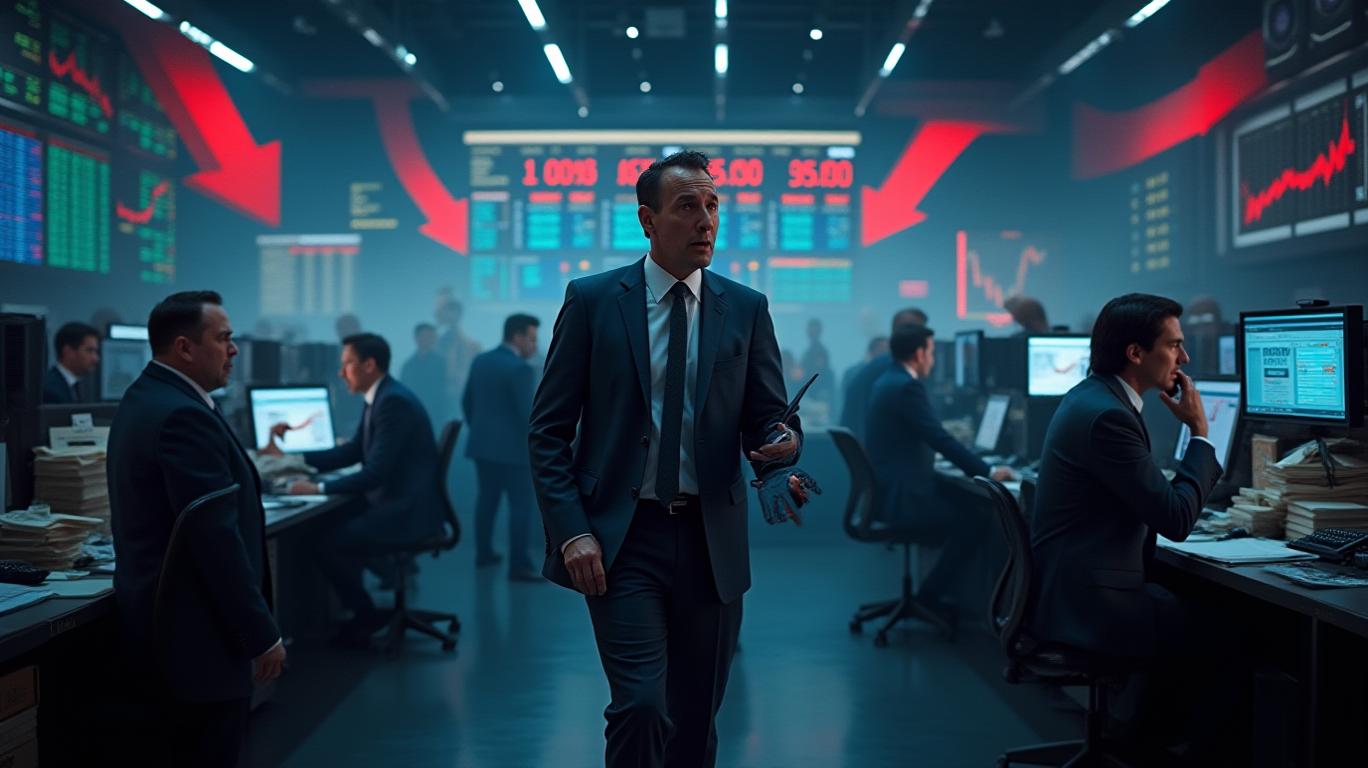
The immediate impact on tech stocks has been severe. Apple's stock plunged 7% on Monday, wiping out $310 billion in market capitalization—the worst single-day loss since March 2020. Tesla's shares dropped 10%, as investors grappled with the potential fallout from higher input costs and supply chain disruptions.
The Greed Index, a measure of market sentiment, remains firmly in the "Extreme Fear" zone, reflecting the deepening pessimism among investors. The index, which tracks the VIX volatility gauge and other market indicators, has not been this low since the height of the pandemic.
The tariff threats have also sent ripples through other sectors. Oil prices briefly dipped below $60 a barrel on Sunday, their lowest level in almost four years, as concerns about a slowing economy weighed on demand. The energy sector, which had been a relative bright spot in recent months, is now facing renewed headwinds.
In Asia, markets were a sea of red on Monday, with Hong Kong's Hang Seng Index plunging 11% and Taiwan's Taiex falling nearly 10%. Japan's Nikkei and South Korea's Kospi also posted steep losses, as investors fled to safe-haven assets like the Japanese yen and Swiss franc.
The market's reaction to Trump's tariffs has been swift and brutal, but the long-term implications remain uncertain. Some analysts argue that the tariffs could ultimately benefit U.S. manufacturers by forcing companies to reshore production and invest in domestic operations. Others warn that the trade war could spiral out of control, leading to a global recession and a prolonged period of market volatility.
For investors, the current environment presents both challenges and opportunities. On the one hand, the market's extreme fear could create buying opportunities in oversold sectors like tech and energy. On the other hand, the risk of further downside remains high, as Trump's trade policies continue to evolve and retaliatory measures from other countries loom.
In the short term, investors may want to consider tactical plays on oversold Asian markets or safe-haven assets like the Japanese yen. Longer-term, sectors like U.S. manufacturing and tech, which have strong fundamentals and pricing power, could offer resilience in the face of trade wars.
The market's reaction to Trump's tariffs is a stark reminder of the interconnected nature of global economies and the potential for geopolitical risks to upend even the most carefully constructed portfolios. As the trade war continues to unfold, investors will need to stay nimble and adapt to a rapidly changing landscape.
TSLA--
The Dow Jones Industrial Average (DJIA) tumbled for the third consecutive session on Monday, as President Trump's escalating tariff threats sent shockwaves through global markets. The index closed down 0.91%, marking its worst three-day stretch since the 2020 pandemic sell-off. The S&P 500 and Nasdaq Composite also finished lower, with tech giants AppleAAPL-- and TeslaTSLA-- leading the decline.
The market turmoil comes as Trump doubled down on his trade policies, announcing a 10% baseline tariff on all U.S. imports and additional "reciprocal" duties on 90 countries. The move has sparked fears of a global trade war, with China and other major economies retaliating with their own tariffs.
The immediate impact on tech stocks has been severe. Apple's stock plunged 7% on Monday, wiping out $310 billion in market capitalization—the worst single-day loss since March 2020. Tesla's shares dropped 10%, as investors grappled with the potential fallout from higher input costs and supply chain disruptions.
The Greed Index, a measure of market sentiment, remains firmly in the "Extreme Fear" zone, reflecting the deepening pessimism among investors. The index, which tracks the VIX volatility gauge and other market indicators, has not been this low since the height of the pandemic.
The tariff threats have also sent ripples through other sectors. Oil prices briefly dipped below $60 a barrel on Sunday, their lowest level in almost four years, as concerns about a slowing economy weighed on demand. The energy sector, which had been a relative bright spot in recent months, is now facing renewed headwinds.
In Asia, markets were a sea of red on Monday, with Hong Kong's Hang Seng Index plunging 11% and Taiwan's Taiex falling nearly 10%. Japan's Nikkei and South Korea's Kospi also posted steep losses, as investors fled to safe-haven assets like the Japanese yen and Swiss franc.
The market's reaction to Trump's tariffs has been swift and brutal, but the long-term implications remain uncertain. Some analysts argue that the tariffs could ultimately benefit U.S. manufacturers by forcing companies to reshore production and invest in domestic operations. Others warn that the trade war could spiral out of control, leading to a global recession and a prolonged period of market volatility.
For investors, the current environment presents both challenges and opportunities. On the one hand, the market's extreme fear could create buying opportunities in oversold sectors like tech and energy. On the other hand, the risk of further downside remains high, as Trump's trade policies continue to evolve and retaliatory measures from other countries loom.
In the short term, investors may want to consider tactical plays on oversold Asian markets or safe-haven assets like the Japanese yen. Longer-term, sectors like U.S. manufacturing and tech, which have strong fundamentals and pricing power, could offer resilience in the face of trade wars.
The market's reaction to Trump's tariffs is a stark reminder of the interconnected nature of global economies and the potential for geopolitical risks to upend even the most carefully constructed portfolios. As the trade war continues to unfold, investors will need to stay nimble and adapt to a rapidly changing landscape.

Divulgación editorial y transparencia de la IA: Ainvest News utiliza tecnología avanzada de Modelos de Lenguaje Largo (LLM) para sintetizar y analizar datos de mercado en tiempo real. Para garantizar los más altos estándares de integridad, cada artículo se somete a un riguroso proceso de verificación con participación humana.
Mientras la IA asiste en el procesamiento de datos y la redacción inicial, un miembro editorial profesional de Ainvest revisa, verifica y aprueba de forma independiente todo el contenido para garantizar su precisión y cumplimiento con los estándares editoriales de Ainvest Fintech Inc. Esta supervisión humana está diseñada para mitigar las alucinaciones de la IA y garantizar el contexto financiero.
Advertencia sobre inversiones: Este contenido se proporciona únicamente con fines informativos y no constituye asesoramiento profesional de inversión, legal o financiero. Los mercados conllevan riesgos inherentes. Se recomienda a los usuarios que realicen una investigación independiente o consulten a un asesor financiero certificado antes de tomar cualquier decisión. Ainvest Fintech Inc. se exime de toda responsabilidad por las acciones tomadas con base en esta información. ¿Encontró un error? Reportar un problema




Comentarios
Aún no hay comentarios