
Dow's 250-Point Drop: A Tactical Trading Setup or Just Noise?
The market's sharp drop is a direct reaction to a political firestorm. The immediate catalyst is Federal Reserve Chair Jerome Powell's Sunday statement that the Department of Justice had served the central bank with subpoenas and threatened it with a criminal indictment over his testimony on the Fed's building renovation costs. This isn't just bureaucratic friction; Powell explicitly called the threat a "pretext" to undermine the Fed's independence in setting interest rates, its core mandate.
This characterization frames the event as a deliberate attack on the central bank's autonomy. The tension is a direct escalation in President Trump's feud with the Fed, which has intensified since he took office in January 2025. Trump has repeatedly criticized the $2.5 billion renovation as excessive and pressed the Fed to cut rates more sharply than Powell has been willing to do. The renewed fight is expected to rattle financial markets, as it directly challenges the principle that monetary policy should be insulated from political pressure.
The impact was immediate and specific. In premarket trading, the threat landed squarely on financial stocks, which are most sensitive to interest rate policy and regulatory stability. Bank of America, JPMorgan, and Citigroup all fell 2.5% to 4% as investors priced in heightened uncertainty. The sell-off extended to credit card lenders and consumer finance firms, which are also vulnerable to regulatory shifts and rate changes. This tactical catalyst created a clear mispricing opportunity, as the market's knee-jerk reaction may overstate the immediate financial impact while correctly flagging a major governance risk.
Market Mechanics and Technical Context
The market's reaction is now fully priced in. The Dow Jones Industrial Average fell more than 250 points on Monday, closing down 0.61% to 49,202.71. This move follows a premarket drop that saw futures down 0.7%, with the Dow E-mini contract falling 359 points earlier in the session. The sell-off was broad but not uniform, revealing a clear flight to safety.
The immediate financial impact is being driven by two distinct catalysts. The first is the political attack on the Fed, which has created a general risk-off sentiment. The second is a specific policy threat that directly targets the profitability of financial firms. The Trump administration has called for a one-year cap on credit card interest rates at 10% starting on January 20. This proposal is weighing heavily on financial shares, with credit card lenders and consumer finance firms taking the brunt. American Express fell 4.8%, while Synchrony Financial, Bread Financial, and Capital OneCOF-- slumped between 10.5% and 11.6% in premarket trading. This is a direct, near-term earnings headwind that the market is pricing in.
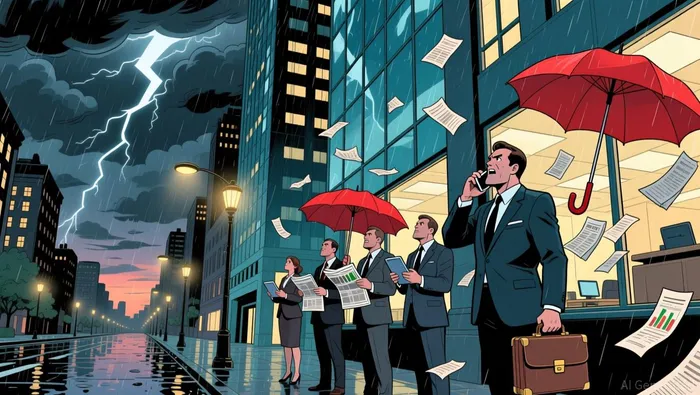
The contrasting performance of consumer staples is a key technical signal. While financials dipped, consumer staples shares gained by 0.6% on Monday. This move suggests investors are rotating out of cyclical, rate-sensitive sectors and into perceived defensive plays. It's a classic flight to quality during periods of uncertainty, indicating the market sees the Fed attack and regulatory threats as a broader risk to economic stability and corporate earnings.
The technical setup now hinges on two factors. First, the market must decide if the political firestorm is a temporary overreaction or a sustained threat to central bank independence. Second, it must weigh the immediate, concrete impact of the credit card rate cap against the broader economic backdrop. For now, the 250-point drop and the sector rotation point to a market that is pricing in both governance risk and a tangible profit squeeze for a major part of the financial sector.
Trading Takeaway: Risk/Reward Setup
The market's 250-point drop has created a clear tactical setup, but the direction hinges on two immediate catalysts and one key test. This isn't just noise; it's a mispricing that could correct if the political threat fizzles, or deepen if concrete policy hits.
First, monitor for any official DOJ response. The threat of indictment remains an active, unresolved catalyst. While Powell has branded it a "pretext," the mere existence of subpoenas and a potential criminal charge is a direct assault on the Fed's operational independence. Any follow-through from the DOJ-whether a formal filing or a public statement-would validate the market's fear and likely trigger further selling. The setup here is binary: either the threat is dropped, offering a quick relief rally, or it escalates, confirming a major governance crisis.
Second, the January 20 implementation date for the credit card interest rate cap is a source of further negative pressure. This isn't a vague policy threat; it's a specific, near-term earnings headwind for a major segment of financials. The premarket slumps in American Express, Synchrony Financial, and Capital One show the market is already pricing this in. Watch for any official guidance or delays from the administration. A clean implementation on schedule will confirm the profit squeeze, while a delay could provide a temporary reprieve for these stocks.
The market's reaction is now being tested against upcoming economic data. The December jobs report, due this week, is the key benchmark. If the data shows a resilient labor market, it could reinforce the Fed's stance and potentially overshadow the political noise. But if the data is weak, it may amplify the pressure on the Fed to cut rates, making the political attack on Powell's independence even more relevant. The market is essentially weighing a tangible profit cut against a potential policy shift, and the jobs report will provide the first concrete data point to break the stalemate.
For a tactical trade, the parameters are clear. The setup favors a short-term, event-driven play on financials, particularly credit card lenders, with a tight stop above the recent lows. The trade is to fade any relief rally that overestimates the DOJ threat being dropped, while the January 20 cap date looms. The risk is that the political firestorm becomes a sustained trend, overriding fundamental data and pushing the market lower. The reward is a sharp correction if the catalysts fail to materialize.





Comentarios
Aún no hay comentarios