
The Double-Edged Sword of Influencer-Driven Volatility: Analyzing CZ's Impact on GIGGLE and Retail Investor Risks
CZ's Ambiguous Role: Denial, Credibility, and the Power of Association
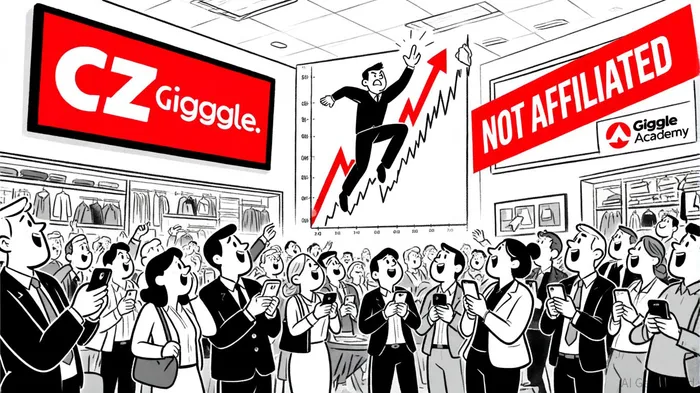
Changpeng Zhao, one of crypto's most recognizable names, recently confirmed GIGGLE is not official, yet the mere association with CZ's brand has been enough to propel GIGGLE's price to stratospheric levels. A whale investor reportedly earned $1.7 million in just 33 days, achieving an 876x return, according to Bitcoinsistemi. This paradox-where a project's value soars despite disavowal by a high-profile figure-highlights the duality of influencer impact: credibility and confusion.
CZ's denial, while technically accurate, did little to dampen enthusiasm. Instead, the token's price surged 158.27% in 24 hours, fueled by the perception that Binance's ecosystem (and CZ's influence) indirectly validated its legitimacy. This underscores a critical risk for retail investors: the line between endorsement and association is often blurred, and retail traders may act on perceived legitimacy rather than factual clarity.
Governance Transparency: A Shield Against Chaos
What sets GIGGLE apart from many memecoins is its transparent governance model. The token operates on the BNBBNB-- Smart Chain (BSC) with a 5% transaction tax that automatically directs funds to the Giggle Academy donation wallet, according to Lookonchain. Binance has also pledged support for Giggle Fund, promising to donate 50% of trading fees from GIGGLE spot and margin trading to the charitable initiative focused on children's education.
This level of on-chain transparency-where every donation and fund movementMOVE-- is publicly verifiable-creates a trust layer that mitigates some of the risks associated with influencer-driven volatility. For retail investors, it offers a dual incentive: participate in a meme-driven token while contributing to a tangible cause. However, the lack of formal governance structures (e.g., no clear roadmap or team disclosures) still leaves room for uncertainty. As one analyst noted in a Lookonchain post, "Transparency in fund allocation doesn't necessarily equate to accountability in project execution."
The Retail Investor Dilemma: FOMO vs. FUD
Influencer-driven altcoins like GIGGLE thrive on social media momentum, but this creates a volatile environment for retail investors. The token's 117% 24-hour gain, reported earlier, exemplifies the FOMO (fear of missing out) effect, where traders rush to buy before a price surge ends. Conversely, the recent hack of GIGGLE's official Twitter account caused its market cap to dip below $8 million, illustrating the FUD (fear, uncertainty, doubt) that can derail even the most hyped projects.
For retail investors, the key challenge is distinguishing between sustainable value and short-term hype. While GIGGLE's charitable angle adds a layer of purpose, its price is ultimately driven by social media sentiment and influencer narratives. This makes it a high-risk, high-reward proposition-ideal for seasoned traders but perilous for those unprepared for rapid reversals.
The Bigger Picture: Lessons for the Crypto Ecosystem
The GIGGLE sagaSAGA-- offers three critical takeaways:
1. Influencer credibility is a double-edged sword: CZ's involvement (real or perceived) can catalyze growth but also create misaligned expectations.
2. Transparency isn't a panacea: Even with clear fund allocations, governance gaps and social media volatility remain risks.
3. Retail investors must prioritize due diligence: Relying solely on influencer endorsements can lead to overexposure in illiquid, speculative assets.
As the crypto market matures, projects like GIGGLE will test the boundaries of influencer economics and governance innovation. For now, the lesson is clear: the line between a memeMEME-- and a movement is razor-thin-and retail investors must tread carefully.






Comentarios
Aún no hay comentarios