
The Double-Edged Jackpot: How State Lotteries Shape Social Spending and Fiscal Futures
For decades, state lotteries have been marketed as a painless way to fund education, healthcare, and social services. Politicians tout them as a win-win: citizens get a shot at life-changing wealth, while governments secure revenue for critical programs. But beneath the surface of this “voluntary taxation” lies a complex web of fiscal risks, ethical dilemmas, and long-term sustainability challenges. As investors, understanding how lottery revenue shapes public spending—and its implications for state budgets—could offer unique insights into regional economic health and policy trends.
The Current Landscape: Where Do Lottery Revenues Go?
In 2023, state lotteries generated over $90 billion in revenue, with allocations varying widely. New York and California directed funds toward K-12 education and higher education, while Florida's Education Enhancement Trust Fund funneled nearly all proceeds into schools and scholarships. Colorado took a different path, allocating half its lottery revenue to environmental conservation. Meanwhile, Illinois used specialty tickets to fund breast cancer research and veterans' programs.
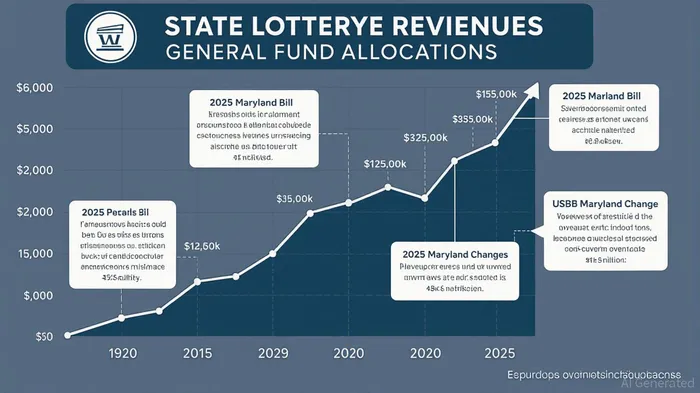
Recent legislative moves, such as Maryland's SB595 (2025), highlight a growing trend: directing lottery funds to local infrastructure projects like the Laurel Race Course. This shift underscores a broader strategy to tie lottery proceeds to tangible, community-level benefits. However, such initiatives also raise questions about prioritization: Are these funds being used to address systemic gaps, or simply to fund politically expedient projects?
The Illusion of Stability: Why Lottery Funding is a Fiscal Mirage
Academic studies and government reports paint a sobering picture. While lotteries generate a windfall in their early years, revenue typically declines as participation wanes—a phenomenon driven by market saturation and diminishing novelty. For example, Florida's lottery revenue peaked in the early 2000s but has since plateaued, forcing the state to repurpose general funds to maintain education spending. This “fungibility” issue is rampant: states often treat lottery funds as a substitute rather than a supplement, leading to underfunded programs and fiscal instability.
The USDA's 2025 proposed SNAP rule changes further illustrate the challenges. By requiring households to report substantial lottery winnings, the agency aims to ensure compliance with eligibility rules. Yet this highlights a deeper problem: lottery revenue is inherently volatile, making it a poor foundation for programs like SNAP, which require consistent, predictable funding.
The Equity Dilemma: Who Bears the Cost?
Perhaps the most troubling aspect of lottery-funded programs is their regressive nature. Lower-income individuals, who statistically stand to gain the least from gambling861167--, contribute disproportionately. In 2023, the average lottery player earned $38,000 annually, while the top 10% of winners accounted for 75% of prizes. This creates a cycle where vulnerable populations subsidize social services, often without realizing it.
For investors, this raises ethical and practical concerns. States reliant on lottery revenue may struggle to fund essential services during economic downturns, potentially impacting bond ratings and local economies. Conversely, companies in sectors tied to lottery infrastructure—such as gaming technology firms—could see growth in states expanding their gambling portfolios.
Investment Implications: Navigating the Risks and Opportunities
- Assess State Fiscal Health: Investors should scrutinize states that over-rely on lottery revenue. For example, Florida's lottery funds 25% of its education budget, compared to 3.8% nationally. A decline in lottery participation could force painful cuts, negatively affecting education-related industries.
- Monitor Policy Shifts: Legislative actions like Maryland's SB595 or the USDA's SNAP rule changes could reshape how lottery funds are allocated. Tracking these trends can help identify states poised to redirect resources to infrastructure or social programs.
- Diversify Exposure: While lottery-dependent states may offer short-term gains (e.g., through construction projects tied to local impact aid), investors should balance their portfolios with regions that prioritize diversified revenue streams, such as progressive taxation or federal grants.
Conclusion: A Cautionary Bet
State lotteries are a double-edged sword. They offer immediate funding for public programs but come with long-term risks of fiscal instability, equity issues, and political mismanagement. For investors, the key lies in understanding how these dynamics play out regionally—and in recognizing that a state's reliance on lottery revenue can be a bellwether for its broader fiscal health. As the 2025 legislative and regulatory landscape evolves, staying attuned to these trends will be critical for navigating the intersection of public policy and investment strategy.







Comentarios
Aún no hay comentarios