
¿Por qué su cuenta bancaria inactiva está perdiendo dinero? (Y cómo evitarlo)
Vamos a dejar de lado esa cuestión del confort. Esa cuenta de ahorros que has dejado sin vigilar… No está simplemente allí, sino que está perdiendo dinero. El culpable es un simple problema matemático: la tasa de interés de tu banco sigue siendo baja, mientras que el costo de todo lo demás aumenta constantemente.
La tasa promedio de ahorro a nivel nacional es una referencia para el entorno general de las tasas de interés. Pero no se trata de una tasa con la cual uno debería conformarse.El rendimiento promedio de los cuentas de ahorro a nivel nacional es del 0.61% anual.Según una encuesta reciente, ese es el número principal que se menciona en los titulares de los periódicos. Pero la inflación es, en realidad, el verdadero “ladrón”. El Índice de Precios al Consumidor aumentó.El 2.7 por ciento en los últimos 12 meses.En otras palabras, su dinero se encuentra sujeto a impuestos debido al aumento de los costos de vida. Al mismo tiempo, ese dinero no gana casi ningún beneficio alguno.
El resultado es un “retorno real” negativo. Ese es el número que importa para determinar tu poder adquisitivo. Para entender cómo funciona esto, imagina que tienes 10,000 dólares en una cuenta típica, y que esa cuenta gana un rendimiento del 0.5% anual. Después de un año, tu saldo habrá aumentado.$10,050En teoría, eso es un éxito. Pero si la inflación alcanza el 2.5%, entonces los 10,050 dólares que tienes ahora no valen menos que los 10,000 dólares de hace un año. De hecho, su poder adquisitivo real disminuye en más de 1,200 dólares durante ese mismo período.
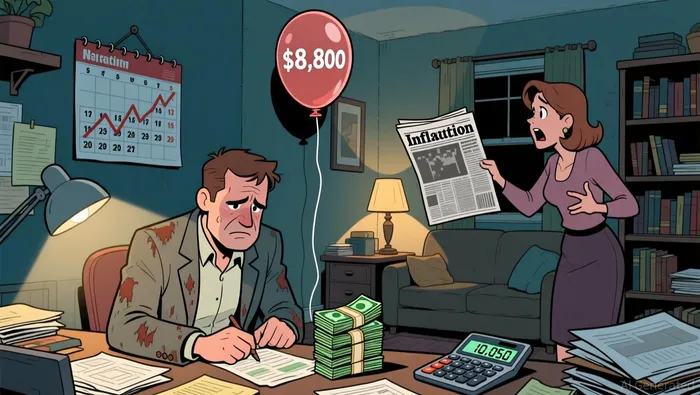
En otras palabras, estás pagando una tarifa simplemente para mantener tu dinero seguro. El banco te ofrece un pequeño interés, pero la inflación reduce constantemente el valor de ese interés y del capital original, cada mes que pasa. Este “derrame lento” es algo inevitable en un entorno con tasas de interés bajas. La comodidad de poder acceder fácilmente a su dinero, además del seguro FDIC, viene acompañada de un costo: tus ahorros pierden valor en el mundo real.
La matemática del rendimiento real: cuando su banco le paga para que pierda.
La tasa de interés que se aplica a tu cuenta de ahorros no es más que una distracción. Es el número que la banca quiere que te concentres en él. El número real, aquel que determina si tu dinero realmente está creciendo o si, por el contrario, está disminuyendo, es el “rendimiento real”. Es muy sencillo: toma el interés que ganas, resta los impuestos sobre ese interés, y luego resta la tasa de inflación. Si el número final es negativo, significa que has perdido dinero en realidad.
Veamos un ejemplo concreto. Imaginemos que depositamos 20,000 dólares en un depósito a plazo de 12 meses. El banco podría ofrecer una tasa de interés nominal…3.70%Pero tendrás que pagar impuestos sobre ese interés. Por ejemplo, un 30% de retención fiscal para una persona con un ingreso promedio. Eso significa que el rendimiento después de pagar los impuestos será de aproximadamente 2.59%. Ahora, teniendo en cuenta la inflación… Si los precios aumentan al 2.70% anual, el rendimiento real se reduce a -0.11%. En otras palabras, después de pagar todos los costos y impuestos, tu dinero sigue perdiendo su poder adquisitivo.
Veamos otro escenario para aquellos que desean aplicar métodos cuantitativos en sus inversiones. Se trata de un enfoque práctico que equilibra el riesgo y la recompensa, utilizando un algoritmo comprobado en la práctica.
La implicación es clara: en efecto, estás pagando una tarifa para que tu dinero se mantenga seguro. La promesa de seguridad y facilidad de acceso que ofrece el banco viene acompañada de un costo: la pérdida del poder adquisitivo del dinero. En este caso, la tarifa que el banco cobra por la seguridad de tu dinero supera incluso los pequeños intereses que te paga. No solo no ganas nada, sino que además pagas para que tu dinero pierda su valor.
Esto no es un cálculo único. Es la nueva normalidad en un mundo de bajas tasas de interés y inflación. La comodidad que ofrece un depósito garantizado ahora se convierte en un compromiso: el banco gana en términos de seguridad, pero usted pierde en términos de valor. El cálculo del rendimiento real te obliga a preguntarte: ¿vale la pena esa comodidad a cambio de una pérdida de valor?
Los riesgos que conlleva la inactividad: tarifas, pérdida de oportunidades y consecuencias negativas
Más allá del lento aumento de la inflación, dejar un saldo sin gestionar conlleva una serie de riesgos específicos, que a menudo se pasan por alto. Estos riesgos no son teóricos; son costos concretos que pueden sumar hasta cientos, o incluso miles de dólares en un período de diez años.
En primer lugar, están las cuotas directas que se cobran de forma constante. Muchos bancos imponen una cuota de mantenimiento mensual, que a menudo se denomina “cuota de servicio”. La media para las cuentas que generan intereses es…$15.45 por mesSi nunca revisa su estado de cuenta, esa tarifa se acumula sin que usted se dé cuenta. En más de diez años, eso significa una pérdida potencial de más de 1,800 dólares… dinero que no ganó y que tampoco necesitaba pagar.
Luego está el proceso legal relacionado con la transferencia de los fondos al estado. Después de un período de inactividad establecido por el estado, que suele durar de 3 a 5 años, los fondos no reclamados se transfieren legalmente al gobierno del estado. Esto no es una sugerencia, sino una obligación.Se estima que existen 58 mil millones de dólares que aún no han sido reclamados por sus dueños.Gran parte de ese dinero proviene de cuentas bancarias olvidadas. Una vez que ese dinero se convierte en propiedad del estado, es necesario recuperarlo activamente. Este proceso puede ser largo y frustrante. El banco ya no tiene control sobre ese dinero, y usted pierde el control sobre su propio efectivo.
Sin embargo, el costo más importante es el costo de oportunidad. Se trata del dinero que podrías haber ganado al invertir ese dinero en otro lugar. Piensa en un saldo de 10,000 dólares que se mantiene en una cuenta con baja rentabilidad. Aunque esa cantidad no gana mucho, el mismo dinero, si se invirtiera en un portafolio diversificado, podría haber crecido significativamente a lo largo del tiempo. Los datos muestran que un saldo de 20,000 dólares invertido en una cuenta bancaria con la tasa de interés oficial habría generado 3,317 dólares en cinco años. Pero lo realmente importante es lo que pasó…Perdido/DesaparecidoEsos 3,317 dólares son simplemente los intereses que no ganaste. El costo de oportunidad se refiere al crecimiento potencial que podría haber obtenido al invertir ese dinero… Un crecimiento que podría haber sido mucho mayor. No solo estás perdiendo contra la inflación, sino que también estás perdiendo la oportunidad de acumular riqueza.
En resumen, la inactividad no es algo pasivo. Es una decisión activa: pagar cuotas, arriesgarse a perder todo lo que posees, y abandonar cualquier esperanza de crecimiento significativo. El costo de no hacer nada es mucho mayor que los intereses que se pueden ganar.
Alternativas más inteligentes: Cómo proteger tu fondo para los días difíciles
La buena noticia es que no es necesario elegir entre la seguridad y el retorno económico. Existen opciones prácticas y de bajo riesgo que pueden proteger tu poder adquisitivo, sin las volatilidades que implican las acciones. Lo importante es buscar activamente opciones con mayores rendimientos y evitar los costos adicionales que implica tener una cuenta con tasas bajas.
En primer lugar, consideremos una cuenta de ahorros con altas tasas de interés. Estas cuentas, que suelen ofrecerse por parte de los bancos en línea, pagan intereses que son múltiplos del promedio nacional. Mientras que el promedio nacional es de…0.61% de TAEPuede encontrar fácilmente cuentas de primera clase que ofrecen una tasa de interés anual del orden del 4%. Eso representa una diferencia significativa. Con un 4%, su saldo de $10,000 ganaría $400 en un año, lo cual es mucho más probable que permita que el dinero siga el ritmo de la inflación actual, o incluso superarla. La seguridad sigue siendo garantizada por el seguro FDIC, pero la rentabilidad ya no representa una pérdida.
Si buscas una rentabilidad un poco más alta y un nivel de disciplina adicional, puedes considerar los certificados de depósito a corto plazo o los títulos del tesoro. En esencia, se trata de préstamos de bajo riesgo que se conceden al banco o al gobierno. Generalmente, ofrecen una rentabilidad ligeramente superior a la de los ahorros de alto rendimiento, ya que su rango de rentabilidad suele estar entre el 4% y el 5%. Además, su seguridad es similar a la de los ahorros de alto rendimiento. El inconveniente es que debes comprometer tu dinero durante un período fijo, como tres meses o un año. También podrías enfrentar una penalización si retiras el dinero antes de tiempo. Pero si necesitas un fondo para casos de emergencia, esta puede ser una buena opción para obtener una mejor rentabilidad.
En resumen, la opción predeterminada ya no es la única opción disponible. La comodidad que ofrece una cuenta de ahorros tradicional viene acompañada de un costo: el poder adquisitivo de tu dinero se reduce. Al simplemente transferir tu dinero a una cuenta de ahorros con alta rentabilidad, podrás comenzar a obtener un rendimiento real. Es un paso pequeño, pero que puede marcar una gran diferencia a largo plazo.
Qué ver: La inflación y el entorno de tipos de interés
Las perspectivas de tus ahorros dependen de dos factores importantes: la inflación y los tipos de interés. En este momento, las circunstancias son desfavorables para ti. Pero el panorama puede cambiar en el futuro, y es necesario que sepas qué cosas debes estar atento a.
En primer lugar, es necesario monitorear la postura de la Reserva Federal. La Fed establece el patrón para todos los costos de préstamo y endeudamiento en la economía. Sus decisiones afectan directamente las tasas de interés que las bancos ofrecen en cuanto a las cuentas de ahorro. Mientras la Fed se esfuerza por reducir la inflación…Tasa objetivo del 2 por cientoSus acciones determinarán si los rendimientos aumentarán o se mantendrán bajos. Si la Fed indica que ha terminado con las subidas de tipos de interés o que está lista para reducirlos, eso podría llevar a un aumento en las tasas de ahorro a largo plazo. Pero si la inflación persiste, la Fed podría mantener los tipos de interés elevados. Esto podría ser beneficioso para los ahorradores a largo plazo.
En segundo lugar, hay que seguir de cerca los datos más recientes del Índice de Precios al Consumidor. Este es el principal indicador de la inflación, y muestra la amenaza constante que representa para su poder adquisitivo. El informe más reciente indicó que…El índice de todos los artículos aumentó un 2.7% en los últimos 12 meses.Ese es el número que debes superar. Hay que observar si esta tendencia se acelera o disminuye. Un aumento constante por encima del 2% significa que tus ahorros deben generar una rentabilidad mayor para mantenerse al ritmo actual. Esto ejerce presión sobre los bancos para que ofrezcan tasas de interés más bajas.
Por último, hay que estar atentos a cualquier cambio en las políticas que puedan afectar la red de seguridad o introducir nuevos incentivos. Aunque el límite de seguro de la FDIC es una característica estable, siempre existe la posibilidad de cambios legislativos. Lo más importante es buscar nuevos programas gubernamentales o incentivos fiscales destinados a fomentar el ahorro. Por ejemplo, algunos legisladores han discutido la creación de nuevos tipos de cuentas de ahorro con beneficios fiscales especiales. Estas cuentas podrían ofrecer una mayor rentabilidad que una cuenta de ahorros estándar, pero requerirían nuevas reglas y podría llevar tiempo para su implementación.
En resumen, el futuro de tus ahorros no está fijo. Depende de la lucha que libe la Reserva Federal contra la inflación y de si los responsables de la formulación de políticas intervienen para ayudar. Mantén un ojo atento en estos tres factores: las medidas tomadas por la banco central, el informe sobre la inflación y cualquier nueva propuesta que se presente. De esta manera, estarás preparado para actuar cuando surja la oportunidad adecuada.







Comentarios
Aún no hay comentarios