
Dorian LPG's Position in a Shifting LPG Market Amid Oversupply Risks and Earnings Volatility
The liquefied petroleum gas (LPG) shipping sector is navigating a complex landscape in 2025, marked by oversupply risks, volatile pricing, and shifting trade dynamics. For investors, Dorian LPG Ltd.LPG-- (NYSE: LPG) stands at a crossroads, balancing cyclical challenges with strategic initiatives aimed at securing long-term value. This analysis examines Dorian LPG's financial performance, dividend strategy, and market positioning amid these headwinds, offering insights into its potential as a cyclical investment.
Financial Performance: Earnings Volatility and Strategic Resilience
Dorian LPG's third-quarter 2025 results underscored the turbulence in the LPGLPG-- market. Revenues fell to $80.7 million, with adjusted net income of $18.5 million ($0.43 per share), a stark decline from $106.0 million ($2.62 per share) in the prior year. This downturn reflects broader industry pressures, including compressed spot rates and elevated operating costs. However, the company's balance sheet remains robust, with $314.5 million in free cash and a debt-to-total-book-capitalization ratio of 34.8%. CEO John Hadjipateras emphasized confidence in the VLGC market, citing the company's ability to absorb new vessel deliveries expected in 2026 and 2027.
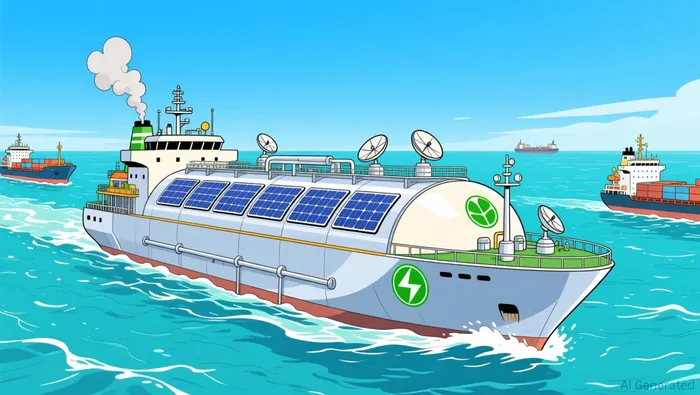 Despite the earnings contraction, Dorian LPGLPG-- maintained its commitment to shareholder returns by declaring an irregular dividend of $0.70 per share, totaling $30.0 million. This move, while non-recurring, signals a strategic prioritization of capital returns amid cyclical uncertainty. Analysts note that such dividends are common in capital-intensive sectors like shipping, where cash flow can fluctuate sharply.
Market Dynamics: Oversupply and Demand Divergence
The LPG market in 2025 is defined by a tug-of-war between surging demand in Asia and persistent oversupply in North America and the Middle East. Saudi Aramco's recent price cuts-propane to $475 per tonne and butane to $460 per tonne-have intensified competition, particularly in the Asian market, where China's PDH sector is a key driver of propane demand. Meanwhile, the U.S. remains a dominant supplier, with its propane-rich production and strategic trade agreements. However, infrastructure bottlenecks, such as high terminal fees and limited Panama Canal transits, are constraining long-haul shipments.
These dynamics create a mixed outlook for LPG shipping rates. While Asian demand is projected to grow at a 4.1% CAGR through 2032, driven by industrial and residential usage in India, China, and Indonesia, oversupply risks could dampen spot rates. Drewry's analysis suggests that increased Middle Eastern exports to Asia may reduce tonne-mile demand, further pressuring vessel operators. For Dorian LPG, which operates a fleet of 14 VLGCs, these trends highlight the need for operational agility.
Strategic Positioning: Fleet Renewal and Diversification
Dorian LPG's long-term strategy hinges on fleet modernization and diversification. The company has invested in scrubber-fitted vessels to enhance energy efficiency and is exploring ammonia-carrying conversions to align with decarbonization trends. These initiatives aim to future-proof the fleet against regulatory shifts and evolving cargo demands. Additionally, Dorian LPG's focus on shorter-haul Middle East-to-Asia routes-favored by arbitrage opportunities-positions it to capitalize on regional trade flows.
However, the company faces headwinds. Analysts upgraded their 2026 revenue forecasts to $428 million, a 19% increase from 2025, but revised earnings per share (EPS) downward to $3.50, reflecting margin pressures from higher operating costs. This underscores the cyclical nature of the sector, where short-term volatility is often followed by periods of recovery.
Cyclical Investment Considerations
For investors, Dorian LPG's stock presents a nuanced case. While its 2025 earnings and revenue declines are concerning, the company's strong liquidity, strategic fleet upgrades, and commitment to dividends offer a counterbalance. The irregular dividend of $0.70 per share, though non-recurring, demonstrates a willingness to return capital even during downturns-a trait often valued in cyclical sectors.
Technical analysis of the stock is mixed, with some analysts labeling it a "hold candidate" due to its exposure to volatile LPG rates and geopolitical risks. Yet, the upgraded 2026 revenue forecasts and the company's proactive approach to fleet modernization suggest potential for recovery. Investors must weigh these factors against macroeconomic risks, including U.S.-China trade tensions and global inventory levels.
Conclusion
Dorian LPG's position in the LPG market is a study in resilience amid adversity. While 2025 has been marked by earnings volatility and oversupply challenges, the company's strategic investments in fleet efficiency, ammonia-carrying capabilities, and regional trade routes position it to navigate the sector's cyclical nature. For investors with a medium-term horizon, Dorian LPG offers a blend of defensive balance sheet strength and growth-oriented initiatives, albeit with the inherent risks of a commodity-dependent industry. As the LPG market evolves, the company's ability to adapt to shifting demand patterns and regulatory trends will be critical to unlocking long-term value.





Comentarios
Aún no hay comentarios