
Domino's Pizza's Q4 Outlook and Implications for the Restaurant Sector
Domino's Pizza's Q4 2025 earnings results underscore its resilience in a volatile economic climate, offering critical insights for investors assessing the restaurant sector's trajectory. Despite macroeconomic headwinds, the company navigated shifting consumer trends through strategic adaptations, including aggressive franchise expansion, digital innovation, and cost optimization. However, challenges such as international growth moderation and debt management remain pivotal for long-term sustainability.
Financial Resilience: A Franchise-Driven Model
Domino's demonstrated robust financial performance in Q4 2025, with total revenue rising 4.2% year-over-year to $1.03 billion, according to the Q4 earnings report. This growth was fueled by an 11.9% increase in U.S. franchise advertising revenue, reflecting a return to standard 6.0% advertising contribution rates and higher same-store sales. Operating income improved by 6.4%, driven by margin gains in both franchise and supply chain segments. Notably, net income surged 7.8%, translating into a basic EPS of $4.92-a 8.9% year-over-year increase.
The company's franchise model remains a cornerstone of its success. By prioritizing royalty income over direct operations, Domino'sDPZ-- mitigates labor and supply chain risks while amplifying scalability. For instance, the U.S. added 29 net new stores in Q3 2025, according to the Q3 press release, and global retail sales grew 5.9% year-over-year in Q4, excluding currency impacts, as noted in a panabee analysis. This expansion, coupled with a 31.8% year-to-date free cash flow increase reported in the same release, highlights the model's ability to generate consistent returns even amid inflationary pressures.
Strategic Adaptations: Digital and Delivery Innovation
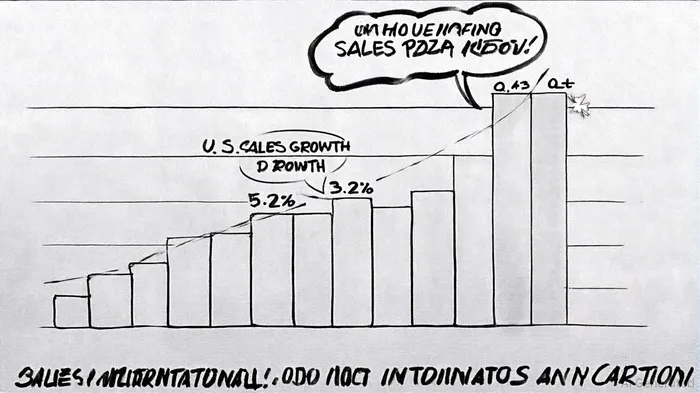
Shifting consumer preferences toward convenience and affordability have been central to Domino's strategy. The "Best Deal Ever" promotion, combined with loyalty programs and partnerships like Uber Eats and DoorDash, helped drive a 5.2% rise in U.S. same-store sales in Q3, according to a Bloomberg report. Digital sales channels accounted for a significant portion of this growth, reflecting the sector-wide shift toward tech-enabled ordering.
Supply chain adjustments further illustrate Domino's agility. While Q4 supply chain revenue declined 9.8% due to product mix changes and margin optimization, that report noted the company offset this by improving gross margins. This strategic pivot aligns with broader industry trends, where restaurants prioritize profitability over volume in response to rising input costs, as observed in a Rewbix analysis.
Challenges: Debt, International Growth, and Macroeconomic Risks
Despite these strengths, Domino's faces headwinds. Its $5 billion debt load as of December 2024 (per Panabee's analysis), including $1.15 billion in current liabilities due in October 2025, raises concerns about leverage. While a $1 billion refinancing at 5.1% reduced the leverage ratio to 4.5x from 4.9x, the debt-to-equity ratio climbed to 1.6 in one industry write-up, signaling potential vulnerabilities in a high-interest-rate environment.
International markets also present mixed signals. While U.S. same-store sales growth stood at 3.2% in Q4 (Panabee), international growth slowed to 1.6%, raising questions about global momentum. Analysts caution that geopolitical instability and currency fluctuations could further strain international operations, a point highlighted in reporting from Bloomberg.
Sector Implications: A Blueprint for Resilience
Domino's performance offers a blueprint for the restaurant sector's response to economic uncertainty. Its focus on franchise growth, digital integration, and margin optimization mirrors strategies adopted by peers like McDonald's and Yum! Brands. However, Domino's aggressive store expansion and debt-driven capital returns highlight a balancing act: scaling operations while maintaining financial flexibility.
For investors, the key takeaway is the interplay between operational agility and macroeconomic risks. While Domino's reaffirmed 3% U.S. same-store sales growth for 2025 in its Q3 release, analysts project a potential 16.10% upside to $492.00 based on the Q4 earnings analysis, contingent on its ability to navigate inflation and consumer spending shifts.
Historical backtesting of DPZ's stock performance following earnings beats since 2022 reveals limited alpha generation. Over 756 earnings-beat events, the average cumulative excess return over a 30-day window was only 0.46 percentage points versus the benchmark, with no statistical significance. A 50% win rate suggests no persistent directional edge, and short-term price movements (1–5 days) were largely noise. These findings underscore the market's efficiency in pricing earnings surprises and highlight the need for investors to look beyond headline beats-considering broader fundamentals like margin resilience, debt management, and international execution.
Conclusion: Navigating Uncertainty with Caution
Domino's Q4 results affirm its position as a resilient player in the fast-food sector. Yet, the company's reliance on debt, international growth challenges, and macroeconomic volatility necessitate a cautious outlook. For the broader restaurant industry, Domino's strategies underscore the importance of adapting to digital trends and optimizing margins-a lesson that will likely shape sector dynamics in 2026 and beyond.





Comentarios
Aún no hay comentarios