
U.S. Dollar Volatility and Carry Trade Opportunities: Navigating ECB Policy Stance in a Divergent Landscape
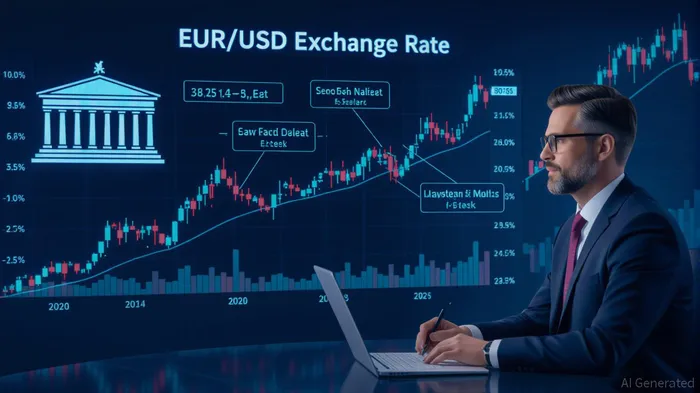
The U.S. dollar's trajectory in 2025 has been shaped by a complex interplay of global monetary policy divergences. While the European Central Bank (ECB) has adopted a cautious, data-dependent approach, keeping its key interest rate at 2% amid stable inflation and moderate growth[1], the Federal Reserve's (Fed) stance remains opaque due to limited publicly available data as of September 2025. This asymmetry in policy clarity creates fertile ground for dollar volatility and opens new carry trade opportunities for investors attuned to macroeconomic asymmetries.
ECB's Policy Framework: A Model of Restraint
The ECB's decision to hold rates at 2% reflects a delicate balancing act. Inflation in the eurozone has stabilized near the central bank's 2% target, with projections indicating a gradual decline to 1.7% by 2026[2]. Meanwhile, GDP growth forecasts of 1.2% in 2025 suggest a resilient but unspectacular recovery[3]. ECB President Christine Lagarde has emphasized a “meeting-by-meeting” approach, signaling that further easing is not ruled out but contingent on evolving risks such as U.S. tariff policies and the euro's strength against the dollar[4]. This measured stance has reinforced the euro's stability, with the ECB also maintaining its Asset Purchase Programme (APP) and Pandemic Emergency Purchase Programme (PEPP) portfolios in a state of gradual decline[5].
Fed Uncertainty and the Dollar's Dilemma
In contrast to the ECB's transparency, the Fed's September 2025 policy decisions remain shrouded in ambiguity. While historical trends suggest the Fed may have already begun tapering its aggressive tightening cycle, the absence of concrete data in the provided context forces investors to rely on indirect signals. If the Fed is perceived to be adopting a more dovish stance—such as initiating rate cuts or signaling prolonged low-rate environments—the dollar could face downward pressure relative to the euro. Conversely, a hawkish pivot by the Fed would amplify the divergence, bolstering the dollar's appeal. This uncertainty creates a volatile environment for currency traders, who must navigate conflicting signals from the two central banks.
Carry Trade Opportunities: A Euro-Biased Strategy
Given the ECB's current policy framework, the euro presents compelling carry trade opportunities. With the ECB maintaining rates at 2% and inflation anchored near target, the currency offers a relatively stable yield environment compared to the dollar. Investors who anticipate a dovish Fed response to slowing global growth could structure carry trades by shorting the dollar against the euro, leveraging the ECB's policy predictability. However, this strategy hinges on the Fed's actual trajectory. If the Fed opts for rate cuts, the yield differential between the euro and dollar will narrow, reducing the trade's profitability. Conversely, if the Fed tightens further, the carry trade could backfire, underscoring the need for dynamic hedging.
Risks and Mitigation
The primary risk for carry traders lies in the Fed's potential policy surprises. A sudden shift toward hawkish tightening could invert the yield curve, triggering a dollar rally and eroding euro-based carry positions. Additionally, geopolitical risks—such as U.S. tariff escalations—could force the ECB to reconsider its “wait-and-see” approach, introducing further volatility. To mitigate these risks, traders should employ stop-loss orders and monitor real-time data on U.S. inflation, employment, and trade policy developments.
Conclusion
The ECB's current policy stance provides a rare anchor in an otherwise uncertain global monetary landscape. By maintaining rates at 2% and projecting inflation stability, the central bank has created a predictable environment for the euro, contrasting with the Fed's opaque trajectory. This divergence offers a strategic window for carry traders to capitalize on the euro's relative stability, provided they remain vigilant to evolving U.S. policy signals. As September 2025 unfolds, the key question will be whether the Fed's actions will amplify or neutralize the ECB's measured approach—a dynamic that will define the dollar's volatility and shape the next phase of global capital flows.







Comentarios
Aún no hay comentarios