
U.S. Dollar Volatility in 2025: Tactical Opportunities Amid Easing Trade Tensions and Commodity Shifts
Dollar Strength and Trade Truce: A Temporary Reprieve
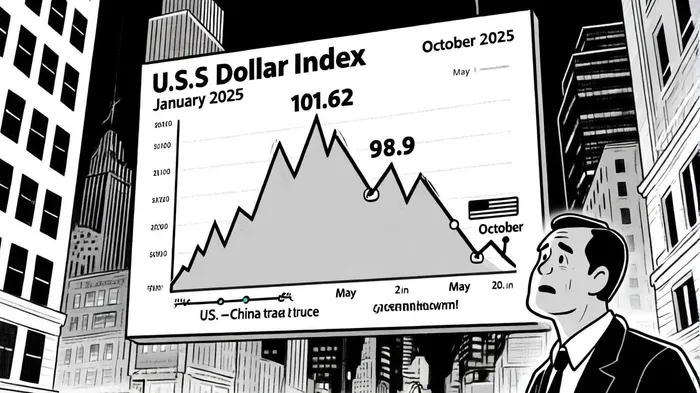
In early May 2025, the U.S. Dollar Index (DXY) surged to 101.62 following a 90-day trade truce between the U.S. and China, which saw both sides reduce tariffs, according to a Morningstar article. This marked a sharp reversal from months of bearish sentiment, as institutional short positioning in the dollar had reached historic levels, as the Morningstar article noted. However, this optimism proved fleeting. By mid-October 2025, the DXY had retreated to 98.9, reflecting renewed skepticism amid a U.S. government shutdown, political gridlock, and expectations of Federal Reserve rate cuts, according to a Cambridge Currencies forecast. The dollar's volatility underscores the fragility of trade-related optimism in the face of domestic policy uncertainty.
Commodity Markets: Gold's Resurgence and Diversification Shifts
The easing of trade tensions in Q3 2025 catalyzed a surge in gold prices, which hit $3,800 per ounce-a record high. This was driven by a combination of Fed rate cuts, inflation concerns, and reduced geopolitical risk, according to a Twelve Points review. Gold's performance highlights its role as a hedge against both trade-related instability and monetary policy shifts. Meanwhile, investors rotated capital into emerging market equities and non-U.S. assets, signaling a broader diversification away from the dollar, according to an Investopedia article. These trends suggest that while trade détente can temporarily stabilize markets, long-term positioning depends on macroeconomic fundamentals and central bank actions.
Tactical Positioning: Balancing Currency and Commodity Exposure
For investors, the 2025 market environment demands a nuanced approach:
1. Currency Hedging: The dollar's weakness in late 2025, exacerbated by Trump-era tariff escalations and regulatory uncertainty, as the Investopedia article reported, has created opportunities for hedging against further depreciation. Positions in non-U.S. currencies-particularly those in countries with stable trade relations and strong export sectors-could benefit from dollar outflows.
2. Commodity Diversification: Gold remains a strategic asset, given its inverse correlation with the dollar and its appeal during periods of geopolitical risk, as that Twelve Points review noted. Additionally, commodities tied to emerging markets, such as copper and industrial metals, may gain traction as trade tensions ease and global demand rebounds.
3. Rate-Centric Strategies: The Federal Reserve's expected rate cuts in Q4 2025, according to the Cambridge Currencies forecast, could further weaken the dollar, making carry trades (e.g., shorting the dollar against higher-yielding currencies) attractive. However, investors must monitor trade tensions closely, as renewed escalations could reverse these dynamics.
Conclusion: Navigating Uncertainty with Discipline
The dollar's 2025 trajectory underscores the importance of tactical flexibility. While trade détente can provide short-term relief, investors must remain vigilant about domestic policy risks and global capital flows. A balanced portfolio-combining dollar hedging, gold exposure, and emerging market diversification-offers a robust framework for navigating this volatile landscape.







Comentarios
Aún no hay comentarios