
Dollar Tree's Strategic Expansion in Distribution Infrastructure: Operational Efficiency and Long-Term Competitive Advantage
Dollar Tree's Strategic Expansion in Distribution Infrastructure: Operational Efficiency and Long-Term Competitive Advantage
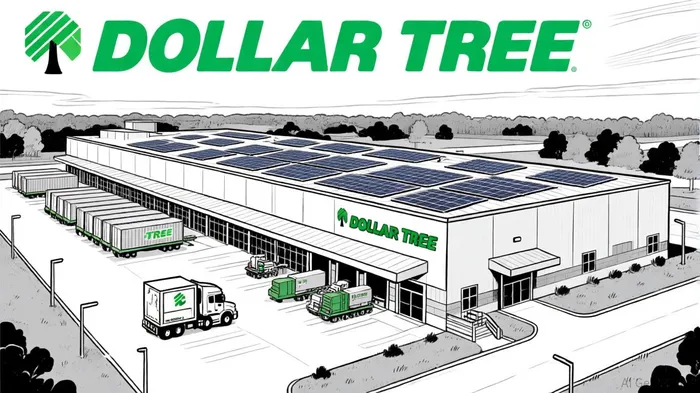
In the fiercely competitive discount retail sector, operational efficiency is the linchpin of sustained profitability. Dollar TreeDLTR-- Inc. (DLTR) has emerged as a standout player by strategically investing in its distribution infrastructure, a move that not only addresses immediate supply chain challenges but also positions the company for long-term dominance against rivals like Dollar General and Walmart. By modernizing its logistics network, implementing cutting-edge technologies, and expanding regional footprints, Dollar Tree is redefining cost leadership in an era of rising inflation and shifting consumer demands.
Infrastructure Investments: Building Resilience and Scalability
Dollar Tree's recent infrastructure projects underscore its commitment to supply chain resilience. In September 2025, the company broke ground on a new 1 million-square-foot distribution center in Marietta, Oklahoma, replacing a facility destroyed by a tornado in April 2024, as noted in the company's press release. This facility, expected to open in spring 2027, will serve 700 stores in the West and Southwest regions and create 400 jobs, according to a Business News Today report. Simultaneously, Dollar Tree acquired a 1.25 million-square-foot distribution center in Litchfield Park, Arizona, for $147 million, set to open in spring 2026, per a Morningstar announcement. These projects are not merely replacements but strategic expansions designed to reduce delivery times, enhance inventory turnover, and support regional economic recovery.
The Oklahoma facility, in particular, highlights Dollar Tree's focus on disaster preparedness and geographic diversification. By relocating critical logistics hubs away from high-risk areas, the company mitigates disruptions while ensuring consistent product availability for its stores, as described in a Yahoo Finance article. This approach contrasts with Dollar General's more centralized model, which, while cost-effective, lacks the same level of regional redundancy, according to a Latterly profile.
Operational Efficiency: Temperature Controls and Rotacart Innovations
Beyond physical infrastructure, Dollar Tree is leveraging technology to optimize its supply chain. The company has implemented temperature controls across its distribution centers, reducing cross-docking costs and enabling the efficient handling of temperature-sensitive products like over-the-counter medications, as reported in a Supply Chain Dive report. By the end of 2024, 25 distribution centers will be fully temperature-controlled, a move that aligns with growing consumer demand for health and wellness products, noted in a Food Shippers blog.
Equally transformative is the adoption of Rotacart delivery systems, which automate store unloading and streamline handling, as described in a Hulk Apps post. With plans to expand Rotacart deliveries to over 2,000 stores by 2025, Dollar Tree is addressing labor shortages and reducing product damage, both of which directly impact operating expenses, according to a Supply Chain Dive article. According to a report by Supply Chain Dive, these initiatives have already improved in-stock levels by 15% in pilot locations.
Financial Metrics: Inventory Turnover and Cost Savings
Dollar Tree's operational efficiency is reflected in its inventory turnover ratios. For the fiscal year ending January 31, 2025, the company reported an inventory turnover of 4.22, up from 3.38 in 2023, according to AlphaQuery data. While this remains lower than Walmart's 9.07 turnover ratio for the same period, per AlphaQuery WMT, it outperforms Dollar General's 1.11 ratio in Q2 2025, according to Macrotrends data. This improvement is attributed to better demand forecasting, reduced overstocking, and faster replenishment cycles enabled by its upgraded distribution network, as outlined in a FernFort case study.
Cost savings are another critical metric. Dollar Tree's temperature-controlled facilities are projected to reduce cross-docking expenses by 12% annually, while Rotacart systems are expected to cut labor costs by 8% per store, according to CSIMarket. These efficiencies are vital in an environment where operating expenses rose 12.63% year-over-year in Q2 2025, per a Finviz report. By comparison, Dollar General's gross margin declined by 1.6% in 2024, as discussed in a Financhle analysis.
Competitive Advantage: A New Era of Retail Logistics
Dollar Tree's investments are not just defensive-they are offensive strategies to outmaneuver competitors. Walmart, despite its supply chain dominance, faces challenges in replicating Dollar Tree's localized distribution model. The latter's focus on regional hubs ensures faster delivery times (averaging 24–48 hours for Southwest regions, according to AlphaQuery) compared to Walmart's national network, which often prioritizes scale over speed. Meanwhile, Dollar General's reliance on a centralized model limits its ability to adapt to regional disruptions, a vulnerability exposed during the 2024 tornado and noted in a Panabee earnings note.
Moreover, Dollar Tree's emphasis on technology-such as AI-driven inventory analytics and cloud-based ERP systems-positions it to capitalize on e-commerce growth. While its e-commerce sales remain modest, the company's omnichannel strategy, including buy-online-pickup-in-store (BOPIS) options, is gaining traction, as highlighted in TCS retail trends. This contrasts with Dollar General's lag in digital adoption, where e-commerce accounts for less than 5% of revenue, according to TheStreet report.
Conclusion: A Blueprint for Sustainable Growth
Dollar Tree's strategic expansion in distribution infrastructure is a masterclass in operational efficiency. By combining physical investments with technological innovation, the company is not only reducing costs but also enhancing its ability to meet consumer expectations in a volatile market. As it continues to outperform rivals in inventory turnover and delivery speed, Dollar Tree is solidifying its position as a leader in the discount retail sector. For investors, this represents a compelling case of long-term value creation through supply chain excellence.





Comentarios
Aún no hay comentarios