
The Dollar's Resurgence and Its Implications for Global Equity Portfolios
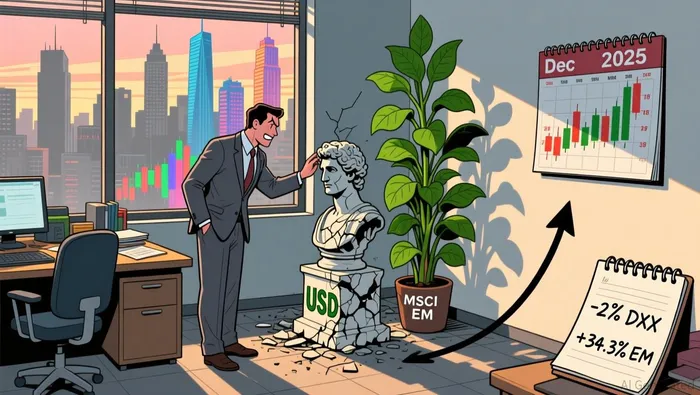
The U.S. dollar's trajectory in 2025 has defied traditional narratives of resilience, instead revealing a complex interplay of cyclical volatility and structural shifts. While the greenback entered the year as a dominant global reserve currency, its performance-marked by a 10.7% decline in the DXY index by mid-2025 and a 9% year-to-date drop by December-has underscored a broader reallocation of capital and a reevaluation of risk across global markets according to JPMorgan analysis. This shift has profound implications for equity investors, particularly as currency-driven sector rotation and corporate profitability dynamics reshape the landscape.
The Dollar's Decline: A Catalyst for Global Rebalancing
The dollar's weakness in 2025 was fueled by a confluence of factors: slowing U.S. growth, expectations of Federal Reserve rate cuts, and geopolitical uncertainties. By December 2025, the DXY index hovered near 98, a level that reflected not only the pricing of rate cuts but also a loss of confidence in the dollar's long-term structural advantages. Morgan StanleyMS-- Research highlighted that the dollar's overvaluation-15% higher than peers in purchasing power parity terms-has created a "floorless" environment, with the currency potentially losing another 10% by 2026.
This devaluation has acted as a tailwind for international equities. A weaker dollar boosts the dollar value of foreign earnings for multinational corporations, providing a direct earnings lift. For example, the MSCIMSCI-- Emerging Markets Index surged 34.3% in 2025, driven by both currency translation effects and improved local economic conditions. European investors, in particular, have shifted capital back to domestic assets, hedging U.S. exposure and accelerating the dollar's relative decline.
Sector Rotation: Winners and Losers in a Dollar-Driven World
 The dollar's decline has amplified sector-specific divergences, with corporate profitability hinging on exposure to international markets and currency sensitivity. Large-cap growth stocks, particularly those with significant overseas revenue, have outperformed. The Russell 1000 Growth Index outpaced its Value counterpart by 2.7% in 2025, as multinational firms capitalized on the weaker dollar.
Communication services and technology-related sectors have emerged as key beneficiaries. The communication services sector, bolstered by favorable valuations and digital media exposure, returned 33.6% in 2025-surpassing the S&P 500. Conversely, sectors like real estate and energy have lagged due to macroeconomic volatility and global supply chain adjustments eroding margins.
For investors, this rotation underscores the importance of geographic and sectoral diversification. BlackRock noted that a declining dollar has historically enhanced international equity returns, suggesting a structural shift in how global markets respond to dollar cycles. This trend is further reinforced by the Trump-era tariff policies, which have introduced persistent uncertainty into corporate planning and supply chain strategies.
The Fed's Balancing Act and Long-Term Structural Shifts
The Federal Reserve's policy trajectory remains a critical variable. Despite holding rates steady for much of 2025, the Fed's credibility has been tested by weak employment data and political speculation around leadership changes. Market participants now price in a high probability of rate cuts in 2026, a scenario that could further weaken the dollar and extend the current equity rotation.
Structurally, the dollar's dominance as a reserve currency faces growing challenges. While its role as a global benchmark provides a floor to its value, diversification into gold and other currencies has accelerated. RBC Wealth Management argues that the dollar is transitioning from a 15-year bull cycle to one of cyclical volatility, with long-term imbalances in purchasing power parity exerting downward pressure.
Strategic Implications for Investors
For equity portfolios, the dollar's decline necessitates a recalibration of asset allocation. A weaker dollar historically supports international equities, particularly in emerging markets, where local currencies have appreciated against the greenback. Morgan Stanley's analysis suggests that investors should prioritize sectors with high foreign revenue exposure and avoid those sensitive to U.S. dollar strength.
Moreover, the dollar's structural shifts highlight the need for hedging strategies. As foreign investors hedge U.S. asset exposure, demand for alternative currencies and gold is likely to rise, further pressuring the dollar. This dynamic could create opportunities in non-U.S. markets, where earnings growth and currency appreciation compound returns.
Conclusion
The U.S. dollar's 2025 performance marks a pivotal moment in global capital flows and equity market dynamics. While its long-term dominance remains intact, the currency's cyclical volatility and structural overvaluation have catalyzed a reallocation of capital toward international equities and diversified assets. For investors, the key lies in navigating sector-specific exposures and leveraging the dollar's weakness to capitalize on emerging opportunities. As the Fed's policy path and global economic rebalancing unfold, the era of dollar-driven sector rotation is likely to persist, reshaping the contours of global equity portfolios for years to come.





Comentarios
Aún no hay comentarios