
The Dollar at a Pivotal Crossroads: Why the 105.00 Level on the DXY Is a Make-or-Break Moment for Global Markets
The US Dollar Index (DXY) has long served as a barometer of global economic sentiment, and its current positioning near the 105.00 level represents a critical inflection point. This level, which coincides with the 200-day moving average and a confluence of technical and macroeconomic factors, could determine whether the dollar consolidates its dominance or faces a corrective phase. For investors, understanding the interplay between technical indicators and macroeconomic drivers is essential to navigating the volatility ahead.
Technical Convergence: A Tipping Point
The DXY's recent surge above key resistance levels has positioned it at a technical crossroads. As of early March 2025, the index broke through the 105.00 threshold, according to an ActionForex analysis. This breakout was supported by bullish price action, including strong buy candles on the daily chart and a retest of the 200-day moving average at 104.43, per an FXStreet report. However, the RSI has entered overbought territory, and the MACD line is narrowing relative to the signal line, signaling potential exhaustion in the upward trend, according to a 72Pips analysis.
A sustained close above 105.00 could propel the DXY toward 105.63, with the 106.50 level-a 2024 high-acting as the next major target, the ActionForex analysis noted. Conversely, a pullback to 104.00 would test the index's near-term stability, particularly if the 200-day moving average fails to hold as a psychological barrier, an FXStreet weekly forecast observed. This technical ambiguity underscores the importance of monitoring short-term volatility, especially as the DXY remains in a consolidation phase following its three-week high in March 2025, per the FXStreet weekly forecast.
Macroeconomic Drivers: Tariffs, Fed Policy, and Global Uncertainty
The DXY's trajectory near 105.00 is not solely a technical story. Macroeconomic factors, including trade policy shifts and Federal Reserve decisions, are equally pivotal. The Trump administration's proposed tariffs on imports from Canada and Mexico have created a dual-edged sword for the dollar. While initial speculation about aggressive trade policies boosted risk-off sentiment and temporarily strengthened the DXY, retaliatory measures from trading partners have since introduced uncertainty, dampening investor confidence, as discussed in the FXStreet report.
Meanwhile, the Federal Reserve's rate-cut expectations remain a dominant force. As of July 2025, the CME Group's FedWatch Tool indicated a 50% probability of a September rate cut and 35 basis points of easing by December, the ActionForex analysis pointed out. This contrasts with hawkish rhetoric from Fed officials like Neel Kashkari and John Williams, who emphasized the need for "more data" before committing to cuts, a theme also highlighted by the ActionForex analysis. This mixed messaging has created a tug-of-war between dollar strength (supported by a "tighter-for-longer" narrative) and weakness (driven by rate-cut expectations), a dynamic noted in an FXStreet forecast.
Compounding these dynamics is the DXY's divergence from traditional correlations with interest rate differentials. High inflation, a narrowing yield gap between the U.S. and other economies, and global economic slowdowns have weakened the dollar's usual appeal as a safe-haven asset, according to the 72Pips analysis. For instance, the European Central Bank's June 2025 rate cut and anticipated moves by the Bank of England and Reserve Bank of Australia have amplified the DXY's relative strength against G10 currencies, as described in the FXStreet forecast.
The Convergence: A Perfect Storm for Volatility
The 105.00 level is a flashpoint where technical and macroeconomic forces collide. On one hand, the DXY's proximity to the 200-day moving average and its recent bullish momentum suggest a potential continuation of the upward trend, especially if geopolitical risks in Europe or further tariff escalations trigger a risk-off rally, as noted in the FXStreet report. On the other hand, the Fed's rate-cut expectations and weaker U.S. labor market data-such as elevated jobless claims and softer nonfarm payrolls-pose a significant headwind, the ActionForex analysis warned.
This convergence creates a high-stakes scenario for global markets. A breakout above 105.00 could accelerate capital inflows into the U.S. dollar, exacerbating pressure on emerging markets and commodity currencies. Conversely, a failure to hold above this level might trigger a broader selloff in USD assets, as investors rotate into risk-sensitive equities and commodities, the FXStreet weekly forecast suggested.
Implications for Investors
For investors, the 105.00 level on the DXY is more than a technical milestone-it is a litmus test for global market stability. A sustained breakout would validate the dollar's resilience amid macroeconomic headwinds, offering opportunities in USD-denominated assets and Treasury bonds. Conversely, a breakdown could signal a shift toward risk-on sentiment, favoring equities and commodities.
Positioning should also account for the Fed's policy trajectory. If rate cuts materialize as expected, the DXY may face downward pressure despite short-term technical strength. Conversely, a "hawkish surprise" from the Fed could reinforce the dollar's dominance, particularly against currencies of economies with weaker growth outlooks, as noted in the FXStreet forecast.
In this environment, hedging strategies and diversified portfolios remain critical. The DXY's volatility near 105.00 is a reminder that no single factor-technical or macroeconomic-operates in isolation. The interplay between these forces will define the dollar's-and by extension, global markets'-immediate future.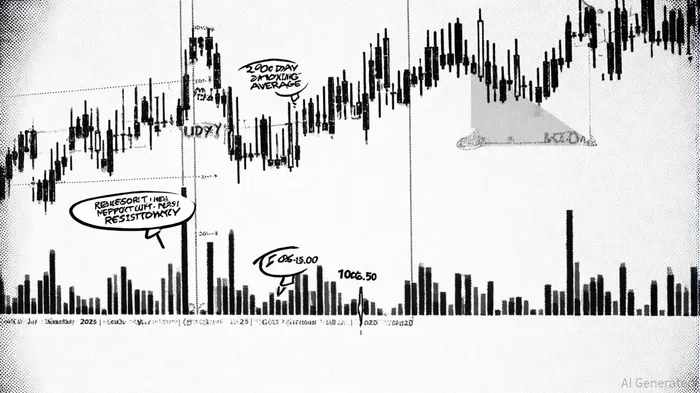







Comentarios
Aún no hay comentarios