
Dollar Dynamics in a Stagnant Inflation Environment
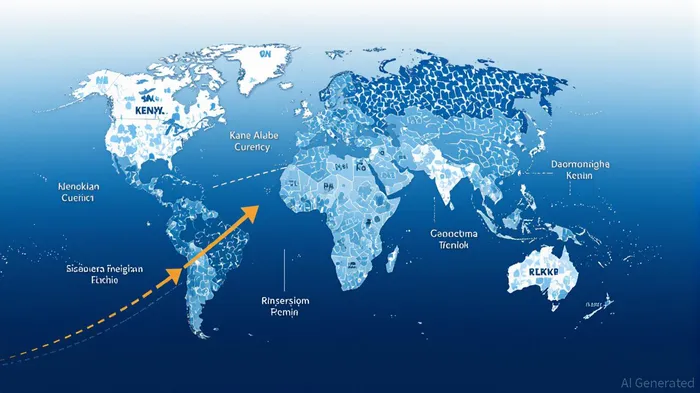
In a global economy marked by stagnant inflation since 2023, the interplay between dollar dynamics and capital reallocation has become a critical focal point for investors. While the U.S. dollar remains the dominant reserve currency, emerging markets are increasingly leveraging macroeconomic reforms and structural shifts to attract capital into non-dollar assets. This trend is driven by a combination of policy-driven stability, diversification strategies, and the need to mitigate vulnerabilities tied to commodity dependence.
Macroeconomic Policies as Catalysts for Reallocation
Emerging markets have adopted a dual approach to managing stagnant inflation: short-term tightening to stabilize economies and long-term reforms to foster inclusive growth. For instance, Kenya has prioritized macroeconomic stability while expanding private-sector productivity and connecting marginalized populations to growth opportunities[2]. Similarly, Papua New Guinea and Peru have implemented reforms such as increasing domestic revenue, reducing inefficient public spending, and strengthening institutional capacity to reduce exposure to external shocks[3][2]. These policies create a more predictable environment for foreign and domestic capital, encouraging reallocation into non-dollar assets like local equities and currencies.
Case Studies: Structural Shifts and Sectoral Diversification
The World Bank has underscored the importance of redirecting capital toward non-resource sectors to build resilience against volatile commodity prices. In Papua New Guinea, for example, public and private investment is shifting toward agriculture and manufacturing, sectors that promise long-term growth and job creation[3]. Peru's focus on improving fiscal frameworks and public expenditure efficiency further illustrates how macroeconomic discipline can unlock opportunities in non-dollar assets[2]. These examples highlight a broader trend: emerging markets are no longer solely reliant on traditional export-driven models but are instead investing in domestic productivity and diversification.
Challenges and Strategic Opportunities
Despite these positive developments, challenges persist. Global uncertainty, including geopolitical tensions and uneven recovery in advanced economies, continues to influence capital flows. Tight monetary conditions in the U.S. and Europe also constrain liquidity for emerging markets. However, the strategic reallocation of capital into non-dollar assets—such as local infrastructure bonds, green energy projects, and technology startups—offers a counterbalance. For example, Kenya's push to integrate vulnerable populations into its growth narrative has spurred demand for social impact investments[2], while Peru's emphasis on institutional capacity has attracted foreign direct investment into renewable energy.
Conclusion: A New Paradigm for Investors
The stagnant inflation environment has reshaped the landscape for capital reallocation. While the U.S. dollar retains its dominance, emerging markets are increasingly demonstrating that macroeconomic stability and structural reforms can unlock value in non-dollar assets. Investors who align with these trends—by targeting sectors like agriculture, technology, and sustainable infrastructure—stand to benefit from both risk diversification and long-term growth. As the World Bank notes, the key lies in ensuring that capital is directed toward sectors that promote productivity and inclusivity[1], a principle that will define the next phase of global investment.







Comentarios
Aún no hay comentarios