
Dollar Dives to Decade-Low vs Swiss Franc Amid US Asset Selloff
Generado por agente de IATheodore Quinn
jueves, 10 de abril de 2025, 9:56 pm ET3 min de lectura
The U.S. dollar has taken a significant hit, falling to a decade-low against the Swiss franc as investors flee U.S. assets in response to escalating trade tensions and a dramatic sell-off in U.S. Treasuries. The greenback's decline is a stark reminder of the volatility that can grip global markets when geopolitical risks and economic uncertainties collide.
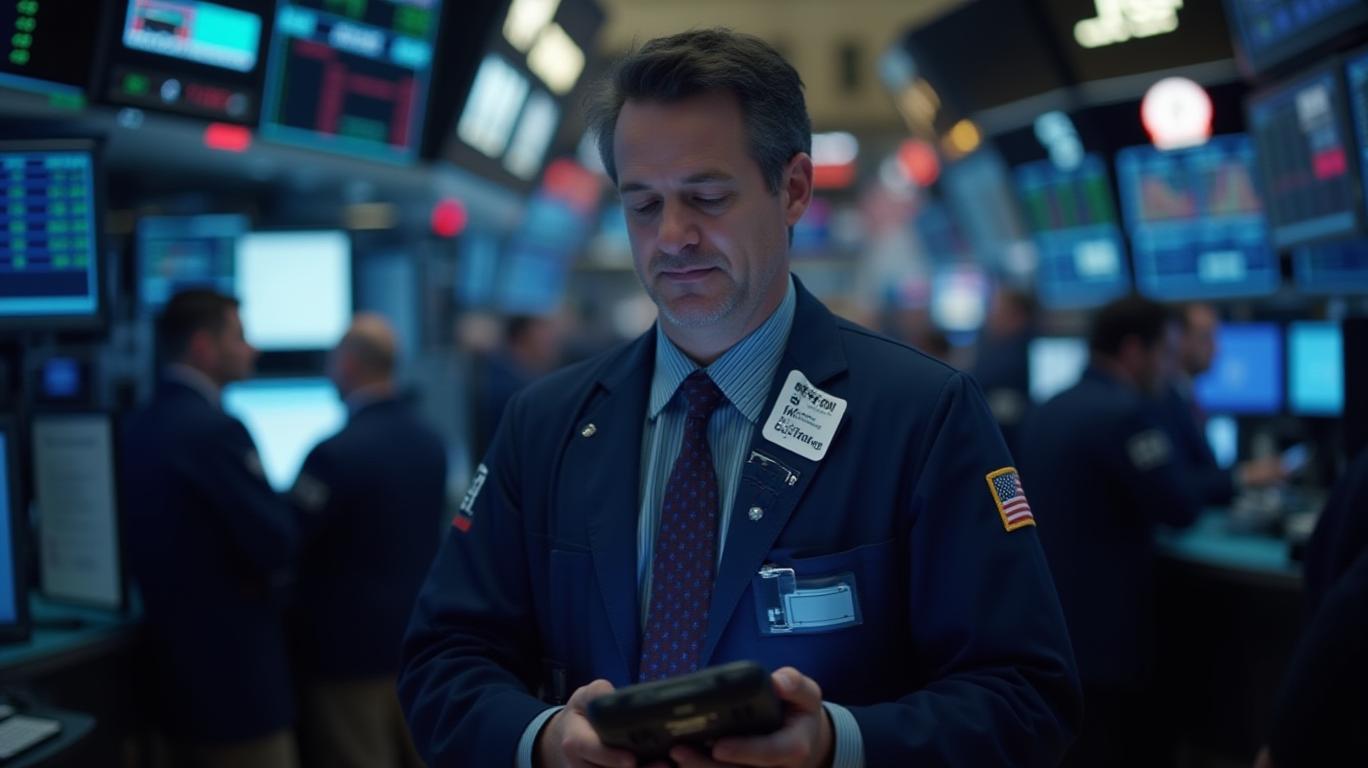
The sell-off in U.S. Treasuries has been nothing short of a fire sale, with yields on the benchmark 10-year bond rising by 0.16 percentage points to 4.42% and the 30-year yield briefly jumping above 5%. This dramatic move has sent shockwaves through financial markets, as investors offload their government bonds in large numbers. The yield on 10-year Treasuries jumped to more than 4.5 percent shortly after midnight, with 30-year yields surpassing 5 percent and two-year yields briefly reaching above 3.8 percent. This surge in yields indicates a significant loss of confidence in the U.S. as a cornerstone of the global economy.
The U.S. Dollar Index fell under 102 points for the first time since the presidential election, reflecting a broader loss of confidence in U.S. assets. Investors are seeking safer havens, such as the Swiss franc, yen, and euro, as well as gold. The euro surged as much as 1.7% to $1.13855, a level last seen in February 2022, while gold jumped 1.4% to an unprecedented $3,217.43 per ounce. This shift away from the U.S. dollar as a safe-haven asset is further evidenced by the strengthening of the Chinese yuan, which erased all losses and surged again on Thursday, despite escalating U.S. trade war with China.
The sell-off in U.S. Treasuries and the broader loss of confidence in U.S. assets raise questions about the long-term stability of the U.S. dollar as a global reserve currency. The U.S. Treasury market, valued at nearly $29 trillion, underpins everything from global reserves to corporate borrowing costs. Its stability is central to the functioning of the global financial system. A severe disruption in this market, like the current sell-off, could severely tighten financial conditions worldwide. If confidence in Treasuries continues to erode, the U.S. may find itself paying more to finance its debt, exacerbating fiscal pressures at a time of persistent deficits and geopolitical tension. This could lead to a situation where the U.S. is treated by global financial markets like a problematic emerging market, as suggested by former U.S. Treasury secretary Lawrence H. Summers.
The decline of the U.S. dollar against the Swiss franc and other safe-haven currencies has several potential implications for global trade and investment flows. Firstly, a weaker U.S. dollar can make U.S. exports more competitive in international markets, potentially boosting U.S. exports and benefiting sectors such as manufacturing and agricultureANSC--. However, it can also make imports more expensive, leading to higher costs for U.S. consumers and businesses that rely on imported goods. This could exacerbate inflationary pressures, which are already a concern given the recent tariff escalations and their potential impact on global supply chains.
Secondly, the decline of the U.S. dollar can lead to capital outflows from the U.S. as investors seek safer havens for their investments. This can result in a reduction in foreign investment in the U.S., potentially leading to a slowdown in economic growth. For instance, the U.S. Dollar Index fell under 102 points for the first time since the presidential election, indicating a significant loss of confidence in the U.S. economy. This loss of confidence can also lead to a reduction in foreign direct investment (FDI) in the U.S., as investors become more risk-averse and seek safer investment opportunities elsewhere.
Thirdly, the decline of the U.S. dollar can have implications for global trade and investment flows, as other currencies become more attractive for trade and investment. For example, the euro surged as much as 1.7% to $1.13855, a level last seen in February 2022, indicating a shift in investor sentiment towards the euro as a safe-haven currency. This can lead to an increase in trade and investment flows between the U.S. and countries that use the euro, as well as other safe-haven currencies such as the Swiss franc and the Japanese yen.
Fourthly, the decline of the U.S. dollar can also have implications for emerging markets, as a weaker U.S. dollar can make it more difficult for emerging market economies to service their dollar-denominated debt. This can lead to a reduction in investment flows to emerging markets, as investors become more risk-averse and seek safer investment opportunities elsewhere. For instance, the Chinese yuan had tumbled to an all-time low in offshore trading on Tuesday, but erased all those losses a day later, surging again on Thursday, and was strengthening in early trading. This volatility in emerging market currencies can lead to a reduction in investment flows to these markets, as investors become more risk-averse and seek safer investment opportunities elsewhere.
In summary, the decline of the U.S. dollar against the Swiss franc and other safe-haven currencies has several potential implications for global trade and investment flows. It can make U.S. exports more competitive, but also make imports more expensive, leading to higher costs for U.S. consumers and businesses. It can also lead to capital outflows from the U.S., potentially leading to a slowdown in economic growth. Additionally, it can have implications for global trade and investment flows, as other currencies become more attractive for trade and investment. Finally, it can have implications for emerging markets, as a weaker U.S. dollar can make it more difficult for emerging market economies to service their dollar-denominated debt.



Divulgación editorial y transparencia de la IA: Ainvest News utiliza tecnología avanzada de Modelos de Lenguaje Largo (LLM) para sintetizar y analizar datos de mercado en tiempo real. Para garantizar los más altos estándares de integridad, cada artículo se somete a un riguroso proceso de verificación con participación humana.
Mientras la IA asiste en el procesamiento de datos y la redacción inicial, un miembro editorial profesional de Ainvest revisa, verifica y aprueba de forma independiente todo el contenido para garantizar su precisión y cumplimiento con los estándares editoriales de Ainvest Fintech Inc. Esta supervisión humana está diseñada para mitigar las alucinaciones de la IA y garantizar el contexto financiero.
Advertencia sobre inversiones: Este contenido se proporciona únicamente con fines informativos y no constituye asesoramiento profesional de inversión, legal o financiero. Los mercados conllevan riesgos inherentes. Se recomienda a los usuarios que realicen una investigación independiente o consulten a un asesor financiero certificado antes de tomar cualquier decisión. Ainvest Fintech Inc. se exime de toda responsabilidad por las acciones tomadas con base en esta información. ¿Encontró un error? Reportar un problema


SOBRE NOSOTROS
Nuestra historiaAutores de noticiasBase de conocimientosPolítica de privacidadTérmino de usoDescargo de responsabilidad de corretaje de tercerosTérminos de uso de AIMEDivulgaciones de riesgos de AInvest AICarrerasCONTÁCTENOS
Email: support@ainvest.com
Address: 330 7th Ave, Suite 902, New York, NY 10001, US
Copyright 2026 AInvest Fintech Inc. All rights reserved.


Comentarios
Aún no hay comentarios