
The Dollar's Decline: Navigating Global Markets with Strategic Diversification
The U.S. dollar's prolonged decline—driven by policy volatility, shifting capital flows, and erosion of its reserve currency status—has created a pivotal moment for global investors. As the greenback weakens, opportunities are emerging in euro-denominated bonds, Asian equities, and commodities, while risks of overexposure to U.S. assets grow. This article explores how investors can capitalize on this trend through strategic diversification.
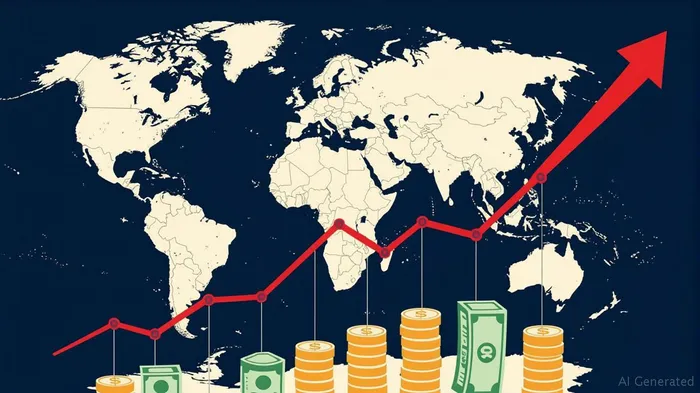
The Dollar's Weakening Foundation
The U.S. Dollar Index (DXY) has fallen 7.63% year-to-date, with its recent close at 96.88 marking a 20-year low. reveals a steady decline, fueled by three key factors:
- Policy Uncertainty Under Trump: Tariff escalations and inconsistent tax reforms have eroded investor confidence, creating a “policy drag” on the dollar.
- Interest Rate Differentials: While the Fed's cautious rate-cut path has slowed dollar appreciation, the ECB's aggressive easing (e.g., 110bps cuts in 2025) has bolstered the euro.
- Reduced Reserve Status: The dollar's share of global reserves dipped to its lowest since 2005, as central banks diversify into euros, yen, and even renminbi.
Opportunities in Non-Dollar Assets
Eurozone Government Bonds: A Safe-Haven Shift
The euro's rise—bolstered by ECB policy stability and cooling inflation—has made European bonds an attractive alternative to U.S. Treasuries. shows the ECB's easing has narrowed spreads, offering comparable yields with lower currency risk. Investors should consider:
- Core Eurozone Bonds: High credit quality and euro strength provide a hedge against dollar volatility.
- Periphery Bonds: Countries like Spain or Italy offer higher yields, though with added credit risk.
Asian Equities: Riding Emerging Market Growth
Capital flows into emerging markets have surged as the dollar weakens, reducing borrowing costs for Asian economies. highlights a 12% outperformance in 2025, driven by:
- China's Stimulus: Post-politburo meeting policies targeting real estate and tech could boost yuan-linked assets.
- India and Southeast Asia: Strong domestic consumption and manufacturing growth, insulated from U.S. trade wars, make these regions compelling.
Commodities: Inflation Hedges and Geopolitical Plays
Gold, oil, and industrial metals have gained as the dollar's safe-haven appeal fades. shows a clear inverse correlation:
- Gold: A 15% YTD gain makes it a top hedge against inflation and dollar weakness.
- Energy: Geopolitical risks (e.g., Middle East tensions) and Asian demand could push Brent crude toward $90/barrel.
Risks and Hedging Strategies
Overexposure to U.S. Assets
Investors holding large allocations to U.S. equities or dollar-denominated debt face two risks:
1. Import Costs: A weaker dollar raises costs for U.S. companies reliant on global supply chains.
2. Margin Pressure: U.S. exporters may see earnings diluted by currency fluctuations.
Geopolitical Volatility
Tariff disputes and Middle East conflicts could temporarily boost the dollar as a safe haven. Investors should:
- Diversify Geographically: Allocate 20-30% of portfolios to non-dollar assets.
- Use Currency Hedging Tools: FX forwards or ETFs like UUP/UDN can mitigate volatility.
Actionable Investment Themes
- Rotate to Eurozone Fixed Income
- Buy core European bonds (e.g., Germany, France) for yield stability.
Consider ETFs like IAGG (global government bonds) or DBEU (Europe-focused).
Overweight Asian Equities
- Target sectors like consumer discretionary (India's e-commerce boom) and industrials (China's infrastructure plans).
Use ETFs such as MCHI (China) or EPP (India).
Build a Commodity Basket
- Allocate 5-10% to gold via GLD or physical holdings.
- Use oil ETFs (USO) or diversified funds like DBC for broader exposure.
Conclusion
The dollar's decline is not a fleeting trend but a structural shift driven by policy, inflation, and reserve dynamics. For investors, this means:
- Rebalance: Reduce U.S. exposure and diversify into euro bonds, Asian equities, and commodities.
- Hedge: Protect against currency swings using derivatives or inverse ETFs.
- Stay Patient: While short-term volatility may persist, long-term gains await those who adapt to this new landscape.
The writing is on the wall: the dollar's reign as the sole global anchor is fading. The time to diversify—and thrive—is now.
Disclaimer: This analysis is for informational purposes. Always consult with a financial advisor before making investment decisions.







Comentarios
Aún no hay comentarios