
DOJ Probe: The Catalyst That Could Force a Fed Chair Change
The immediate catalyst forcing the Fed chair succession into the open is a criminal investigation. The Justice Department has launched a probe into Chair Jerome Powell over the central bank's $2.5 billion renovation cost overruns, a move Powell has called a "pretext" for political pressure. This unprecedented step-targeting a sitting Fed chair with a grand jury subpoena-has transformed a simmering feud over interest rates into a high-stakes political gamble.
The administration's framing is tactical. White House adviser Kevin Hassett is directly challenging Powell's narrative, framing the case instead around the Fed's soaring renovation costs and questioning Powell's congressional testimony. Hassett insists the probe is about financial oversight, not political payback, a clear attempt to distance the investigation from Trump's repeated demands for rate cuts. Yet this creates a critical tension. Hassett, a front-runner for the top job, has publicly stated he was not involved in conversations with the Justice Department about the probe and does not know if the president approved it. This potential rift with the president's stated intent risks entrenching Powell and muddying the transition path.
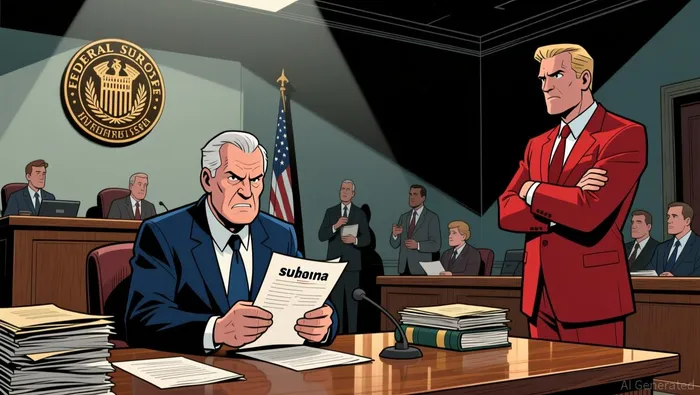
The bottom line is volatility. The probe is a direct, high-risk move to accelerate Powell's exit, but by framing it as a financial issue, it may backfire by galvanizing defenders of Fed independence. The investigation forces a choice: either Powell steps down to avoid a drawn-out fight, or he fights it, potentially leading to a drawn-out, messy confirmation battle for his successor. The political gamble is on, and the market is watching.
The Market Mispricing: A Lack of Reaction Signals Risk
The market's silence is the loudest signal. Despite the political fireworks, the bond market has shown no significant reaction to the probe. This lack of movement suggests traders don't see the investigation as a guarantee of imminent rate cuts. As economist Wendy Edelberg noted, markets don't think what Trump did ensures more rate cuts this year. That disconnect is the core of the potential mispricing. The political catalyst is real, but the market is pricing in a more complex, drawn-out battle for Fed independence than a simple "rate cut now" narrative.
This creates a tactical setup. Chair Powell's term expires in May, but his board term runs through January 2028. That legal path gives him a clear option to stay if the probe creates a crisis. The administration's goal is to force his exit, but the investigation itself may entrench him. As one former Fed official warned, the DOJ criminal investigation of Powell may even make it harder for Trump to replace Powell with a loyalist. The market, by not pricing in a swift change, is implicitly betting that the probe will backfire, delaying the transition Powell wants and protecting the institution's independence.
The probe has also sparked rare bipartisan backlash, with Republican senators and former Fed chairs defending Powell. This unity against political interference is a red flag for the administration's strategy. It suggests the investigation is seen as an attack on the rule of law and monetary policy, not a routine oversight matter. For now, the market's non-reaction reflects this skepticism. Traders are waiting to see if the political pressure can overcome this institutional resistance, or if the probe will simply prolong the standoff.
The Hassett Opportunity: A Loyalist Front-Runner
Kevin Hassett is now the clear front-runner to succeed Jerome Powell, a position cemented by his loyalty and proximity to the president. As the director of the National Economic Council, Hassett has been the administration's chief economic voice, directly challenging Powell's narrative about the DOJ probe. This alignment makes him the de facto choice for the top Fed job, a fact traders are already pricing in. Odds of his nomination have surged, with Polymarket odds jumping to 43%, surpassing other contenders.
Yet his path is fraught with credibility questions. Hassett's policy views have shifted dramatically from his earlier, more traditional conservative stance. Once a proponent of free trade and more immigration, he now supports tariffs and argues that deportations can boost the native-born labor market. This pivot demonstrates a willingness to adapt to the administration's agenda, but it also raises doubts about his economic principles and independence. As one analysis notes, what was true about him in 2017 might not be true today.
His past economic record offers further caution. Hassett's reputation includes a 1999 book forecasting a quadrupling of the Dow, a prediction that was widely criticized as wildly inaccurate. While he has a strong résumé, including stints at the Fed and Treasury, this history of over-optimistic forecasts contrasts with the data-driven, credibility-focused approach Powell has championed. The market's current pricing of the chair race reflects this tension: the narrative has shifted from Powell's warning about political pressure to Hassett's defense of the administration's actions, making his loyalty a key, if risky, driver of the setup.
The Immediate Setup: Catalysts and Risks to Watch
The political gamble is now a live event. The DOJ probe has launched, and the next moves will determine if this catalyst accelerates the Fed chair transition or entrenches Powell. Traders should watch three specific signals in the coming weeks.
First, watch for the DOJ's next move. The investigation is in its early stages, but the key test will be whether it issues indictments or settles. The threat of a criminal indictment, as Powell noted, is a powerful tool. If the DOJ forces Powell to testify under oath about his congressional statements, it will force a public showdown that could pressure him to step down. Yet, as former Fed officials warn, this escalation may backfire by galvanizing defenders of independence, making a smooth exit harder.
Second, monitor the Senate Banking Committee's response to any formal nomination of Kevin Hassett. While he is the front-runner, his path is not guaranteed. The probe has sparked rare bipartisan backlash, with Republican senators and former Fed chairs defending Powell. If Hassett is nominated, watch for defections within his own party. A Senate that views the investigation as an attack on Fed independence may block a nominee perceived as too loyal to the administration, prolonging the transition and policy uncertainty.
The key risk is that the probe entrenches Powell. His board term runs through January 2028, giving him a clear legal path to stay if the investigation creates a crisis. The administration's goal is to force his exit, but the investigation itself may achieve the opposite. As one former Fed official noted, the DOJ criminal investigation may even make it harder for Trump to replace Powell with a loyalist. This creates a tactical mispricing: the market is betting the probe will backfire, delaying a rate-cutting chair and protecting the institution's independence. The setup now hinges on whether political pressure can overcome this institutional resistance.







Comentarios
Aún no hay comentarios