
DOJ Drops Investigation Into Dragonfly Over Tornado Cash Investment
The U.S. Department of Justice (DOJ) has confirmed it will not pursue criminal charges against venture capital firm Dragonfly Capital or its executives in the ongoing Tornado Cash investigation, according to statements from the firm’s co-founder Haseeb Qureshi. The clarification came during a trial involving Roman Storm, one of Tornado Cash’s co-founders, following earlier courtroom remarks that had suggested the DOJ was considering charges against the firm [1]. Qureshi emphasized that the DOJ has “backtracked” from its initial stance, stating that neither Dragonfly nor its principals are under investigation [2].
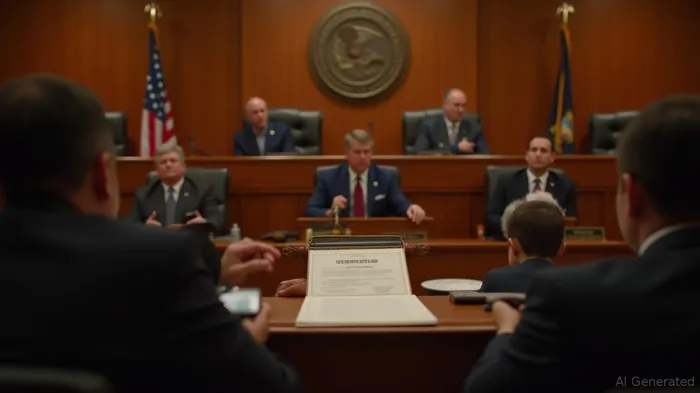
The development follows a contentious courtroom exchange in which prosecutors refused to grant immunity to Dragonfly partner Tom Schmidt, who was being considered as a defense witness in the Storm trial. Schmidt invoked his Fifth Amendment rights and declined to testify [3]. Qureshi criticized the move as a “clear violation of DOJ policy” and a tactic aimed at preventing the firm from providing context for its investment in Tornado Cash, an Ethereum-based crypto mixer designed to enhance transaction privacy [4].
Dragonfly made its investment in Tornado Cash in August 2020, at a time when the firm had sought legal counsel to confirm compliance with existing regulations. Qureshi stated that the investment was made with the belief in the “importance of open-source privacy-preserving technology” [5]. The decision to drop the investigation appears to align with a broader reevaluation of the DOJ’s approach to prosecuting open-source developers and their investors, a legal gray area that remains under scrutiny following the guilty pleas of Samourai Wallet co-founders in early July [6].
The Tornado Cash trial, which involves co-founder Roman Semenov and Storm, continues to draw attention as a potential precedent-setting case. Prosecutors allege that the mixer facilitated money laundering by North Korean hackers and other illicit actors. However, the legal battle over whether open-source technology and its backers can be held criminally liable remains unresolved [7]. As the trial moves toward closing arguments, the outcome is expected to influence how regulators and courts define liability in the evolving crypto landscape.
Sources:
[1] Cointelegraph - [https://cointelegraph.com/news/doj-not-investigating-dragonfly-over-tornado-cash-investment](https://cointelegraph.com/news/doj-not-investigating-dragonfly-over-tornado-cash-investment)
[2] Decrypt - [https://decrypt.co/332632/dragonfly-capital-no-longer-under-doj-scrutiny-in-tornado-cash-trial-co-founder](https://decrypt.co/332632/dragonfly-capital-no-longer-under-doj-scrutiny-in-tornado-cash-trial-co-founder)
[4] Mitrade - [https://www.mitrade.com/au/insights/news/live-news/article-3-992632-20250729](https://www.mitrade.com/au/insights/news/live-news/article-3-992632-20250729)
[6] dlnews.com - [https://www.dlnews.com/articles/regulation/samurai-wallet-devs-plead-guilty-to-money-transmitting/](https://www.dlnews.com/articles/regulation/samurai-wallet-devs-plead-guilty-to-money-transmitting/)
[7] Decrypt - [https://decrypt.co/332667/white-house-sprawling-crypto-report-makes-no-mention-bitcoin-reserve/](https://decrypt.co/332667/white-house-sprawling-crypto-report-makes-no-mention-bitcoin-reserve/)







Comentarios
Aún no hay comentarios