
Dogecoin vs Solana: Evaluating Short-Term Momentum and Long-Term Utility
The cryptocurrency market in 2025 continues to evolve rapidly, with projects like DogecoinDOGE-- (DOGE) and SolanaSOL-- (SOL) representing divergent investment theses. While Dogecoin retains its meme-driven appeal, Solana has emerged as a serious contender in the blockchain infrastructure space. This analysis evaluates their short-term momentum and long-term utility, contextualizing their risk-reward profiles for investors navigating the current crypto cycle.
Short-Term Momentum: Volatility and Liquidity Dynamics
On September 3, DOGEDOGE-- surged 4% to $0.218, driven by a spike in trading volume to 416.41 million tokens-a 70% increase from its average of 244.87 million, according to a CoinDesk analysis. However, the price faced rejection at the $0.223 resistance level, triggering profit-taking and a subsequent pullback to $0.2178. Technical analysts note key support at $0.214, with uncertainty over whether the asset will consolidate or break lower, the CoinDesk piece adds. Meanwhile, Dogecoin's average daily trading volume in Q1 2025 stood at $950 million, underscoring its enduring retail appeal despite limited utility, per a Benzinga comparison.
Long-Term Utility: Infrastructure vs. Speculation
The fundamental divergence between DOGE and SOLSOL-- lies in their utility. Solana's hybrid Proof of Stake and Proof of History consensus mechanism enables 65,000 transactions per second at an average cost of $0.00025, making it a preferred platform for developers building DeFi protocols and NFT marketplaces, as noted in the Benzinga comparison. Its ecosystem has attracted over $9 billion in TVL, driven by projects like Axiom and Serum, which leverage Solana's speed and low fees according to a TronWeekly report. Analysts project a price target of $370 by late 2025, citing decreasing exchange supply, strong technical indicators, and growing institutional interest in a Currency Analytics forecast.
Dogecoin, meanwhile, remains a social token with no inherent utility beyond tipping and charitable donations. Its uncapped supply model introduces inflationary pressure, limiting its potential as a store of value, the Benzinga comparison points out. While the DOGE community remains vocal, analysts warn of a potential decline to $0.09 in 2025 due to competition from newer altcoins and the lack of smart contract capabilities, the Currency Analytics forecast also warns.
Risk-Reward Profiles in the 2025 Crypto Cycle
For investors prioritizing risk-adjusted returns, Solana's real-world applications and scalable infrastructure present a compelling case. Its ability to process transactions at Ethereum's speed with Bitcoin's security model positions it as a bridge between legacy finance and Web3, according to the CoinDesk analysis. However, its rapid growth also exposes it to regulatory scrutiny and network congestion risks.
Dogecoin's risk profile is more speculative. While its liquidity and brand recognition offer short-term trading opportunities, its long-term viability hinges on community sentiment and macroeconomic factors. A bearish scenario could see DOGE's market cap shrink further as investors shift toward utility-driven assets, the Benzinga comparison suggests.
Conclusion
In the current crypto cycle, Solana's technological innovation and ecosystem growth make it a stronger candidate for both short-term gains and long-term value creation. Dogecoin, though culturally iconic, faces structural challenges that could undermine its price stability. Investors seeking balanced risk-reward dynamics should prioritize Solana's infrastructure-driven narrative while treating Dogecoin as a high-volatility, low-utility speculative play.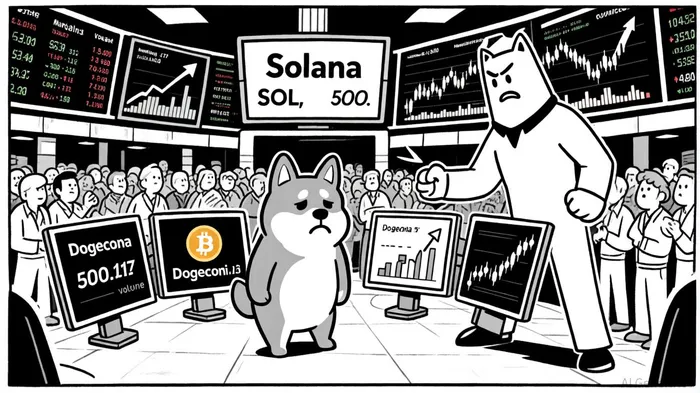






Comentarios
Aún no hay comentarios