
The First U.S. Dogecoin ETF: A Tectonic Shift in Retail and Institutional Crypto Adoption
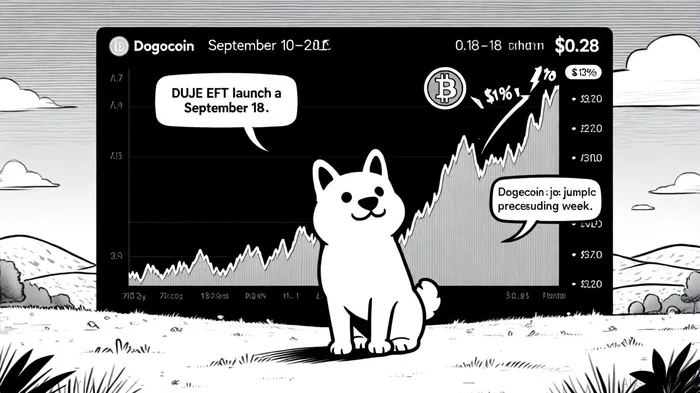
The launch of the REX-Osprey DogecoinDOGE-- ETF (DOJE) on September 18, 2025, marks a watershed moment in the evolution of cryptocurrency as an asset class. By offering regulated exposure to Dogecoin—a digital assetDAAQ-- once dismissed as a “meme coin”—the ETF bridges the gap between retail enthusiasm and institutional caution, signaling a broader acceptance of speculative crypto assets in mainstream finance. This development, underpinned by regulatory innovation and surging retail demand, has profound implications for digital asset investment strategies and the future of memecoinMEME-- markets.
Regulatory Breakthrough: The 1940 Act as a Gateway
The DOJEDOJE-- ETF's approval hinged on a strategic pivot to the Investment Company Act of 1940, bypassing the SEC's stringent requirements for spot crypto ETFs under the Securities Act of 1933 [1]. This regulatory workaround allowed REX Financial and Osprey Funds to launch DOJE with a structure that allocates 80% of assets to Dogecoin futures and 20% to U.S. Treasuries, mitigating custody risks while complying with existing frameworks [2]. According to a report by Financial Content, this precedent could accelerate the approval of ETFs for other altcoins and memecoins, as regulators appear to prioritize market access over strict asset classification [3].
The SEC's delayed approval of spot Dogecoin ETFs until November 2025—citing concerns over market manipulation—highlights lingering skepticism about crypto's infrastructure [4]. Yet the 1940 Act's flexibility has already reshaped the landscape, enabling institutional players to deploy capital without waiting for regulatory clarity on direct crypto ownership.
Retail Frenzy: From MemeMEME-- to Mainstream
Retail investor participation in Dogecoin has surged ahead of the ETF's launch, with Short-Term Holder (STH) supply metrics indicating a 25% increase in wallets holding DOGEDOGE-- for under 155 days [5]. This mirrors patterns seen during Bitcoin's 2017 and 2021 bull runs, where retail inflows drove price momentum. Social media sentiment, tracked by platforms like Santiment, further underscores a Fear Of Missing Out (FOMO) narrative, with Dogecoin-related hashtags trending on X (formerly Twitter) and RedditRDDT-- [6].
The ETF's debut amplified this frenzy. Within its first hour of trading, DOJE generated $6 million in volume—far exceeding analyst forecasts of $2.5 million [7]. This success reflects a growing appetite among retail investors for crypto exposure through familiar financial instruments. As noted by CoinDesk, the DOJE ETF's structure—accessible via traditional brokerage accounts—lowers the barrier to entry for a demographic that once relied on direct crypto exchanges [8].
Institutional Validation: From Speculation to Strategy
While retail demand fueled the DOJE launch, institutional adoption has been equally transformative. CleanCore SolutionsZONE--, a crypto-native treasury firm, acquired over 500 million DOGE tokens in anticipation of the ETF's debut, signaling confidence in Dogecoin's utility as a reserve asset [9]. Similarly, Digital Asset Treasuries (DATs) have increased their DOGE holdings, integrating the memecoin into corporate balance sheets as a hedge against fiat devaluation [10].
Institutional validation is further reinforced by the ETF's 1.5% expense ratio, which, though higher than BitcoinBTC-- ETFs (0.2–0.4%), reflects the premium investors are willing to pay for regulated access to a volatile asset [11]. As Phemex analysts observe, this structure institutionalizes speculation, channeling capital into a framework that balances risk with regulatory oversight [12].
Portfolio Implications: Diversification or Distraction?
The DOJE ETF introduces Dogecoin as a speculative component in diversified portfolios, but its role remains contentious. While traditional diversification strategies emphasize low-correlation assets to mitigate risk, Dogecoin's high volatility and positive correlation with Bitcoin (average 0.79 since 2020) limit its effectiveness as a hedge [13]. Nevertheless, the ETF's indirect exposure—via futures and Treasuries—offers a middle ground for investors seeking crypto exposure without direct custody risks [14].
Critics warn that DOJE's structure may exacerbate tracking errors and price manipulation risks, given Dogecoin's lower trading volume compared to Bitcoin [15]. Yet proponents argue that the ETF's launch has already enhanced liquidity, with Dogecoin's price surging 13% in the week leading up to the debut [16].
The Road Ahead: Memecoins and Market Maturation
The DOJE ETF's success has sparked speculation about a broader “meme coin rally,” with pending ETF applications for assets like TrumpTRUMP-- Coin (TRUMP) and Pudgy PenguinsPENGU-- (PENGU) gaining traction [17]. While this trend underscores crypto's cultural influence, it also raises questions about sustainability. Unlike Bitcoin or EthereumETH--, Dogecoin lacks inherent utility, relying instead on community-driven narratives and speculative demand [18].
Regulatory scrutiny will remain a wildcard. The SEC's delayed approval of spot ETFs and ongoing litigation with crypto exchanges suggest that the path to mainstream adoption is far from smooth. However, the 1940 Act's flexibility has already created a blueprint for innovation, enabling market participants to navigate ambiguity while pushing boundaries.
Conclusion
The DOJE ETF represents more than a product—it is a symbol of crypto's evolving identity. By aligning retail enthusiasm with institutional pragmatism, it has redefined Dogecoin as a legitimate, if volatile, asset class. For investors, the ETF offers a glimpse into a future where memecoins coexist with traditional equities, reshaping portfolio strategies and regulatory frameworks alike. Yet as with all speculative bets, the risks are as significant as the rewards. In this new era, the line between innovation and hype grows thinner, demanding a balance between optimism and caution.





Comentarios
Aún no hay comentarios