
Why DOGEBALL Is Outperforming Polygon and Fantom as the Most Attractive Presale in 2026
The 2026 cryptocurrency landscape is defined by a shift toward utility-driven innovation, where infrastructure execution and real-world adoption determine success. Amid this evolution, DOGEBALL has emerged as a standout presale project, leveraging a live EthereumETH-- Layer 2 blockchain, a gaming-first utility model, and a strategic partnership with Falcon Interactive to outpace slower-moving Layer 1s like Polygon and Fantom. This analysis examines why DOGEBALL's combination of memeMEME-- coin utility, timing, and infrastructure execution positions it as the most compelling investment opportunity in 2026.
Meme Coin Utility: From Speculation to Tangible Ecosystem
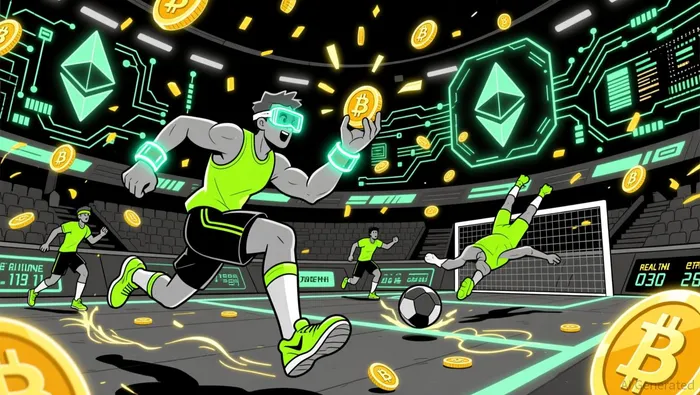
Meme coins have historically struggled to justify their value beyond virality. DOGEBALL, however, introduces a novel approach by anchoring its utility to a fully developed gaming ecosystem. As the native token of DOGECHAIN-a custom Ethereum Layer 2 blockchain-DOGEBALL powers a live mobile game where players compete in dodgeball-style arenas, earn rewards, and climb leaderboards according to reports. A $1 million prize pool, with $500,000 allocated to the top-ranked player, creates immediate on-chain demand according to data. This contrasts sharply with Polygon and Fantom, whose token utilities remain broader and less action-oriented. While Polygon's 2025 upgrades boosted transaction throughput by 50x, they lack the direct user engagement mechanisms that DOGEBALL's gaming model provides. Fantom's aBFT consensus and interoperability focus are valuable but do not address the need for token-driven user activity in gaming, a sector projected to dominate blockchain adoption in 2026 according to predictions.
Infrastructure Execution: Ethereum Layer 2 vs. Generalized L1s
DOGEBALL's infrastructure is a critical differentiator. DOGECHAIN, its Ethereum Layer 2 blockchain, is already live, offering near-zero fees, sub-2-second block times, and full EVM compatibility according to reports. This contrasts with Polygon and Fantom, which, despite robust L1/L2 frameworks, have yet to deliver gaming-specific optimizations. Polygon's PoS 2.0 and zkEVM upgrades are designed for enterprise use cases, while Fantom's high-throughput architecture prioritizes interoperability over gaming performance. DOGEBALL's purpose-built blockchain ensures low-latency transactions for in-game purchases and rewards, a feature absent in generalized L1s. As Polygon vs. Other L2 Networks notes, platforms that tailor infrastructure to niche use cases-like gaming-will dominate in 2026 according to analysis. DOGEBALL's execution aligns with this trend, whereas Polygon and Fantom remain constrained by their broader, less targeted approaches.
Timing and Returns: A 50× Presale Model vs. Uncertain Projections
DOGEBALL's presale model is structured to maximize investor returns. With a Stage 1 price of $0.0003 and a projected listing price of $0.015, the token offers a clear 50× return potential according to reports. This is bolstered by a four-month presale window, shorter than industry norms, and a capped supply of 80 billion tokens to prevent oversaturation according to data. In contrast, Polygon and Fantom's token return projections are less defined. While Fantom's price forecasts suggest an average of $5 by 2026 according to predictions, these are speculative and lack the structured roadmap of DOGEBALL's presale. Polygon's tokenomics, though strong in enterprise adoption, do not offer comparable short-term upside for retail investors. The clarity of DOGEBALL's 50× model, combined with its alignment with the Q1 2026 altcoin cycle according to market analysis, makes it a more attractive bet for those seeking rapid, calculable gains.
Strategic Partnerships: Falcon Interactive vs. Generalized Gaming Collaborations
DOGEBALL's partnership with Falcon Interactive-a global gaming company with hundreds of live titles-adds a layer of credibility and scalability according to reports. Falcon's integration of DOGECHAIN into future game development ensures long-term demand for the token, a stark contrast to Polygon's gaming collaborations, such as KGeN and SuperGaming, which focus on rewards platforms rather than direct blockchain integration according to industry reports. Fantom's gaming ecosystem, meanwhile, lacks equivalent partnerships, with its 80 active dApps primarily serving DeFi and NFT markets. Falcon Interactive's involvement signals a shift toward blockchain-native gaming, a sector where DOGEBALL's infrastructure and token design are uniquely positioned to thrive.
Conclusion: A New Paradigm for Meme Coin Investing
In 2026, the most successful crypto projects will be those that combine meme coin virality with tangible utility, infrastructure execution, and strategic partnerships. DOGEBALL's live Ethereum Layer 2 blockchain, $0.0003 presale price, 50× return projection, and Falcon Interactive collaboration create a compelling case for outperformance. While Polygon and Fantom remain strong in enterprise and interoperability, their slower adoption in gaming and less structured tokenomics leave them trailing behind a project that has already demonstrated execution. For investors seeking exposure to the next major crypto trend, DOGEBALL represents a rare convergence of innovation, timing, and real-world demand.






Comentarios
Aún no hay comentarios