
Dockworker Union Ratifies Six-Year Contract at Eastern US Ports
Generado por agente de IAWesley Park
martes, 25 de febrero de 2025, 10:37 pm ET1 min de lectura
CR--
The International Longshoremen's Association (ILA) has ratified a six-year contract with the United States Maritime Alliance (USMX), ending a contentious negotiation process that had the potential to disrupt supply chains and impact the U.S. economy. The new contract, which covers roughly 25,000 longshoremen at 41 East and Gulf Coast ports, includes a significant 62% wage increase over six years, raising hourly wages from $39 to $63 by 2029. This substantial increase, coupled with job guarantees when employers introduce autonomous technology, has been hailed as a "win-win" agreement by both parties.
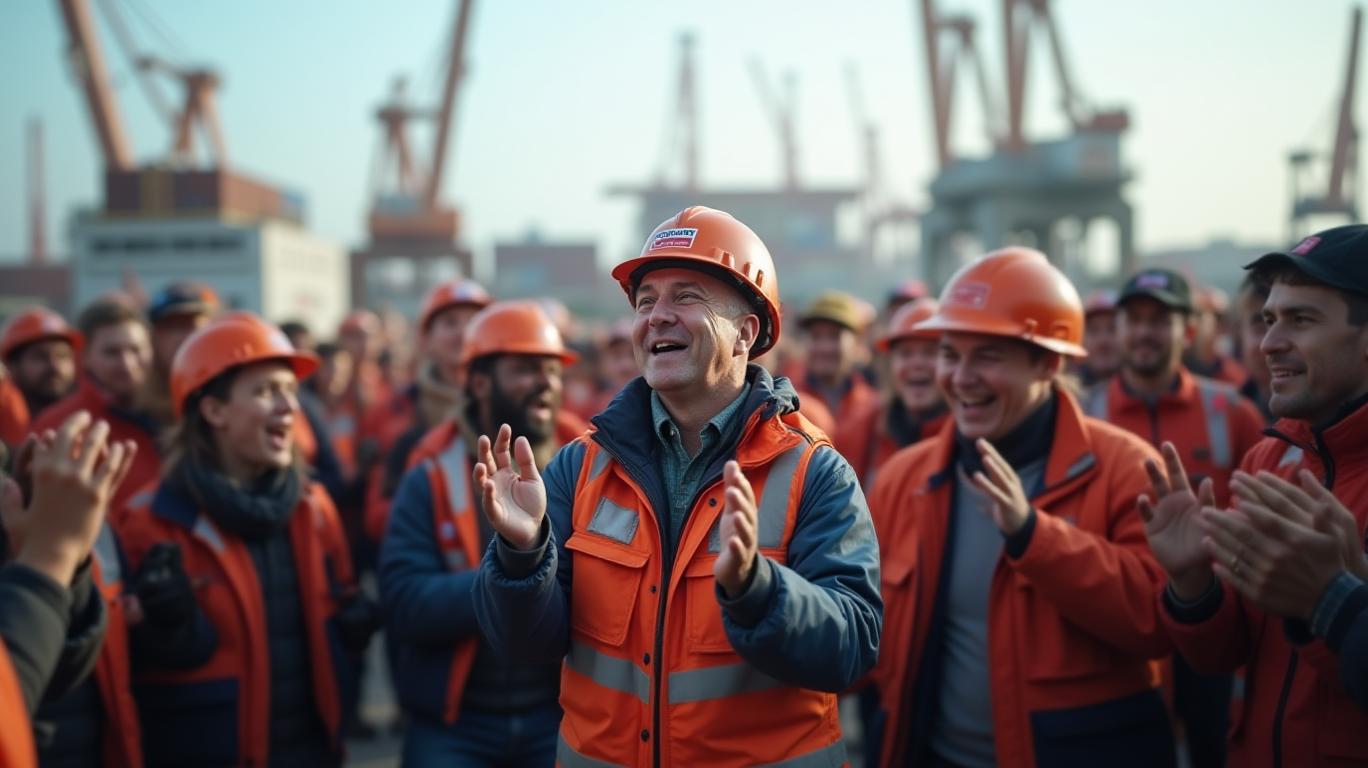
The new contract not only secures higher wages for dockworkers but also ensures job security in the face of automation. The ILA has long opposed the introduction of automated cranes and other machines, fearing job displacement. However, the new contract includes a job guarantee that management would assign at least one worker for each additional crane. This balance between job guarantees and automation will be crucial for the ports' financial sustainability and their ability to attract and retain talent.
The 62% wage increase over six years will have a significant impact on the financial sustainability of the ports and their ability to attract and retain talent. While the increased labor costs may pose a challenge, the higher wages could also help the ports attract and retain skilled workers. The balance between job guarantees and automation will be crucial for the ports' long-term success.
The introduction of semi-automated cranes and other machinery can significantly impact the productivity and efficiency of the ports. While automated cranes can handle more containers per hour than manual ones, leading to increased throughput and reduced waiting times for ships, there are also potential drawbacks. These include job displacement, the need for continuous investment in new technology, and potential security risks associated with automated systems.
In conclusion, the ratification of the six-year contract between the ILA and USMX is a significant development for the Eastern US ports and the broader U.S. economy. The new contract secures higher wages and job guarantees for dockworkers, while also addressing the challenges posed by automation. As the maritime industry continues to evolve, it is crucial for labor and management to work together to balance technological progress with worker protection and economic stability.
EIG--
The International Longshoremen's Association (ILA) has ratified a six-year contract with the United States Maritime Alliance (USMX), ending a contentious negotiation process that had the potential to disrupt supply chains and impact the U.S. economy. The new contract, which covers roughly 25,000 longshoremen at 41 East and Gulf Coast ports, includes a significant 62% wage increase over six years, raising hourly wages from $39 to $63 by 2029. This substantial increase, coupled with job guarantees when employers introduce autonomous technology, has been hailed as a "win-win" agreement by both parties.
The new contract not only secures higher wages for dockworkers but also ensures job security in the face of automation. The ILA has long opposed the introduction of automated cranes and other machines, fearing job displacement. However, the new contract includes a job guarantee that management would assign at least one worker for each additional crane. This balance between job guarantees and automation will be crucial for the ports' financial sustainability and their ability to attract and retain talent.
The 62% wage increase over six years will have a significant impact on the financial sustainability of the ports and their ability to attract and retain talent. While the increased labor costs may pose a challenge, the higher wages could also help the ports attract and retain skilled workers. The balance between job guarantees and automation will be crucial for the ports' long-term success.
The introduction of semi-automated cranes and other machinery can significantly impact the productivity and efficiency of the ports. While automated cranes can handle more containers per hour than manual ones, leading to increased throughput and reduced waiting times for ships, there are also potential drawbacks. These include job displacement, the need for continuous investment in new technology, and potential security risks associated with automated systems.
In conclusion, the ratification of the six-year contract between the ILA and USMX is a significant development for the Eastern US ports and the broader U.S. economy. The new contract secures higher wages and job guarantees for dockworkers, while also addressing the challenges posed by automation. As the maritime industry continues to evolve, it is crucial for labor and management to work together to balance technological progress with worker protection and economic stability.

Divulgación editorial y transparencia de la IA: Ainvest News utiliza tecnología avanzada de Modelos de Lenguaje Largo (LLM) para sintetizar y analizar datos de mercado en tiempo real. Para garantizar los más altos estándares de integridad, cada artículo se somete a un riguroso proceso de verificación con participación humana.
Mientras la IA asiste en el procesamiento de datos y la redacción inicial, un miembro editorial profesional de Ainvest revisa, verifica y aprueba de forma independiente todo el contenido para garantizar su precisión y cumplimiento con los estándares editoriales de Ainvest Fintech Inc. Esta supervisión humana está diseñada para mitigar las alucinaciones de la IA y garantizar el contexto financiero.
Advertencia sobre inversiones: Este contenido se proporciona únicamente con fines informativos y no constituye asesoramiento profesional de inversión, legal o financiero. Los mercados conllevan riesgos inherentes. Se recomienda a los usuarios que realicen una investigación independiente o consulten a un asesor financiero certificado antes de tomar cualquier decisión. Ainvest Fintech Inc. se exime de toda responsabilidad por las acciones tomadas con base en esta información. ¿Encontró un error? Reportar un problema




Comentarios
Aún no hay comentarios