
DMG MORI’s Q1 2025 Earnings: A Fragile Resilience Amid Global Headwinds
DMG MORI, a global leader in machine tool manufacturing, reported its first-quarter 2025 earnings amid a perfect storm of geopolitical tensions, trade policy shifts, and weakened capital spending. While the results show a stark revenue decline and margin contraction, the company’s profitability improved dramatically—thanks to strategic exits and a renewed focus on innovation. The question now is whether DMG MORI can navigate these challenges to meet its full-year targets or if it’s merely kicking the can down the road.
The Numbers: A Revenue Slump, But Profitability Improves
The headline numbers paint a mixed picture. Q1 2025 sales dropped 15% year-on-year to €468.7 million, driven by a 15% slump in order intake to €558 million. Domestic and international orders both fell sharply, with the latter now accounting for 68% of total orders—a slight uptick from 67% in 2024. Meanwhile, EBIT collapsed by 59% to €19.7 million, with the margin halving to 4.2% (from 8.6% in Q1 2024).
The silver lining? Net income turned positive at €15.3 million, a stark reversal from the €56.5 million loss in Q1 2024. This improvement wasn’t due to operational excellence, however. Instead, it stemmed from the discontinuation of its Russian operations, which had contributed a €91.9 million loss in 2024. 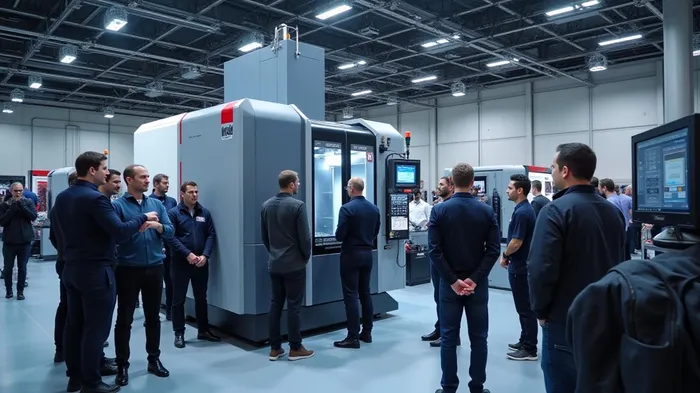
What’s Driving the Decline?
The primary culprit is the lingering fallout from geopolitical instability. CEO Alfred Geißler cited “political uncertainties” and U.S. customs policy shifts as key factors suppressing demand. The Ukraine war and broader trade tensions have chilled capital spending, particularly in advanced manufacturing. This is a sector where DMG MORI’s high-end CNC machines are critical for industries like aerospace and automotive.
The numbers back this up:
- U.S. orders: Unspecified, but the CEO’s emphasis suggests a meaningful drag.
- Personnel costs: Despite a workforce reduction (to 7,352 employees from 7,498 in late 2024), the cost ratio rose to 33.6% of revenue (vs. 28.6% in 2024), highlighting margin pressure.
The Strategic Play: Betting on MXMX-- and EMO
DMG MORI isn’t just waiting for the clouds to part. The company is doubling down on its MX – Machining Transformation initiative, a holistic strategy to integrate automation, digitization, and sustainability into its offerings. In Q1, it showcased this vision at its 30th Pfronten Open House, drawing 6,000 visitors to see new automation-equipped machines and software updates like CELOS Xchange and CELOS Xperience.
The plan for 2025 includes 35 innovations, including 23 world premieres, with a focus on process integration and data-driven manufacturing. This is no small bet: the company aims to leverage its 17 global production plants and 124 sales/service locations to push these solutions into markets still wary of capital spending.
The EMO trade fair in Hanover (September 2025) looms large as a catalyst. DMG MORI plans to unveil eight world premieres there, which could generate momentum if exhibitors signal a rebound in investment.
The Forecast: Can They Hit Targets?
Despite the Q1 struggles, DMG MORI reaffirmed its full-year guidance:
- Orders: €2.4–2.5 billion
- Sales: €2.2–2.3 billion
- EBIT: €150–160 million
- Free Cash Flow: €110–130 million
This is a tightrope walk. The company’s free cash flow turned deeply negative in Q1 (€-75.9 million vs. €5.0 million in 2024), and the Japanese parent company (listed in Tokyo) reported a 97% drop in net income. Yet, management is banking on a second-half rebound, citing the VDW’s prediction of a machine tool market recovery and the EMO effect.
Risks and Uncertainties
- Geopolitical Risks: The Ukraine war and U.S.-China trade dynamics remain unpredictable.
- EMO Success: If the trade fair doesn’t spark orders, the second-half recovery could fizzle.
- Ulyanovsk Plant: The potential compensation from Russia’s investment guarantee is excluded from forecasts.
The Bottom Line
DMG MORI is in a tough spot. Its Q1 results reflect a sector under siege by macroeconomic headwinds, but its strategic moves—MX, R&D, and the EMO pivot—are the right calls. The company’s ability to execute hinges on whether the VDW’s optimism about a second-half recovery materializes.
Investors should monitor two key metrics:
1. Order intake trends (is the 15% YoY decline widening or narrowing?).
2. EMO 2025 booth traffic and deal flow—a real-time indicator of industry sentiment.
In conclusion, DMG MORI’s Q1 2025 results are a tale of survival, not growth. The company is clinging to its innovation roadmap and betting on cyclical recovery. While the stock (TSE:6141) has risen 6.2% weekly, Simply Wall St’s caution about declining margins and high valuation multiples isn’t misplaced. Investors should keep one eye on the MX strategy’s execution and the other on the geopolitical horizon. For now, DMG MORI’s resilience is fragile—but if it nails its strategic plays, this could be a story of reinvention in a challenging market.







Comentarios
Aún no hay comentarios