
DMB Bonds: A Tax-Exempt Income Play in a Rising Rate World
In a landscape where rising interest rates and elevated inflation continue to test fixed-income investors, the BNY Mellon Municipal Bond Infrastructure Fund (DMB) emerges as a compelling, if nuanced, opportunity. This closed-end fund offers a rare combination of tax-exempt income, exposure to infrastructure-focused municipal bonds, and a yield advantage—though it comes with risks that demand careful scrutiny. Let's dissect its appeal and pitfalls in the context of today's markets.
The Tax-Exempt Advantage
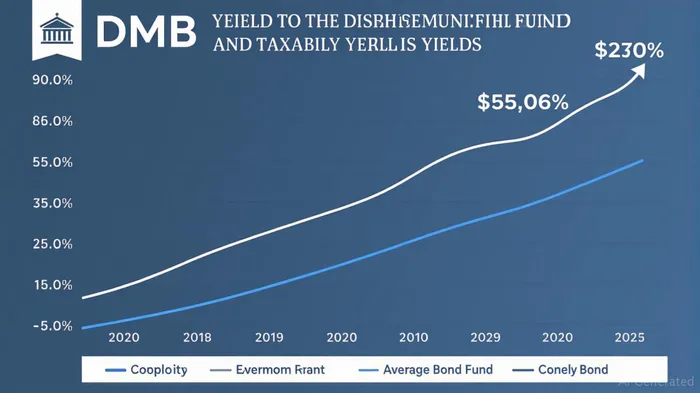
DMB's primary draw lies in its federal tax exemption, a feature that becomes increasingly valuable as rates climb. The fund targets monthly distributions—currently yielding around 4.46%—that are free from federal income tax. For investors in high tax brackets or states without state income tax (e.g., Texas or Florida), this creates a clear edge over taxable bonds. Even in states with income taxes, DMB's focus on out-of-state infrastructure projects (e.g., toll roads, utilities) can reduce exposure to unfavorable state-specific levies.
Yield and Rate Risk: A Delicate Balance
The fund's yield advantage is amplified by its strategic tilt toward high-quality municipal bonds—99.99% of its holdings are investment-grade—with an average coupon of 5.01%. However, its effective duration of 4.39 years (down from 4.76 in 2024) means it remains moderately sensitive to rising rates. A 1% increase in rates could trim its net asset value (NAV) by ~4.4%, though this shorter duration reduces its volatility compared to longer-dated peers.
The fund's 30.96% leverage complicates the picture. While this amplifies returns during favorable conditions, it also magnifies losses during downturns. Investors must weigh this risk against DMB's persistent discount to NAV (averaging -12.89% in 2024), which partially offsets its rate sensitivity by offering shares at a bargain.
Credit Quality and Geographic Risks
DMB's infrastructure focus—investing in toll roads, public utilities, and healthcare facilities—provides a cash-flow advantage over general obligation bonds reliant on taxpayer funding. However, its geographic allocations raise flags. Top exposures include states like Illinois (6.07%) and California (5.89%), both rated near junk status (BBB- for Illinois). While infrastructure projects often have dedicated revenue streams, fiscal mismanagement or economic shocks in these regions could destabilize bonds.
Why DMBDMB-- Shines in 2025
Despite these risks, DMB's 4.46% yield stands out in a market where 10-year Treasuries hover near 4.26%. The fund's income generation is bolstered by its high coupon portfolio, which reduces reliance on price appreciation. In a prolonged rate environment, this “yield cushion” becomes critical, as bonds with higher starting yields are less vulnerable to further hikes.
The Trade-Offs
- Expense Ratio: At 3.52%, DMB's fees are nearly double the average municipal bond fund. This eats into long-term returns and diminishes its tax-exempt edge.
- Leverage and Volatility: While leverage enhances distributions (currently $0.0380/month), it also exposes investors to heightened NAV swings.
- Discount to NAV: A widening discount (peaking at -15.34%) reflects skepticism about DMB's complex structure and macro risks.
The Bottom Line
DMB is a high-reward, high-risk play for tax-sensitive investors willing to tolerate volatility. Its yield and infrastructure focus make it a viable option for those prioritizing federal tax exemption and income resilience in a rising-rate world. However, its elevated costs, geographic concentrations, and leverage require caution.
Investment Strategy
- Buy: For high-income investors in low-tax states seeking steady tax-free income, provided they can stomach rate-driven volatility.
- Avoid: If you prioritize capital preservation, have a low risk tolerance, or prefer lower-cost alternatives.
Alternatives to Consider
- Shorter-Duration Funds: The iShares National Muni BondMUB-- ETF (MUB) offers lower duration (4.5 years) and a 1.42% expense ratio, sacrificing yield for stability.
- State-Specific Funds: For investors in states with strong credit profiles, regional muni funds may offer better risk-adjusted returns.
Final Take
DMB is not a “set it and forget it” investment. Its success hinges on stable interest rates, favorable credit conditions in key states, and a narrowing NAV discount. For the right investor—those with a long time horizon and a need for tax-free income—it could be a valuable piece of a diversified fixed-income portfolio.





Comentarios
Aún no hay comentarios