
Dmail: Pioneering the Decentralized Communication Revolution in Web3
The decentralized communication sector is undergoing a seismic shift, driven by the convergence of blockchain innovation and surging Web3 adoption. At the forefront of this transformation is Dmail, a protocol redefining how users interact with decentralized messaging, email, and cross-chain communication. With strategic integrations into major ecosystems and a growing alignment with Web3's global adoption trends, Dmail is positioning itself as a critical infrastructure layer for the next internet.
Strategic Integrations: Expanding Dmail's Ecosystem Footprint
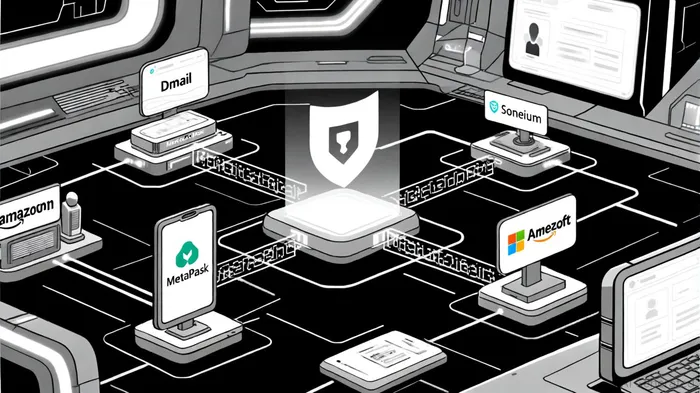
Dmail's 2025 roadmap has been defined by aggressive partnerships that amplify its utility and user base. In August 2025, the protocol integrated its messaging infrastructure into the Soneium ecosystem, unlocking cross-chain communication for over 2 million monthly users[3]. This move not only enhances interoperability but also creates a flywheel effect: as more chains adopt Dmail's protocol, the demand for its $DMAIL token-used for governance and access-rises[3].
The MetaMask Snaps integration in July 2025 further cemented Dmail's consumer-facing appeal. By enabling encrypted email notifications within the MetaMask interface, Dmail tapped into a user base of 30 million+, bridging the gap between crypto wallets and decentralized communication[3]. Meanwhile, the partnership with Cwallet in the same month introduced a novel use case: combining messaging with bulk crypto payments. This synergy is particularly valuable for enterprise applications like payroll distributions and airdrops, where secure, scalable communication is paramount[3].
Perhaps the most striking development came in April 2025, when Dmail announced collaborations with Microsoft and Amazon. These partnerships signal a pivotal shift toward enterprise adoption, as decentralized communication tools are integrated into mainstream tech ecosystems[4]. Such moves validate Dmail's vision of becoming the "universal inbox of Web3," where encrypted, cross-chain messaging becomes as seamless as traditional email[5].
Web3 Adoption: A Tailwind for Decentralized Communication
Dmail's growth is inextricably linked to the broader adoption of Web3. By Q3 2025, over 560 million people-6.8% of the global population-owned cryptocurrencies and engaged with Web3 tools[2]. Emerging markets are leading this charge: Nigeria, South Africa, and India report adoption rates exceeding 50%, driven by mobile-first access and economic volatility[2].
The decentralized communication market itself is projected to grow at a CAGR of 20.6% from 2025 to 2034, reaching $61.8 billion by 2034[5]. This growth is fueled by demand for privacy, resistance to censorship, and monetization via crypto/NFTs. Dmail's focus on enterprise solutions and cross-chain interoperability aligns perfectly with these trends. For instance, its integration with Soneium and Microsoft positions it to serve both individual users and corporations seeking secure, decentralized communication channels[3].
Moreover, the broader decentralization market-encompassing DeFi, identity, and prediction markets-is forecasted to grow at a CAGR of 46.8% from 2025 to 2034[1]. Dmail's partnerships with Cwallet and MetaMask Snaps tap into this momentum, leveraging existing user bases to drive token utility and network effects.
Investment Thesis: Dmail as a Core Web3 Infrastructure Play
Dmail's strategic integrations and alignment with Web3 adoption trends present a compelling investment case. Key drivers include:
1. Network Effects: Each partnership (e.g., MetaMask, Soneium) expands Dmail's user base and token demand[3].
2. Enterprise Adoption: Collaborations with Microsoft and Amazon signal mainstream validation[4].
3. Market Tailwinds: Web3's projected CAGR of 41.18% from 2025 to 2034[4] ensures long-term growth potential.
However, risks remain. The recent 3% decline in daily unique active wallets (dUAW) in Q3 2025 highlights market volatility[2]. Additionally, regulatory shifts in decentralized communication could impact adoption. Investors must weigh these risks against Dmail's rapid integration pace and enterprise traction.
Conclusion
Dmail is not just a messaging protocol-it's a foundational layer for Web3's communication infrastructure. By securing partnerships with MetaMask, Soneium, and enterprise giants, Dmail is building a network that bridges the gap between decentralized finance, identity, and cross-chain interoperability. As Web3 adoption accelerates, particularly in emerging markets, Dmail's role as the "universal inbox" becomes increasingly critical. For investors seeking exposure to the next phase of the internet, Dmail represents a high-conviction opportunity.







Comentarios
Aún no hay comentarios