
Dividend Sustainability and Financial Risk in the iShares MSCI USA Value Factor ETF (IRBTQ): A 2025 Analysis
Investors seeking stable income from equities often prioritize dividend sustainability, a metric that balances yield with the resilience of underlying companies. The iShares MSCIMSCI-- USA Value Factor ETF (IRBTQ), which tracks the MSCI USA Enhanced Value Index, offers exposure to U.S. large- and mid-cap value stocks. However, a 2025 financial risk assessment reveals critical considerations for investors evaluating its dividend sustainability and potential for shareholder value erosion.
Dividend Sustainability: A Mixed Picture
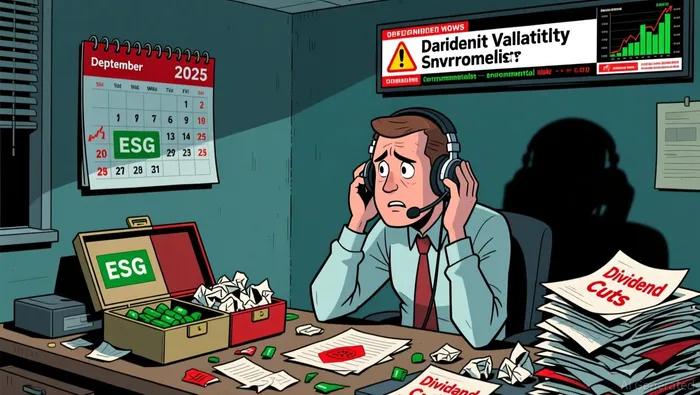 IRBTQ's dividend performance in 2025 has shown volatility. For instance, the fund reduced its quarterly dividend by over 3% in September 2025, from $3.01 to $2.82 per share, followed by a further cut to $0.8129 per share in December 2025. While the fund's trailing yield of 2.11% exceeds the 1.93% category average, these reductions signal potential fragility in its payout structure. Unlike ESG-focused funds, which prioritize companies with durable dividend practices, IRBTQ's traditional value strategy may include firms with weaker financial safeguards, increasing the risk of future cuts.
Morningstar's analysis underscores that sustainable dividends-those supported by strong earnings-tend to outperform during market stress. However, IRBTQ's lack of explicit ESG criteria means its holdings may include companies exposed to environmental risks, such as regulatory shifts or physical climate impacts, which can erode profitability and dividend capacity.
Financial Risk Factors: Concentration and Environmental Exposure
The fund's portfolio holds 155 securities, with the top 10 accounting for 36.3% of assets. This concentration, coupled with a 30% turnover rate (below the category average of 38%), suggests limited diversification. Notably, the MSCI USA Enhanced Value Index includes a significant portion of technology stocks, a sector historically sensitive to macroeconomic and regulatory pressures.
Environmental risks further complicate the picture. report highlights that over 67% of corporations face material financial risks from environmental factors. While IRBTQ's prospectus does not address ESG integration, its holdings may include companies with high exposure to these risks, potentially undermining long-term earnings stability and dividend sustainability.
Shareholder Value Erosion: The ESG Gap
A 2025 study on ESG performance and shareholder value reveals that firms with strong ESG practices enhance long-term returns through improved governance and risk management. ESG-oriented companies often retain earnings to fund sustainability initiatives, which can delay short-term payouts but bolster resilience. In contrast, IRBTQ's focus on traditional value metrics-such as price-to-book ratios-may overlook companies prioritizing sustainable practices, exposing investors to firms with weaker governance and higher operational risks.
Moreover, the fund's recent dividend cuts could signal eroding shareholder value. A 6% dividend increase by ESG-focused Independence Realty Trust (IRT) in 2025 contrasts sharply with IRBTQ's declines, illustrating how sustainability-focused strategies can better align with long-term value preservation.
Conclusion: Balancing Cost Efficiency and Risk
IRBTQ's low expense ratio (0.15%) and value-oriented approach make it an attractive option for cost-conscious investors. However, its dividend sustainability is compromised by environmental risks, sector concentration, and a lack of ESG integration. For investors prioritizing resilient income, pairing IRBTQ with ESG-screened funds or hedging against macroeconomic volatility may mitigate these risks. As the CDP report emphasizes, addressing environmental risks through proactive disclosure and sustainability practices is critical for long-term financial stability. In a market increasingly shaped by ESG considerations, IRBTQ's traditional strategy may struggle to match the durability of more forward-looking alternatives.





Comentarios
Aún no hay comentarios