
Dividend Sustainability and ESG Integration: A New Framework for Risk Mitigation in Income-Driven Portfolios
In the evolving landscape of income-driven investing, dividend sustainability has emerged as a critical metric for risk mitigation in portfolios reliant on regular dividend income. Recent academic and industry research underscores a paradigm shift: Environmental, Social, and Governance (ESG) factors are no longer peripheral considerations but central to evaluating a company's capacity to maintain stable dividend policies. This transformation is reshaping traditional valuation models and redefining how investors assess long-term financial resilience.
ESG as a Catalyst for Dividend Stability
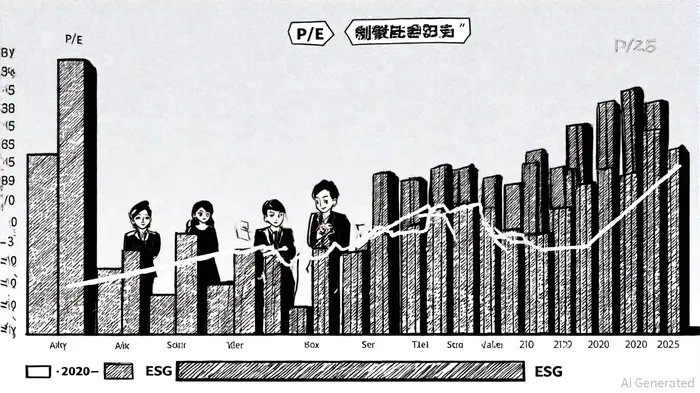
Studies from 2023–2025 reveal a strong correlation between robust ESG performance and consistent dividend payouts. For instance, firms with high ESG scores-particularly in governance-demonstrate greater financial stability, enabling them to sustain dividends even during economic downturns, according to an analysis of ESG and dividends. A 2023 study of global enterprises found that governance scores had a statistically significant positive impact on dividend stability, while environmental and social metrics showed mixed results depending on contextual factors, as shown by a 2023 study. This suggests that strong corporate governance, including transparent stakeholder communication and ethical leadership, reduces operational risks and enhances investor confidence, both of which are vital for maintaining dividend consistency, according to a ScienceDirect study.
Conversely, companies with poor ESG records or unresolved controversies face heightened risks of dividend cuts. Research indicates that ESG controversies-such as regulatory violations or reputational scandals-can disrupt payout patterns, even for otherwise financially sound firms, a finding reported in the earlier analysis. This dynamic highlights the importance of integrating ESG risk assessments into dividend-dependent portfolios to avoid exposure to firms with unstable payout histories.
Valuation Models: Beyond Financials to ESG-Driven Metrics
Traditional stock valuation models like the Dividend Discount Model (DDM) and Discounted Cash Flow (DCF) are being recalibrated to incorporate ESG factors. For example, companies with strong ESG profiles often command lower discount rates in DCF analyses due to reduced perceived risk and enhanced long-term cash flow predictability, as discussed in a The-CFO article. Similarly, the DDM-typically focused on historical dividend growth and cost of equity-is increasingly adjusted to reflect ESG-linked variables such as sustainability ROI and carbon transition costs, according to a Harvard Law article.
A 2024 study by the Harvard Business School emphasized that ESG integration into valuation models requires quantifying both tangible and intangible benefits. For instance, reducing plastic use might lower operational costs while improving brand equity, a factor that indirectly supports dividend sustainability by strengthening customer loyalty and market share, as illustrated in the Top 25 ESG case studies. Energy-intensive sectors, in particular, face pressure to account for regulatory and environmental risks in their valuations, with firms failing to adapt often seeing wider spreads between intrinsic and market values, according to a Rödl report.
Case Studies: ESG in Action
Real-world examples illustrate the tangible impact of ESG on dividend sustainability and stock valuation. Standard Chartered, for instance, reported $982 million in sustainable finance income in 2024 by aligning its operations with science-based climate targets (see the Top 25 ESG case studies). This ESG-driven strategy not only enhanced its reputation but also diversified revenue streams, providing a buffer against economic volatility. Similarly, Tesla's shift to renewable energy infrastructure has enabled significant carbon emission reductions, reinforcing investor confidence in its long-term profitability and dividend potential, according to a ScienceDirect paper.
In contrast, firms lagging in ESG adoption face steeper challenges. A 2025 analysis of Chinese A-share companies found that those with weak ESG performance experienced abnormal low dividend payouts, attributed to higher agency costs and financing constraints, as identified in a channel analysis. These cases underscore the dual role of ESG: as a risk mitigant and a value creator.
Challenges and the Path Forward
Despite progress, challenges persist. ESG data remains inconsistent, with varying methodologies for measuring sustainability performance. Only 50% of valuation experts systematically integrate ESG into DCF models, and just 8% apply it to multiple-based valuations, a point the Rödl report highlights. Standardization of ESG metrics-such as harmonizing carbon accounting or board diversity benchmarks-is essential to improve reliability.
For investors, the takeaway is clear: dividend-dependent portfolios must prioritize ESG screening to identify companies with resilient payout histories and strong governance frameworks. Tools like ESG-linked earnouts in M&A transactions and AI-driven sustainability analytics are emerging as critical resources for aligning risk mitigation with long-term value creation, according to an Equirus blog post.
Conclusion
The integration of ESG factors into dividend sustainability analysis marks a pivotal shift in investment strategy. By aligning valuation models with sustainability metrics, investors can better navigate the risks of dividend cuts while capitalizing on the financial resilience of ESG leaders. As regulatory and market demands evolve, the ability to quantify ESG performance will become indispensable for constructing portfolios that balance income generation with long-term stability.







Comentarios
Aún no hay comentarios