
Dividend Stability in the REIT Sector: Evaluating Medalist Diversified REIT's Strategic Payouts
In the real estate investment trust (REIT) sector, dividend stability is often viewed as a barometer of financial health and management discipline. Medalist DiversifiedMDRR-- REIT (MDRR) has long positioned itself as a player committed to consistent quarterly payouts, even as its dividend trajectory has shifted in recent years. This analysis examines MDRR's dividend strategy through the lens of its historical payments, financial metrics, and investor implications, offering insights into whether its approach aligns with sustainable long-term value creation.
A History of Dividend Adjustments
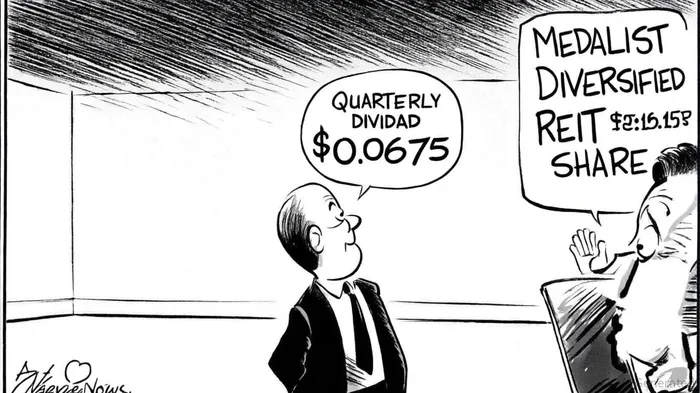
MDRR's dividend history reveals a pattern of both consistency and recalibration. From late 2021 through early 2023, the company maintained a robust quarterly payout of $0.16 per share, reflecting a period of relative stability [2]. However, by early 2024, the dividend was reduced to $0.05 per share for the first quarter before incrementally increasing to $0.06 in subsequent quarters [4]. As of July 2025, the most recent payout stood at $0.0675 per share [1]. While these adjustments signal a departure from prior levels, the company's unwavering adherence to a quarterly schedule—even amid financial headwinds—underscores a strategic emphasis on shareholder returns.
This consistency, however, must be weighed against broader financial trends. For instance, MDRR's Q1 2025 results revealed a 9.7% revenue decline and a $2.34 million net loss [2]. Despite these challenges, the company continued to distribute dividends, albeit at reduced rates. Such actions highlight a dual narrative: management's commitment to preserving investor confidence through regular payouts, juxtaposed with operational pressures that necessitate periodic adjustments.
Financial Health and Dividend Sustainability
The sustainability of MDRR's dividend strategy hinges on its financial metrics. As of June 30, 2025, the company reported a debt-to-EBITDA ratio of 10.97 and a debt-to-equity ratio of 1.72, both indicative of elevated leverage [5]. These figures contrast sharply with the historically lower payout ratios observed in Q3 2024, where the dividend-to-AFFO ratio was 29.41% and to-CORE FFO was 10.00% [4]. However, recent data paints a grimmer picture: a payout ratio exceeding 700% in 2025, driven by net losses, raises serious concerns about the long-term viability of dividend payments [2].
Compounding these risks is MDRR's interest coverage ratio of 0.21, suggesting the company struggles to generate sufficient earnings to cover its debt obligations [3]. While Q2 2025 earnings showed a modest improvement in net losses ($0.34 per share versus $0.47 in Q2 2024) and a 7.1% revenue increase [4], such gains appear insufficient to address structural leverage issues. For REITs, where dividends are often funded by operational cash flow rather than earnings, these metrics signal a precarious balance between payout obligations and financial flexibility.
Investor Confidence and Strategic Implications
Despite these challenges, MDRR's dividend consistency has historically bolstered investor confidence. The company's ability to maintain a quarterly payout—even at reduced levels—demonstrates a prioritization of shareholder returns, a trait that can attract income-focused investors. Insider buying activity further reinforces this narrative, with executives and directors accumulating shares in recent months, signaling faith in the company's long-term prospects [2].
However, historical data on dividend announcements tells a more nuanced story. A backtest of MDRR's dividend events from 2022 to 2025 reveals that average post-announcement returns have oscillated around zero, with no statistically significant outperformance over a 30-day horizon. Win rates for these events have ranged between 33% and 67%, offering no clear directional edge. These findings suggest that while dividend consistency may bolster investor confidence, it has not reliably translated into positive market reactions over the past three-and-a-half years.
Yet, the broader market context complicates this optimism. REITs are inherently sensitive to interest rate environments, and MDRR's high leverage amplifies its vulnerability to borrowing cost fluctuations. With the Federal Reserve maintaining elevated rates and refinancing risks looming, MDRR's debt-heavy structure could strain its ability to sustain dividends without operational improvements.
Conclusion: A Delicate Balance
Medalist Diversified REIT's dividend strategy embodies a classic trade-off between short-term investor appeasement and long-term financial prudence. While its quarterly payouts have historically served as a strategic anchor for confidence, the declining dividend amounts and deteriorating financial metrics suggest a company in transition. For investors, the key question is whether MDRRMDRR-- can stabilize its operations, reduce leverage, and restore earnings growth—prerequisites for reinvigorating dividend sustainability. Until then, the REIT's dividend consistency remains a double-edged sword: a testament to management's commitment, but also a reminder of the fragility of its current financial model.





Comentarios
Aún no hay comentarios