
Dividend Investing for Retirement: Building a Portfolio of Resilient Income Streams
In an era of low interest rates and economic uncertainty, retirees and pre-retirees are increasingly turning to dividend-paying stocks as a cornerstone of income generation. These "dividend machines" offer not only regular cash flow but also the potential for long-term growth, provided they are selected and managed with discipline. For investors seeking to construct a retirement portfolio that balances yield with resilience, the key lies in identifying high-quality companies with sustainable payout ratios, diversified sector exposure, and a track record of weathering economic storms.
The Case for High-Yield Dividend Stocks
High-yield dividend stocks have historically served as a bulwark against market volatility, particularly in sectors like utilities, real estate, and telecommunications. Realty IncomeO-- (O), for instance, has cemented its reputation as "The Monthly Dividend Company" with a 5.31% yield and a 55-year streak of uninterrupted payments. Its investment-grade credit rating and diversified tenant base-spanning retail, healthcare, and technology-underscore its resilience, according to Fool's high-yield list. Similarly, Verizon CommunicationsVZ-- (VZ) offers a 6.21% yield, leveraging its defensive telecom business model to maintain consistent cash flow even during downturns, as noted in that same Fool article.
Energy infrastructure plays a critical role in this landscape. EnbridgeENB-- (ENB), with a 5.34% yield, has grown dividends for nearly three decades by transporting essential energy resources across North America. Its regulated operations and long-term contracts provide a predictable revenue stream, insulating it from short-term market swings; business development companies like Main Street Capital (MAIN) offer a 4.71% yield through conservative leverage strategies, making them a compelling addition to a diversified portfolio (the Fool list cited above provides further examples).
Constructing a Resilient Dividend Portfolio
A well-structured dividend portfolio requires a blend of sector diversification, yield thresholds, and financial rigor. Sector allocation is paramount: defensive industries such as utilities, healthcare, and consumer staples typically outperform during recessions, according to the Simply Safe Dividends guide. For example, a portfolio might allocate 25% to utilities, 20% to healthcare, and 15% to consumer staples, ensuring exposure to stable demand regardless of economic conditions, as noted in that guide. Over-concentration in any single sector-exceeding 25%-should be avoided to mitigate risk, per the Simply Safe Dividends guidance.
Yield thresholds must also be carefully calibrated. While retirees are naturally drawn to high yields, a yield above 6% often signals a "dividend trap," where a company's payout is unsustainable due to declining earnings or rising debt, a point frequently highlighted by Fool's coverage of high-yield names. A safer benchmark is a yield between 3% and 5%, paired with a payout ratio below 75%. For instance, NNN REIT (NNN) offers a 5.46% yield with a conservative payout ratio and 40 years of consecutive dividend growth, exemplifying the balance between yield and sustainability (examples like NNN appear in the Fool list referenced earlier).
Financial resilience criteria further refine the selection process. Companies with strong free cash flow, low debt-to-equity ratios, and a history of dividend increases are better positioned to navigate downturns. The 2008 financial crisis, for example, saw S&P 500 dividends drop by 23%, but non-financial dividend payers largely maintained their payouts, highlighting the importance of sector choice, according to a historical performance analysis.
Historical Performance and Risk Mitigation
The resilience of dividend stocks during economic downturns is well-documented. From 2008 to 2023, dividend-paying portfolios exhibited lower volatility than the broader market, with many companies sustaining or increasing payouts despite market turmoil, as that historical analysis shows. This stability is attributed to disciplined management and operating in essential sectors. For instance, during the 2020 pandemic, healthcare and utility stocks outperformed, as demand for their services remained inelastic, findings echoed in the same analysis.
To amplify returns, investors should reinvest dividends through DRIPs (Dividend Reinvestment Plans) or ETFs like Schwab U.S. Dividend Equity ETF (SCHD), which offers a balanced mix of yield and growth, as suggested in a StockCarrot guide. Tax optimization is equally critical: holding dividend stocks in Roth IRAs can shield income from future tax liabilities, preserving purchasing power in retirement, a strategy also discussed in Fool's high-yield coverage.
Conclusion
For retirees, dividend investing is not merely about chasing yield-it's about building a fortress of income. By prioritizing companies with robust financials, diversifying across sectors, and adhering to disciplined reinvestment strategies, investors can create a portfolio that thrives through cycles of boom and bust. As the examples of Realty Income, Enbridge, and VerizonVZ-- demonstrate, the best dividend stocks are those that combine resilience with growth, ensuring a steady stream of income for decades to come.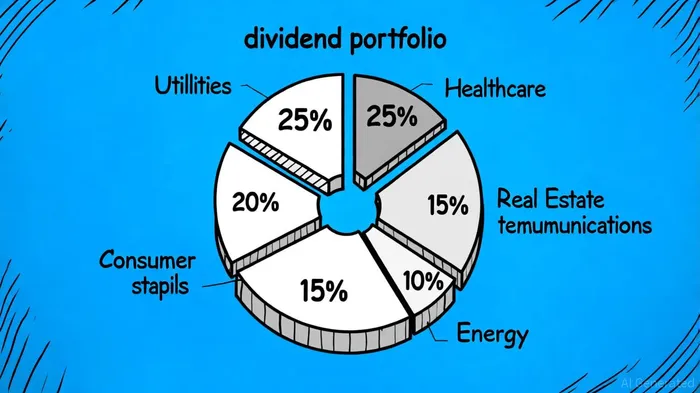







Comentarios
Aún no hay comentarios