
Dividend-Driven Growth in the Tech Sector: Evaluating the Strategic Appeal of QQQY
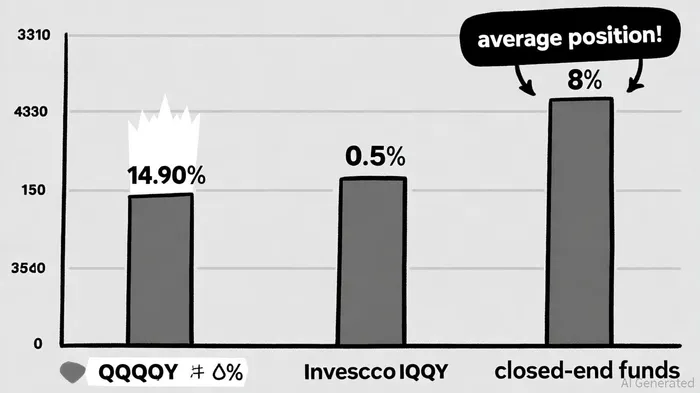
In an era where technology stocks dominate global equity markets and investors increasingly prioritize income generation, the Evolve NASDAQ Technology Enhanced Yield Index Fund (QQQY) has emerged as a compelling—if controversial—option for those seeking high-conviction, high-yield exposure to the sector. With a trailing 12-month yield of 14.90% as of August 29, 2025, and a recent monthly dividend of $0.32 per share[1], QQQY's strategy of combining active covered call writing with exposure to the Nasdaq-100 Technology Sector has captured attention. But does this fund's performance and risk profile justify its lofty yield, or does it reflect unsustainable optimism in a sector prone to volatility?
Market Context: Tech's Dual Role as Growth and Income Engine
The technology sector has long been a magnet for growth-oriented investors, but its role as a source of income has gained traction in 2025. According to a report by Bloomberg, the average yield for Nasdaq-100 index components has risen to 1.2% year-to-date, driven by companies like MicrosoftMSFT-- and AppleAAPL-- increasing shareholder returns[2]. Yet, for income-focused investors, traditional index ETFs like InvescoIVZ-- QQQ (QQQ) remain underwhelming, offering a meager 0.5% yield[3]. This gap has created fertile ground for innovative strategies like QQQY's, which leverages options-based income generation to enhance returns.
QQQY's Strategy: Covered Calls and Yield Amplification
QQQY's approach is straightforward yet aggressive: it sells covered call options on up to 50% of its portfolio to generate additional income while maintaining exposure to the Nasdaq-100's tech-heavy constituents[4]. This strategy has yielded remarkable results. Since its October 2023 inception, the fund has delivered a 32.02% annualized return over three years and a 28.31% total return in 2025 alone[5]. These figures outpace even the Nasdaq-100's historic performance, which has averaged 13.73% annualized over 30 years[6].
The fund's dividend structure further amplifies its appeal. With monthly payouts of $0.32 per share, QQQY's 14.24% yield as of September 2025 dwarfs sector averages[7]. For context, closed-end funds (CEFs) focused on tech stocks typically yield around 8%, making QQQY's returns appear exceptionally attractive[8]. However, this yield comes with caveats. The fund's expense ratio of 1.00%—higher than traditional ETFs like QQQ's 0.20%—raises questions about cost efficiency[9].
Risk-Adjusted Returns: A Tale of Two Metrics
While QQQY's returns are impressive, its risk profile remains opaque. The fund's website and third-party analyses provide no Sharpe ratio, beta, or standard deviation metrics for 2025[10]. This absence is concerning, as the Nasdaq-100's historical volatility—evidenced by QQQ's 23.99% standard deviation and 1.27 beta[11]—suggests QQQY could inherit similar risks. Without concrete data, investors must infer that the covered call strategy may reduce downside risk but cannot eliminate the sector's inherent volatility.
Dividend Sustainability: A Double-Edged Sword
QQQY's dividend sustainability is another area of scrutiny. While the fund's 14.90% trailing yield is enticing, its dividend growth rate has plummeted by -90.51% year-over-year[12]. This sharp decline indicates that the fund's payouts are not tied to earnings growth but rather to the success of its options strategy. A payout ratio of 0%—as noted in one source—further underscores that dividends are not earnings-driven[13]. For income investors, this raises red flags: if market conditions shift or options premiums shrink, QQQY's yield could collapse.
Strategic Appeal: Balancing Innovation and Caution
QQQY's strategic appeal lies in its ability to marry high yield with tech sector exposure, a combination rarely seen in traditional ETFs. Its active management and options-based approach offer a novel way to enhance returns in a sector historically dominated by growth-at-all-costs narratives. However, the fund's lack of transparency on risk metrics and its reliance on volatile options strategies make it unsuitable for risk-averse investors.
For high-conviction investors, QQQY represents a calculated bet on the resilience of tech stocks and the effectiveness of covered call strategies. Yet, as with any high-yield vehicle, due diligence is paramount. Investors must weigh the fund's potential for capital appreciation and income against its exposure to market corrections and the sustainability of its dividend model.
Conclusion: A High-Yield Gamble in a High-Volatility Sector
The Evolve NASDAQ Technology Enhanced Yield Index Fund exemplifies the growing trend of yield-seeking innovation in the tech sector. Its $0.32 monthly dividend and robust returns position it as a standout option for investors prioritizing income. However, the fund's opaque risk metrics, high expense ratio, and uncertain dividend sustainability demand a cautious approach. In a market where tech stocks remain both a growth engine and a source of volatility, QQQY offers a bold, if precarious, path to dividend-driven growth.







Comentarios
Aún no hay comentarios