
Diverging Safe-Haven Asset Dynamics in a Shifting Macro Landscape
The New Normal: Safe-Haven Assets in a Fractured Macro Environment
The traditional pillars of safe-haven investing-gold, U.S. Treasurys, and the U.S. dollar-are no longer immune to the complexities of 2025's geopolitical and monetary landscape. Recent data reveals a stark divergence in their performance, challenging long-held assumptions and demanding a recalibration of strategic asset allocation.
Gold's Divergence: A Losing Battle Against Equities and Policy
Gold, historically a refuge during crises, has shown surprising fragility in 2025. During Operation Rising Lion-a major geopolitical escalation in March 2025-gold prices fell 3.17% as equities surged, defying its traditional role as a hedge, according to an Investors Observer report. This anomaly underscores a critical shift: monetary policy and liquidity conditions now often override geopolitical risk in shaping asset flows. Central banks' aggressive rate hikes and quantitative tightening have made cash and short-duration assets more attractive, even during conflicts. Investors must now weigh gold's inflation-hedging appeal against its susceptibility to policy-driven equity rallies.
The U.S. Dollar's Mixed Signals
The U.S. Dollar Index (DXY) also exhibited unexpected behavior. During Operation Rising Lion, the DXY dropped 0.30%, contradicting its historical tendency to strengthen during crises, as noted in the Investors Observer report. This reflects a broader trend: the dollar's safe-haven status is increasingly contingent on global liquidity conditions. For instance, the Swiss Franc (USD/CHF) appreciated by 0.25% during the same event, reaffirming its role as a neutral, stable alternative. The dollar's relative underperformance highlights the need for investors to diversify across currencies, particularly in a world where geopolitical risks are no longer confined to specific regions.
Government Bonds: A Reassessment of Safety
U.S. Treasurys, long the bedrock of safe-haven demand, have faced a credibility crisis. During the June 2025 Israel-Iran conflict-a scenario that historically would have driven investors to Treasurys-yields rose by 0.15%, signaling a flight away from bonds, according to a Morningstar analysis. This paradox is partly explained by inflationary expectations and the Federal Reserve's hawkish stance, which have made bonds less appealing even in times of uncertainty. Meanwhile, alternative fixed-income instruments like Islamic sukuk have emerged as resilient alternatives. A 2025 Investors Observer study notes that sukuk consistently act as a safe haven during geopolitical threats, outperforming sovereign and corporate bonds. Investors may need to rebalance their fixed-income portfolios, incorporating sukuk or municipal bonds to mitigate risk.
Bitcoin's Ambiguous Role
Bitcoin's performance in 2025 adds another layer of complexity. During the Israel-Iran escalation, BitcoinBTC-- gained 0.42%, suggesting its growing appeal as a digital safe haven, per the Investors Observer report. However, its volatility and event-specific behavior-such as its sharp decline during the March 2025 conflict-highlight its limitations. While Bitcoin may complement traditional safe-haven assets in a diversified portfolio, its role remains speculative and context-dependent.
Strategic Allocation: Navigating the New Safe-Haven Paradigm
The divergent dynamics of 2025 demand a nuanced approach to asset allocation:
- Currency Diversification: Prioritize a mix of USD, CHF, and JPY to hedge against geopolitical and monetary shifts. The Swiss Franc's stability and Japan's yield advantage make them compelling additions.
- Fixed-Income Rebalancing: Replace a portion of U.S. Treasurys with sukuk or high-grade municipal bonds, which have shown resilience in 2025's volatile environment, per the Investors Observer report.
- Gold as a Tactical Play: Use gold selectively, focusing on its inflation-hedging role rather than its traditional crisis response. Pair it with equities in a hedged portfolio.
- Digital Assets as a Satellite Holding: Allocate a small portion to Bitcoin, recognizing its potential as a digital safe haven but avoiding overexposure due to its volatility.
Conclusion
The 2025 macro landscape has rendered the "one-size-fits-all" safe-haven strategy obsolete. Geopolitical risks, monetary policy, and technological innovation are reshaping asset dynamics in unpredictable ways. Investors must now adopt a dynamic, diversified approach, leveraging both traditional and emerging instruments to navigate uncertainty. As the lines between risk and safety blur, adaptability-rather than dogma-will define successful portfolio management.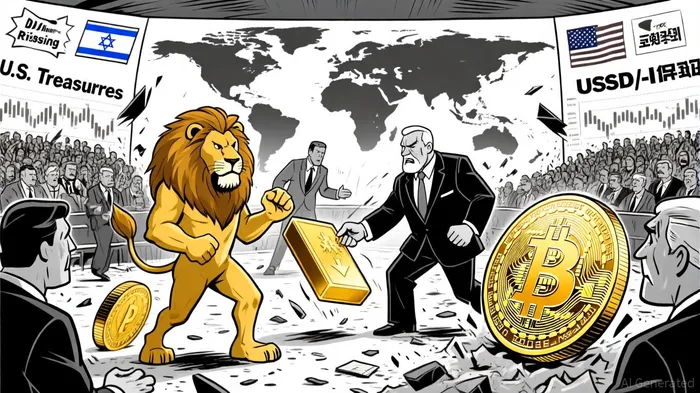






Comentarios
Aún no hay comentarios