
Diverging Paths in Malaysian Tech: Lebtech's Struggles vs Telekom Malaysia's ROCE Surge
Telekom Malaysia's ROCE: A Model of Compounding Efficiency
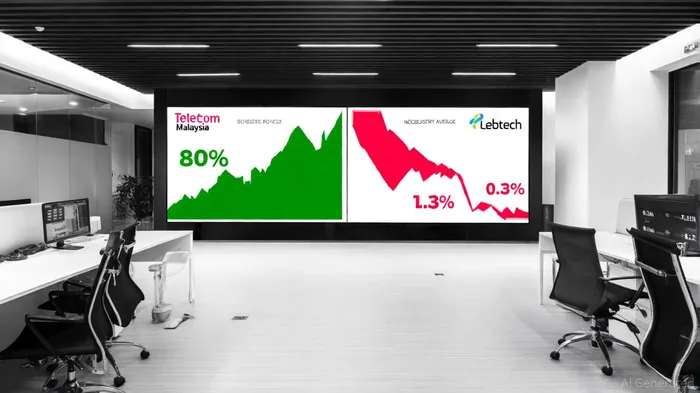
Telekom Malaysia Berhad has redefined its operational and financial performance over the past five years. According to a Yahoo Finance article, , . This remarkable improvement underscores Telekom Malaysia's ability to streamline operations, optimize asset utilization, and reinvest earnings effectively. , reflecting growing investor confidence in the company's strategic execution. For investors, this trajectory signals a business that is not only surviving but thriving in a competitive market.
Lebtech's ROCE: A Tale of Decline and Stagnation
In stark contrast, Lebtech Berhad's ROCE performance paints a less optimistic picture. Data from Yahoo Finance and SimplyWall.St , . . The decline in ROCE, coupled with stagnant capital employed, suggests that Lebtech's earnings growth has not translated into sustainable value creation for shareholders.
The Investment Implications: Compounding vs. Erosion
The divergent ROCE trajectories of Telekom Malaysia and Lebtech highlight fundamental differences in their business models. Telekom Malaysia's ability to compound returns while reducing capital employed demonstrates a mastery of reinvestment and operational discipline. This aligns with 's principle of investing in companies that "earn high returns on equity while retaining much of their earnings." Conversely, Lebtech's declining ROCE indicates a lack of compounding momentum. Even with short-term earnings spikes, the company's inability to improve capital efficiency raises concerns about its long-term sustainability.
For investors, the choice between these two firms hinges on their risk appetite and time horizon. Telekom Malaysia's consistent ROCE growth and shareholder returns make it a compelling play in Malaysia's telecom sector, particularly as it leverages digital transformation and 5G infrastructure. Lebtech, on the other hand, may appeal to speculative investors betting on a turnaround, but its current metrics suggest a high-risk proposition.
Conclusion
While both companies operate in Malaysia's technology and telecom landscape, their capital efficiency trajectories could not be more different. Telekom Malaysia's ROCE growth reflects a compounding engine, whereas Lebtech's declining returns signal a business in need of reinvention. For value-conscious investors, the former offers a blueprint of disciplined capital allocation, while the latter serves as a cautionary tale about the perils of stagnant growth.







Comentarios
Aún no hay comentarios